
Psychoactive substances are natural or synthetic substances that act on the central nervous system and alter mental processes such as mood, perception, cognition, consciousness, and behaviour. These substances may be legally prescribed medications (e.g., pain medications or sedatives), legally available substances such as alcohol or caffeine, or controlled or illicit drugs. Psychoactive substances can be used for medical, social, cultural, or recreational purposes, but some carry risks of misuse, dependence, and health or social harms when used in harmful ways.
Psychoactive Substances
The risk matrix: Drug-related deaths in prisons in England and Wales, 2015–2020
This article explores the factors contributing to drug-related deaths in English and Welsh prisons between 2015 and 2020.
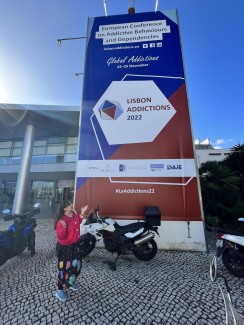
Inter-glam Bursary Award for Pakistani Delegate Participation in Lisbon Addictions
During the second last month of 2022, November 22-24 an international conference was held successfully at the Lisbon Congress Center in Portugal with the collaboration of SICAD, EMCDDA and the Portuguese Directorate. Organized by Clinic in...
HIV and Substance Use: Reading List
World AIDS Day takes place in December each year. This reading list contains a list of research, publications and resources for practitioners relating to HIV/Aids. We also have a network dedicated to HIV and HCV where you can find a...
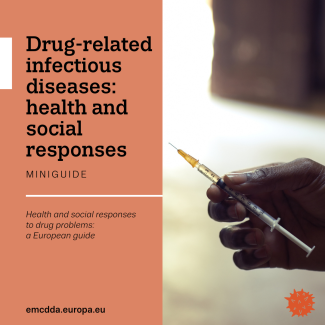
Responding to drug-related infectious diseases: EMCDDA mini guide
Sharing drug injecting equipment increases the risk of transmitting and acquiring blood-borne infections, such as HIV and hepatitis B and C. While hepatitis C is the most prevalent blood-borne viral infection among people who inject drugs...
HIV Prevention, Treatment, Care and Support for People Who Use Stimulant Drugs
Since the beginning of the HIV epidemic, the focus on HIV prevention, treatment and care among people who use drugs has concentrated on the needs of people who inject drugs, and mainly on those who inject opioids. However, data show that...
The Canadian Community Epidemiology Network on Drug Use (CCENDU) Bulletin: An Update on Stimulant Use and Related Harms in Canada and the United States
The Canadian Community Epidemiology Network on Drug Use (CCENDU) is a pan-Canadian network of community partners co-ordinated by the Canadian Centre on Substance Use and Addiction (CCSA). The network has sites in British Columbia, Manitoba...
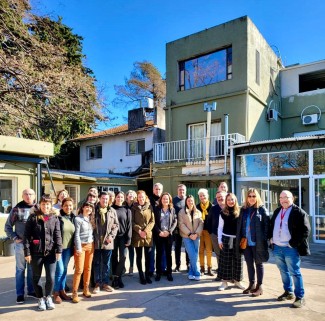
ISSUP Mexico participate at the opening of the Master in Substance Abuse Prevention led by ISSUP Argentina
The launch of the new master's degree "Problematic Consumption of Psychoactive Substances from a Social and Health Perspective" was held. Miriam Carrillo, Director of Prevention at Centros de Integración Juvenil , A.C. ( CIJ, acronym in...
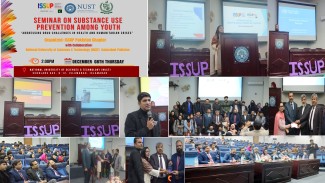
Seminar on "Substance Use Prevention Among Youth" on December 8th, 2022 at National University of Sciences and Technology, Islamabad-Pakistan
ISSUP Pakistan Chapter organized a seminar on "Substance Use Prevention Among Youth" following the theme "Addressing Drug Challenges in Health and Humanitarian Crises" in collaboration with TABA NUST SDG Student Hub NUST at the National...
Legal responses to novel psychoactive substances implemented by ten European countries: An analysis from legal epidemiology
Abstract Introduction Novel psychoactive substances (NPS) continue to pose challenges to law enforcement authorities, public health officers and policymakers as suppliers continuously adapt to control measures, thus remaining highly dynamic...
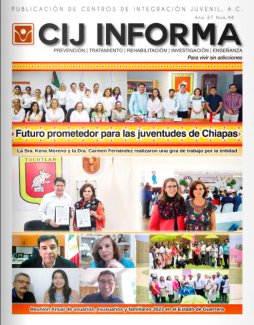
ICJ Informs 98
The most recent issue of CIJ Informa Magazine, a quarterly publication of Youth Integration Centers (CIJ), host institution of the ISSUP Mexico Chapter, is now available. In addition to a variety of topics on CIJ's work in Mexico, the...