
Psychoactive substances are natural or synthetic substances that act on the central nervous system and alter mental processes such as mood, perception, cognition, consciousness, and behaviour. These substances may be legally prescribed medications (e.g., pain medications or sedatives), legally available substances such as alcohol or caffeine, or controlled or illicit drugs. Psychoactive substances can be used for medical, social, cultural, or recreational purposes, but some carry risks of misuse, dependence, and health or social harms when used in harmful ways.
Psychoactive Substances
Eating Disorders and Drug Use in Adolescents
The aim of the study was to show whether there was a connection between drug use and eating disorders, as well as to identify the type of drugs most widely used and to ascertain whether they are used to suppress appetite. An “ad hoc” scale...
World Drug Report 2019
The World Drug Report aims at improving the understanding of the world drug problem and contributing towards fostering greater international cooperation for countering its impact on health, governance and security. The World Drug Report...
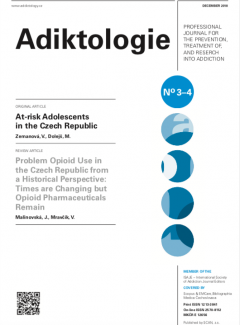
ADIKTOLOGIE Journal
ADIKTOLOGIE is an international journal devoted to publishing peer-reviewed interdisciplinary and transdisciplinary scientific reports on psychoactive substance use, other behavioural addictions and related issues.
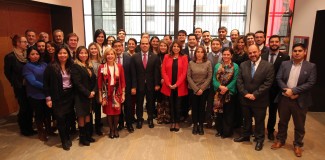
UNODC Training on the Nature, Prevention and Treatment of Drug Use Disorders Organized jointly with SENDA in Chile
30 policy makers attended the training event in Chile which was organized from 28-30 May 2019 in coordination with the National Service for the Prevention and Rehabilitation of Drug and Alcohol Consumption (SENDA) and with the support of...
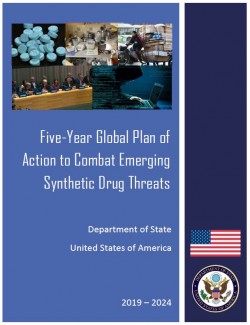
Five-Year Global Plan of Action to Combat Emerging Synthetic Drug Threats
To deter and disrupt production and trafficking of illicit synthetic drugs into the United States, the Department of State has developed a new strategy that will attack this new business model of illicit international drug supply chains at...
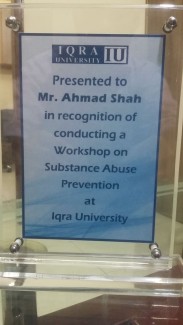
Workshop on Psychoactive Substance Use Prevention at Iqra University Karachi, Pakistan
On 3rd May 2019 the Drug Free Pakistan Foundation (DFPF) in collaboration with the Iqra University organized a one day Workshop on Substance Psychoactive Use Prevention at Iqra University in Karachi, Pakistan. The main objective of this...
Community Response to the Initiation of Smoking in Indonesian Early Adolescents
Prevalence of smoking in Indonesia is on the increase. The trend is particularly noticeable among Indonesian adolescents with smoking in early adolescents increasing from 9.5 to 17.5% from 2001 to 2010. A recent study, published in the...
Cannabidiol (CBD) Content in Vaporized Cannabis does not Prevent Tetrahydrocannabinol (THC)-induced Impairment of Driving and Cognition
Abstract Background The main psychoactive component of cannabis, delta-9-tetrahydrocannabinol (THC), can impair driving performance. Cannabidiol (CBD), a non-intoxicating cannabis component, is thought to mitigate certain adverse effects of...
A Qualitative Study of Drivers of Psychoactive Substance Use among Mekelle University Students, Northern Ethiopia
Abstract Background Psychoactive substance (PS) use is a public health concern among University students. Understanding the factors underlay the use helps to underpin effective preventive interventions. However, there is dearth of...
Prevalence of Cognitive Impairment in Patients with Substance Use Disorder
Abstract Introduction and Aims Cognitive impairments in substance use disorder predict treatment outcome and are assumed to differ between substances. They often go undetected, thus the current study focuses on the prevalence of and...