Psychoactive substances are natural or synthetic substances that act on the central nervous system and alter mental processes such as mood, perception, cognition, consciousness, and behaviour. These substances may be legally prescribed medications (e.g., pain medications or sedatives), legally available substances such as alcohol or caffeine, or controlled or illicit drugs. Psychoactive substances can be used for medical, social, cultural, or recreational purposes, but some carry risks of misuse, dependence, and health or social harms when used in harmful ways.
Psychoactive Substances
Eye tracking of smoking-related stimuli in tobacco use disorder: A proof-of-concept study combining attention bias modification with alpha-transcranial alternating current stimulation
Abstract Background Tobacco use disorder (TUD) is characterized by the presence of an attentional bias (AB) towards smoking-related stimuli. We investigated whether combining an AB modification paradigm (ABM) with transcranial alternating...
Illicit Drug Use and the Genetic Overlap with Cannabis Use
Abstract Background The use of illicit substances is correlated, meaning that individuals who use one illicit substance are more likely to also use another illicit substance. This association could (partly) be explained by overlapping...
Webinar: ISSUP Ukraine - Clinical Aspects of Substance Use Disorders
On Thursday, July 2, 2020 ISSUP Ukraine presented a webinar on Clinical Aspects of Substance Use Disorders. The webinar was presented in Ukrainian and Russian.
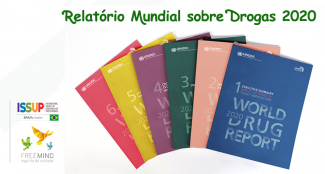
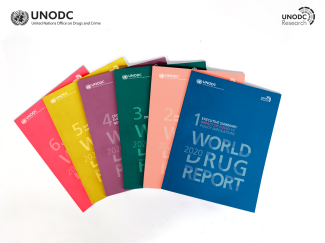
World Drug Report 2020
Presented in six separate booklets, the World Drug Report 2020 provides a wealth of information and analysis to support the international community in implementing operational recommendations on a number of commitments made by Member States...
World Drug Report 2020
Global drug consumption increases, while COVID-19 impacts markets, according to the World Drug Report 2020, released on June 25, 2020 by the United Nations Office on Drugs and Crime (UNODC). The Report shows that around 269 million people...
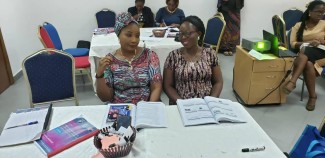
Better Knowledge for Better Care: Changing Substance Use Treatment and Prevention Narratives in Nigeria
International Day against Drug Abuse and Illicit Trafficking Better Knowledge for Better Care Changing Substance Use Treatment and Prevention Narratives in Nigeria The United Nations International Day against Drug Abuse and Illicit...
Life Skills and the prevention of psychoactive substance use
According to Botvin (2004) and Sloboda (2004), there is empirical evidence that prevention programs, such as Life Skills, based on knowledge, identification of risk factors and development of psychosocial skills related to drugs are more...
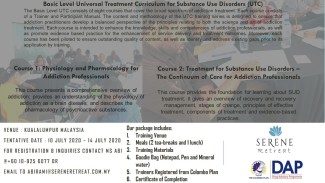
UTC / UPC Workshop for Addiction Professionals
Basic Level Universal Treatment Curriculum for Substance Use Disorders (UTC) The Basic Level UTC consists of eight courses that cover the broad spectrum of addiction treatment. Each course consists of a Trainer and Participant Manual. The...
Video: Working Conditions in Quarantine, Pandemic and Addiction
On 22 May 2020, ISSUP Argentina collaborated with ISSUP Global to present a webinar on quarantined working conditions, pandemics and addictions. Exhibitors: Dres. Roberto Canay and Ernesto Eduardo GonzálezUniversity of the Argentine Social...
The CHILD Intervention for Living Drug-Free Comprehensive Assessment of Risk, Resilience, and Experience (CHILD CARRE) Measure: Initial Findings
This paper summarizes the development and evaluation of an assessment instrument for children ages 7–12. The CHILD CARRE measure is a semi-structured interview with 7 domains. Children from the USA and Argentina (N¼134) completed baseline...