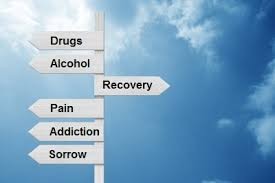
Psychoactive substances are natural or synthetic substances that act on the central nervous system and alter mental processes such as mood, perception, cognition, consciousness, and behaviour. These substances may be legally prescribed medications (e.g., pain medications or sedatives), legally available substances such as alcohol or caffeine, or controlled or illicit drugs. Psychoactive substances can be used for medical, social, cultural, or recreational purposes, but some carry risks of misuse, dependence, and health or social harms when used in harmful ways.
Psychoactive Substances
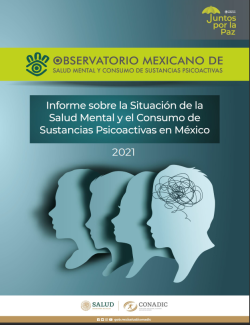
Report on the situation of Mental Health and Psychoactive Substance Use
The Report on the Situation of Mental Health and Psychoactive Substance Use compiles relevant data on substance use and mental health, with the purpose of providing interested persons and decision makers from the public, private and social...
World Drug Report 2021
Consisting of five separate booklets, the World Drug Report 2021 provides an in-depth analysis of the global drug markets and paints a comprehensive picture of the measurable effects and potential impact of the COVID-19 crisis on the world drug problem.
New App for Practitioners to Improve Knowledge of the Clinical Harms of Non-medical Prescription Drug Use.
ATOMIC is a free, evidence-based, mobile-learning application aimed at clinicians and other practitioners who want to improve their knowledge of the acute and chronic clinical harms of non-medical prescription drug use. ATOMIC is a response...
Dealing With Addiction - A Dalgarno Institute Research Report
Models, Modes, Mantras & Mandates – A Review of Literature Investigating Models of Addiction Management. - A primer for recovery sector clinicians to enhance awareness and stimulate investigation into the not only Addiction Models, but...
Call for Papers: New Drug and other Behavioural Trends During Social-Distancing for the COVID-19 Pandemic
This Special Issue explores new drug and behavioural trends during the Covid-19 Pandemic. We welcome multidisciplinary contributions aimed at enhancing the understanding of how “physical distancing” and other radical changes in our...
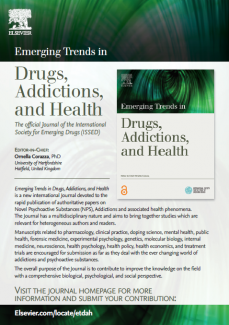
Opportunity to Publish a Scientific Article on New Psychoactive Substances!
UNODC is proud to be the co-editor of Special Issue “New Drug and other Behavioural Trends During Social-Distancing for the COVID-19 Pandemic” of the Journal “Emerging Trends in Drugs, Addictions, and Health” and cordially invites you to...
Drug Overdose Deaths Before and After Shelter-in-Place Orders During the COVID-19 Pandemic in San Francisco
Source: Appa A, Rodda LN, Cawley C, et al. Drug Overdose Deaths Before and After Shelter-in-Place Orders During the COVID-19 Pandemic in San Francisco. JAMA Netw Open. 2021;4(5):e2110452. doi:10.1001/jamanetworkopen.2021.10452 Discussion In...
The “Black Box” of Treatment: Patients’ Perspective on What Works in Opioid Maintenance Treatment for Opioid Dependence
Source: Silva, T.C., Andersson, F.B. The “black box” of treatment: Patients’ perspective on what works in opioid maintenance treatment for opioid dependence. Subst Abuse Treat Prev Policy 16, 41 (2021). https://doi.org/10.1186/s13011-021...
HIV/HCV prevalence and risk behavior among NPS users are a growing public health burden
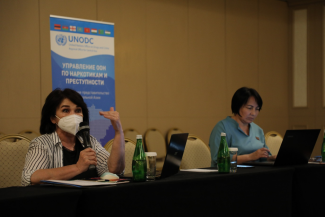
On April 27, 2021, UNODC Regional Office for Central Asia held a training seminar for specialists of the republican and regional levels responsible for drug dependence treatment and HIV prevention services in the Republic of Uzbekistan. The...
Dispositional mindfulness, spirituality and religion and its role as protective factors for substance use in Mexican adolescents
fountain: Ramírez-Garduño, Axel, Veytia López, Marcela, Guadarrama Guadarrama, Rosalinda, & Lira Mandujano, Jennifer. (2020). Dispositional mindfulness, spirituality and religion and its role as protective factors for substance use in...