
Psychoactive Substances

Psychoactive substances are natural or synthetic substances that act on the central nervous system and alter mental processes such as mood, perception, cognition, consciousness, and behaviour. These substances may be legally prescribed medications (e.g., pain medications or sedatives), legally available substances such as alcohol or caffeine, or controlled or illicit drugs. Psychoactive substances can be used for medical, social, cultural, or recreational purposes, but some carry risks of misuse, dependence, and health or social harms when used in harmful ways. 

Quality Standards in Drug Use Disorder Treatment – Reading List

Reading List
 - 
In this reading list, we provide resources to help engage our members with the latest knowledge, tools, and case studies on quality standards in substance use disorder treatment. These materials highlight international frameworks, research...
Best Practice

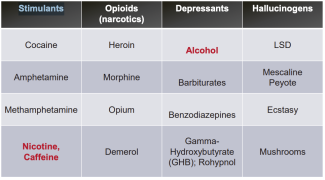
Classification of Psychoactive Substances

Leaflet, Infographic, Fact sheet, Poster
 - 
This section from the UPC 2 Physiology and Pharmacology for Prevention Professionals (p130-133) introduces the main types of psychoactive substances, explains their effects on the brain and body, and clarifies that some commonly used legal...

UNODC (2014a), Global SMART Update

Report
 - 
The rapid rise of synthetic drugs has become one of the world’s most pressing drug-related challenges. After cannabis, amphetamine-type stimulants (ATS) are the most widely used drugs globally, now surpassing cocaine and heroin. Alongside...

Global Launch – Universal Nurses Addiction Curriculum (UNAC)

Webinar
 - 
On June 26, 2025, the International Consortium of Universities for Drug Demand Reduction (ICUDDR) marked an important milestone with the global launch of the Universal Nurses Addiction Curriculum (UNAC). This initiative, supported by the U...