
The range of medical, psychological, and social services designed to help individuals reduce or stop substance use and manage substance use disorders. Treatment may include assessment, counselling and behavioural therapies, medication-assisted treatment, withdrawal management, and support for co-occurring mental or physical health conditions. Effective treatment is typically person-centred and evidence-informed, and may be provided in outpatient, community, or residential settings. Treatment aims to improve health and functioning, reduce substance-related harms, and support individuals in moving toward recovery and long-term wellbeing.
Treatment
Drug Treatment and Management Training in Prison Inaugurated
Drug use has been identified as one of the ominous problems that the society faces now-a-days. Every drug dependent person has different and complex difficulties to go through in the process of recovering from such harmful behavior. Person...
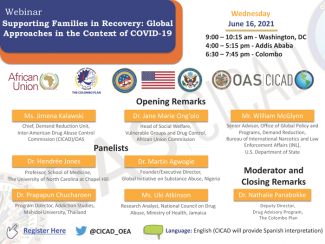
Supporting Families in Recovery – Global Approaches in the Context of COVID-19
Supporting Families in Recovery: Global Approaches in the Context of COVID-19
WHO Quitting Toolkit
With professional support and quitting services, tobacco users double their chances of quitting successfully. This WHO toolkit is aimed at tobacco users and is designed to provide information, reasons to quit and resources in an easily accessible format.
Toolkit for delivering the 5A’s and 5R’s brief tobacco interventions in primary care
This toolkit was developed based on WHO Capacity Building Training Package 4 entitled “Strengthening health systems for treating tobacco dependence in primary care”. Its target audience are primary care providers.
Quality Assurance (QA) of the Drug Treatment Services in Pakistan
The ISSUP Quality in Treatment Network and ISSUP Pakistan, in collaboration with MNC, UNODC and INL, are pleased to present their webinar on Quality Assurance (QA) of the Drug Treatment Services in Pakistan.
Implementing brief advice for reducing alcohol and tobacco use at the first level of care: A qualitative study
Introduction: In Mexico the consumption of tobacco and alcohol represents a public health problem. Models of screening, brief intervention and referral to treatment (SBIRT) have shown efficacy in reducing such consumption, so they are used...
Fenacetina: Un Adulterante Tóxico Encontrado en Drogas Callejeras Ilegales
Las personas encargadas del tratamiento por abuso de sustancias, quienes ejercen la medicina clínica, los/las extensionistas, las clínicas de salud pública, entre otros, deben conocer la información que se detalla a continuación. La...
Call for Papers: New Drug and other Behavioural Trends During Social-Distancing for the COVID-19 Pandemic
This Special Issue explores new drug and behavioural trends during the Covid-19 Pandemic. We welcome multidisciplinary contributions aimed at enhancing the understanding of how “physical distancing” and other radical changes in our...
Mindfulness-Oriented Recovery Enhancement Remediates Hedonic Dysregulation in Opioid Users: Neural and Affective Evidence of Target Engagement
Abstract Addiction neuroscience models posit that recurrent drug use increases reactivity to drug-related cues and blunts responsiveness to natural rewards, propelling a cycle of hedonic dysregulation that drives addictive behavior. Here...
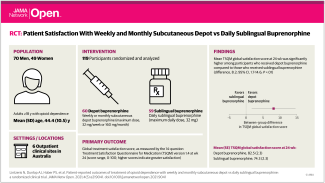
Patient-Reported Outcomes of Treatment of Opioid Dependence With Weekly and Monthly Subcutaneous Depot vs Daily Sublingual Buprenorphine: A Randomized Clinical Trial
Abstract Importance: Patient-reported outcomes in the treatment of opioid dependence may differ between subcutaneously administered depot buprenorphine and daily sublingual buprenorphine. Objective: To compare patient satisfaction between...