
The range of medical, psychological, and social services designed to help individuals reduce or stop substance use and manage substance use disorders. Treatment may include assessment, counselling and behavioural therapies, medication-assisted treatment, withdrawal management, and support for co-occurring mental or physical health conditions. Effective treatment is typically person-centred and evidence-informed, and may be provided in outpatient, community, or residential settings. Treatment aims to improve health and functioning, reduce substance-related harms, and support individuals in moving toward recovery and long-term wellbeing.
Treatment
Canadian Guidelines on Alcohol Use Disorder Among Older Adults
Open Access article: Abstract Background Alcohol use disorder (AUD) is an increasingly common, under-recognized, and under-treated health concern in older adults. Its prevalence is expected to reach unprecedented levels as the Canadian...
Resilience and related factors as predictors of relapse risk in patients with substance use disorder: a cross-sectional study
Source: Yamashita, A., Yoshioka, Si. & Yajima, Y. Resilience and related factors as predictors of relapse risk in patients with substance use disorder: a cross-sectional study. Subst Abuse Treat Prev Policy 16, 40 (2021). https://doi.org/10...
UNODC strengthened workforce capacity on community-based social services for youth at risk and their families in Turkmenistan
UNODC Regional Office for Central Asia together with the UNODC Prevention, Treatment and Rehabilitation Section (PTRS), hosted a training for practitioners on "Treatnet Family" for youth with drug use disorders including those in contact or...
Bi-Monthly Webinar: ISSUP Nigeria Knowledge Update Series (Sixth Session)
ISSUP Nigeria are pleased to present the next Webinar in their Bi-Monthly Knowledge Update Series. This Webinar focuses on 'The Role of Law Enforcement in Evidence-Based Substance Use Prevention'.
NAADAC Advancing Awareness in LGBTQ Care Series
Advancing Awareness in LGBTQ Care, Part I: History of Specialized Treatment for LGTBQ+ Clients Friday, June 18, 2021 @ 12:00-2:00pm ET Earn 2 CEs Register Now Advancing Awareness in LGBTQ Care, Part II: LGBTQ Youth, Community & Alcohol...
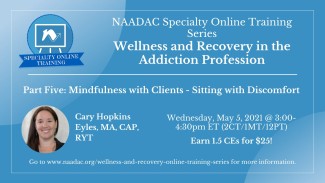
Wellness and Recovery in the Addiction Profession Part Five: Mindfulness with Clients - Sitting with Discomfort
Description:
Many of our clients react to strong emotions by trying to get rid of them through the use of substances. Mindfulness can help clients manage uncomfortable feelings and avoid impulsive reactions or acting out. Mindfulness techniques can be added to standard treatment protocols and programs for little to no cost, and they can be used with both staff and clients.
Qualitative assessment of patients’ perspectives and needs from community pharmacists in substance use disorder management
Abstract Background Non-medical use of psychoactive substances is a common harmful behavior that leads to the development of Substance Use Disorders (SUDs). SUD is a significant health concern that causes adverse health consequences and...
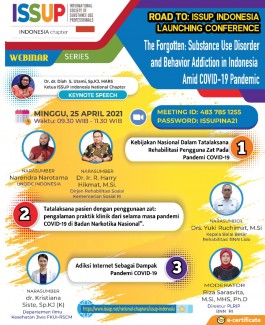
UNODC Indonesia supports the establishment of ISSUP Indonesia’s Chapter
In line with ISSUP’s global network in the field of prevention and treatment and its importance of promoting evidence based and ethical substance use prevention and treatment locally, Indonesia planned to officially establish its national...
Managing Co-occuring Alcohol and Other Drug and Mental Health Conditions
This website provides evidence-based information, training and resources to assist with the management of co-occurring, or comorbid, AOD and mental health conditions. The content is based on the second edition of the “ Guidelines on the...
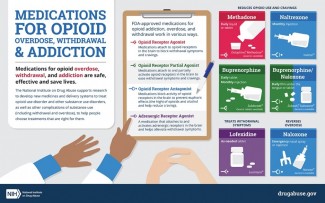
Medications for Opioid Overdose, Withdrawal & Addiction
This infographic shows the different types of medications prescribed for opioid overdose, withdrawal, and addiction. Medications for opioid addiction, overdose, and withdrawal work in various ways. Opioid Receptor Agonist: Medications...