
The range of medical, psychological, and social services designed to help individuals reduce or stop substance use and manage substance use disorders. Treatment may include assessment, counselling and behavioural therapies, medication-assisted treatment, withdrawal management, and support for co-occurring mental or physical health conditions. Effective treatment is typically person-centred and evidence-informed, and may be provided in outpatient, community, or residential settings. Treatment aims to improve health and functioning, reduce substance-related harms, and support individuals in moving toward recovery and long-term wellbeing.
Treatment
Is telemedicine the answer to rural expansion of medication treatment for opioid use disorder? Early experiences in the feasibility study phase of a National Drug Abuse Treatment Clinical Trials Network Trial
Abstract Telemedicine (TM) enabled by digital health technologies to provide medical services has been considered a key solution to increasing health care access in rural communities. With the immediate need for remote care due to the COVID...
Plausibility of patient-centred care in high-intensity methadone treatment: Reflections of providers and patients
Abstract Background: Patients with opioid use disorder (OUD) often have complex health care needs. Methadone is one of the medications for opioid use disorder (MOUD) used in the management of OUDs. Highly restrictive methadone treatment...
Becky Vaughn opens Vth Batch of UTC course by Ecolink Institute
Ecolink opens its Vth International Batch on UTC training Becky Vaughn, Director of the Global Center for Credentialing and Certification (GCCC), US inaugurated the Vth Batch of the Universal Treatment Curriculum on 29 June 2021 under the...
Development of an unannounced standardized patient protocol to evaluate opioid use disorder treatment in pregnancy for American Indian and rural communities
Abstract Background: Opioid use disorder (OUD) disproportionately impacts rural and American Indian communities and has quadrupled among pregnant individuals nationwide in the past two decades. Yet, limited data are available about access...
Reimagining brief interventions for alcohol: Towards a paradigm fit for the twenty first century?
Abstract Background: There is no longer support for the idea that brief intervention programmes alone can contribute meaningfully to the improvement of population health relating to alcohol. As a result, calls for major innovations and...
Supporting Women to Access Appropriate Treatment Study
Supporting Women to Access Appropriate Treatment (SWAAT) is a National Drugs Strategy Strand 2 Strategic Health Initiative which aims to build community capacity to support women to access treatment and recovery from drug and alcohol use...
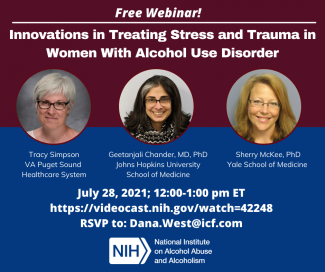
Innovations in Treating Stress & Trauma in Women with Alcohol Use Disorder
Join NIAAA for an informative and interactive free webinar on Wednesday, July 28, 2021
Chronic care treatment for smoking cessation in patients with serious mental illness: a pilot randomized trial
Background: Rates of smoking among those with serious mental illness (SMI) are two to three times higher than for the general population. Smoking is rarely addressed in mental health settings. Innovative outreach and treatment strategies...
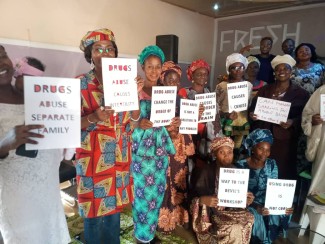
“100 program Challenge” for drug prevention by Ecolink Institute receives good response
“100 program Challenge” for drug prevention by Ecolink Institute receives global response. The students of the Ecolink Institute from 16 countries launched a campaign against drug abuse, in connection with the International Day against Drug...
Supporting Women to Access Appropriate Treatment
Supporting Women to Access Appropriate Treatment (SWAAT) is a National Drugs Strategy Strand 2 Strategic Health Initiative which aims to build community capacity to support women to access treatment and recovery from drug and alcohol use...