
The activities of authorised agencies such as police, customs, border services, and investigative bodies to enforce drug control laws and address criminal activities related to the production, trafficking, and distribution of illicit substances. These activities may include investigations, intelligence gathering, interdiction, and collaboration with national and international partners to disrupt organised crime networks. Law enforcement plays an important role in protecting public safety and maintaining the rule of law, and is most effective when coordinated with broader public health, prevention, treatment, and recovery efforts as part of a balanced and comprehensive response to substance use.
Law Enforcement
The Punjabi Problem: Drug Use in One of India’s Wealthiest Regions
According to the BBC, a recent government-conducted investigation suggests that more than 860,000 young men (15 – 35) in the Punjab region of India take drugs. This is three times the national average. Heroin is used by 53% of all addicts...
Crime and Social Impacts of Alcohol
Alcohol-related crime and social disorder is estimated to cost UK taxpayers £11bn per year, at 2010/11 prices. [1] Alcohol-related crime makes up a substantial portion of violent offences across the UK (47% in England and Wales in 2014/15,...
New Online Training for Practitioners, Peer Mentors and Service Managers
This new platform allows substance misuse, probation and prison services to upskill their workforces in a scalable and consistent way, and optimise their use of the digital behaviour change programme Breaking Free. Service providers can now...
Drug-Impaired Driving Toolkit
Research has shown that the problem of driving while impaired by drugs has become comparable in seriousness to alcohol-impaired driving. In order to inform driving school staff and young drivers about drug-impaired driving, the Canadian...
Opium Addiction Destroying Families
We are in the middle of the first quarter of the 21st century. It is a technologically advanced era, in which people across the world, and within a country are trying to excel in their lives, exploring new opportunities and trying to build...
2016 National Drug Threat Assessment
The purpose of the DEA's 2016 National Drug Threat Assessment is to provide timely and relevant strategic drug-related intelligence for policymakers in the United States to formulate counterdrug policies. Further, it helps law enforcement...
Fentanyl Deaths Rise as Curbing Supply Proves Difficult
The November 2016 data chart of overdoses in Massachusetts shows a climbing blue line labeled “fentanyl”. Boston's National Public Radio station reports via article and audio clip on some of the challenges faced by law enforcement and...
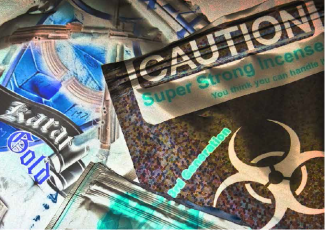
Lethal Highs: How U.S. Customs and Border Protection Laboratories Are Protecting America from Designer Drugs
This article summarizes the work of the U.S. Department of Homeland Security Customs and Border Protection agency (CBP) in the area of counternarcotics. The CBP describes the challenges to addressing substance use when molecular...
International Standards for the Treatment of Drug Use Disorders
Drug use disorders are a serious global health problem. The United Nations Office on Drugs and Crime (UNODC) estimates that 246 million people, or one in twenty 15- to 64-year-olds, used an illegal drug in 2013. Of those who use, one in ten...
Online Learning for Prevention Standards
The module aims to help prevention teams, mental health professionals, school administrators, law enforcement personnel and others to plan, select, implement and evaluate prevention initiatives in their communities and schools, and at home.