
The activities of authorised agencies such as police, customs, border services, and investigative bodies to enforce drug control laws and address criminal activities related to the production, trafficking, and distribution of illicit substances. These activities may include investigations, intelligence gathering, interdiction, and collaboration with national and international partners to disrupt organised crime networks. Law enforcement plays an important role in protecting public safety and maintaining the rule of law, and is most effective when coordinated with broader public health, prevention, treatment, and recovery efforts as part of a balanced and comprehensive response to substance use.
Law Enforcement
Effectiveness Bank Matrix Bite: Treatment Systems to Reduce Alcohol-Related Crime and Safeguard the Community
Final cell of the Alcohol Treatment Matrix. The theme is set by an Australian review which argues that despite radically different starting points, criminal justice and treatment systems must collaborate to deliver treatment. We invite you...
Field Guide to Drug Demand Reduction Program Development, 2nd ed.
The Field Guide to Drug Demand Reduction (DDR) Development is an annual publication by the U.S. Department of State primarily for its Embassy personnel abroad to guide in the development of substance use prevention and treatment programming...
For Whom Does Prison-Based Drug Treatment Work? Results from a Randomized Experiment
For the first time in a prison setting, a randomised trial has rigorously compared intensive residential therapeutic community treatment to outpatient counselling. Confounding expectations, the US prison for problem drug users which hosted...
Effectiveness Bank Matrix Bite: What If the Therapist ... Is Also the Jailer?
A cell in the Alcohol Treatment Matrix. In an extreme form, the title poses the dilemma for alcohol treatment staff who may also be (seen as) working for authorities whose main role is to control or punish the ‘client’ or who may be...
Effectiveness Bank Matrix Bite: Treatment not for the Patient but for the Community
The final row of the Alcohol Treatment Matrix enters the domain of treatment organised not primarily for the patient, but to safeguard the wider community, encountering what seems a core contradiction depicted on the cover of WHO guidance...
Adult Substance Misuse Statistics from the National Drug Treatment Monitoring System (NDTMS)
This report brings together information on people receiving specialist interventions for drug problems and for problem drinking in England, other than patients receiving this treatment in prison. Analysed textually and pictorially through...
ISSUP Mexico 2017
At the beginning of April ISSUP’s Deputy Executive Director, Joanna Travis-Roberts, headed to Cancún, Mexico to plan for this year’s Annual ISSUP Workshop.
ISSUP Staff in the Spotlight: Jeff Lee
Over many years Jeff has undertaken and managed projects in more than 80 different countries around the world as well as taken the lead role in one national and two international organisations.
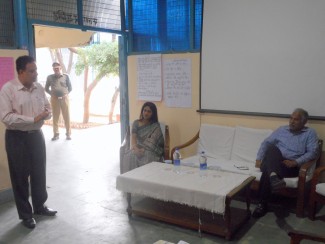
Training of Peer Educators at Tihar Central Jail
SPYM has started a prison intervention program among drug abusing youth who are inmates of the Central Jail, Tihar in New Delhi. Peer educators have been identified and a training program was conducted by Dr. Rajesh Kumar, Executive...
2017 International Narcotics Control Strategy Report
This week the Bureau of International Narcotics and Law Enforcement Affairs (INL) publicly rolled out the 2017 International Narcotics Control Strategy Report (INCSR), an annual report by the Department of State to Congress prepared in...