
The activities of authorised agencies such as police, customs, border services, and investigative bodies to enforce drug control laws and address criminal activities related to the production, trafficking, and distribution of illicit substances. These activities may include investigations, intelligence gathering, interdiction, and collaboration with national and international partners to disrupt organised crime networks. Law enforcement plays an important role in protecting public safety and maintaining the rule of law, and is most effective when coordinated with broader public health, prevention, treatment, and recovery efforts as part of a balanced and comprehensive response to substance use.

Law Enforcement
1st ISSUP National Chapter Philippines Conference
"Our long time dream of gathering professionals and people interested in addiction recovery is now very real," said Eddie L. Castillo at the opening of the 1st ISSUP National Chapter Philippines Conference. The conference was held in Quezon...
Morbidity and Mortality in Homeless Individuals, Prisoners, Sex Workers, and Individuals with Substance Use Disorders in High-Income Countries
Summary Background Inclusion health focuses on people in extremely poor health due to poverty, marginalisation, and multimorbidity. We aimed to review morbidity and mortality data on four overlapping populations who experience considerable...
Alcohol Problems in the Criminal Justice System: An Opportunity for Intervention
Alcohol is linked with crime, especially violent crime. Many people are incarcerated because of alcohol-related crime. Alcohol is not permitted in prisons except in a very few cases, and illicit use of alcohol in prison is not a major...
Misuse of Novel Synthetic Opioids: A Deadly New Trend
ABSTRACT Novel synthetic opioids (NSOs) include various analogs of fentanyl and newly emerging non-fentanyl compounds. Together with illicitly manufactured fentanyl (IMF), these drugs have caused a recent spike in overdose deaths, whereas...
Effect of Initiating Drug Treatment on the Risk of Drug-Related Poisoning Death and Acquisitive Crime among Offending Heroin Users
Abstract Background A recent Cochrane review of randomised trials identified a lack of evidence for interventions provided to drug-using offenders. We use routine data to address whether contact with treatment services reduces heroin users’...
Feasibility Study of a Cell Phone Intervention to Promote Mental Health among Deported Mexican Migrants
Ietza Bojorquez , Rosa M Aguilera-Guzman, Adrian Aguilera, Silvia Mejia Introduction: Deportations of Mexican migrants who had been living in the United States for extended periods of time increased during the past decade. As an event of...
Measuring Community Readiness for Implementing Preventive Interventions in Colombia and Chile
Arthur de Oliveira Correa , Eric C. Brown, Nicole Eisenberg, John S. Briney, Juliana Mejía-Trujillo, Daniela Castillo, Marcelo Sánchez Introduction: The increasing use of evidence-based preventive interventions in Latin America has produced...
NIDA Humphrey Fellows Participate in ISSUP's Third Workshop
NIDA Hubert H. Humphrey Fellows from Virginia Commonwealth University participated in the Third Annual Meeting of the International Society of Substance Use Professionals. More than 3,000 participants attended the meeting for drug treatment...
Exposure to Tobacco Secondhand Smoke and Its Associated Factors among Non-Smoking Adults in Smoking-Restricted and Non-Restricted Areas
Abstract Objectives: Secondhand smoke (SHS) has been associated with increased morbidity and mortality. Therefore, the aims of the paper are to assess SHS exposure among non-smoking adults in Malaysia attending various smoking-restricted...
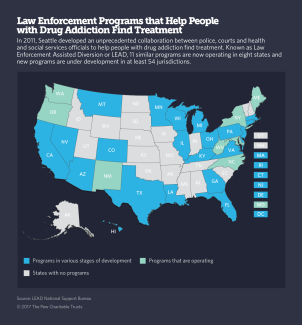
Overburdened Mental Health Providers Thwart Police Push for Drug Treatment
This article highlights the overburdened health system in West Virginia, including a shortage of behavioral treatment professionals.