
The activities of authorised agencies such as police, customs, border services, and investigative bodies to enforce drug control laws and address criminal activities related to the production, trafficking, and distribution of illicit substances. These activities may include investigations, intelligence gathering, interdiction, and collaboration with national and international partners to disrupt organised crime networks. Law enforcement plays an important role in protecting public safety and maintaining the rule of law, and is most effective when coordinated with broader public health, prevention, treatment, and recovery efforts as part of a balanced and comprehensive response to substance use.
Law Enforcement
Medication-Assisted Treatment (MAT) for Opioid Use Disorder in Jails and Prisons: A Planning and Implementation Toolkit
People who have been incarcerated are approximately 100 times more likely to die by overdose in the first two weeks after their release than the general public. Despite high rates of opioid use disorder among justice-involved individuals...
The United Nations Office on Drugs and Crime’s Efforts to Strengthen a Culture of Prevention in Low- and Middle-Income Countries
Abstract This article discusses how decision-makers can be supported to strengthen a culture of prevention. This article presents an example of the United Nations Office on Drugs and Crime’s (UNODC) work to engage with decision-makers to...
OBID interviews researcher Sanela Talic
What is prevention? I think the definition of "prevention science" by the Academic Science for Prevention Network (SPAN) fully encompasses the role of this field. It is a very rich field in terms of combining and using knowledge from many...
Get to know the "Ballad with Science" Project
The emergence of the idea: There's no denying it: a lot happens at the club! Some cool and some not so much... Some decisions made under the influence of alcohol and other drugs can have lifelong implications. Others, not so much...
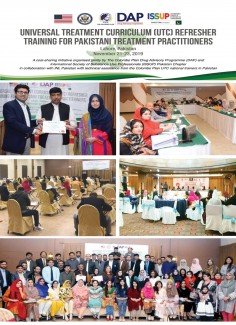
Universal Treatment Curricula (UTC) Refresher Training and International Certified Addiction Professional (ICAP) Examination for Treatment Practitioners in Pakistan
Working jointly the International Society of Substance Use Professional (ISSUP) Pakistan National Chapter and Drug Advisory Program (DAP) of the Colombo Plan, in collaboration with the US Department of State Bureau of International...
UTC 6 and UTC 7 Training Report
The Education and Training Unit of the National Dangerous Drugs Control Board (NDDCB) organised training on “UTC 06- Case Management for Addiction Professionals and UTC 07- Crisis Intervention for Addiction Professionals” for 28 staff...
New Zealand Government to Grant Police the Power to Conduct Roadside Drug Testing
Taking drugs influences your ability to drive safely putting yourself and those around you at risk. In a bid to prevent harm caused by drug driving, the New Zealand Government have introduced police random roadside drug testing. Drivers who...
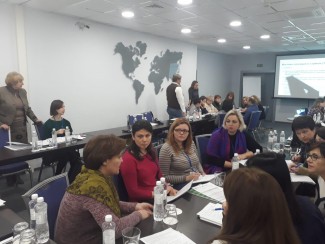
UNODC and WHO Organize International Training on Substance Use Treatment and Care during Pregnancy
Kyiv (Ukraine), 18 December 2019 - The United Nations Office on Drugs and Crime (UNODC) jointly with the World Health Organization (WHO) in the framework of the UNODC-WHO Programme on Drug Dependence Treatment and Care, organized an...
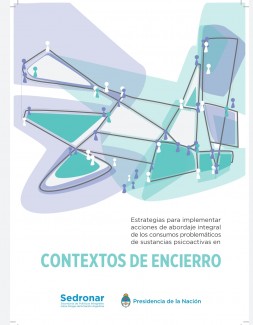
Prevention in lockdown contexts
The material promotes the development of intervention strategies for a comprehensive and networked approach to problematic substance use in areas of deprivation of liberty. Encouraging the participation of detainees, their families, prison...
UNODC Training on the Nature, Prevention and Treatment of Drug Use Disorders for Intersectoral Group of Panama Policymakers
Thirty-four (34) high-level decision makers from CONAPRED, the Ministries of Health, Education and Social Development, NGOs and other entities are participating in a three-day workshop on creating humane, effective and evidence-based drug...