
The activities of authorised agencies such as police, customs, border services, and investigative bodies to enforce drug control laws and address criminal activities related to the production, trafficking, and distribution of illicit substances. These activities may include investigations, intelligence gathering, interdiction, and collaboration with national and international partners to disrupt organised crime networks. Law enforcement plays an important role in protecting public safety and maintaining the rule of law, and is most effective when coordinated with broader public health, prevention, treatment, and recovery efforts as part of a balanced and comprehensive response to substance use.
Law Enforcement
Bi-Monthly Webinar: ISSUP Nigeria Knowledge Update Series (Ninth Session)
ISSUP Nigeria would like to present the next Bi-Monthly Webinar in their Knowledge Update Series. This Webinar will focus on the 'Learning Experience from Claremont University Graduate Course in Media Science for Evidence-Based Drug Use Prevention'.
Cocaine Insights 2
In the context of an ongoing expansion of the global cocaine market, this report summarizes the current state of knowledge on what cocaine consumer products are and how they are produced and consumed in different world regions. The report...
INL's Webinar Week
The U.S. Department of State's Bureau of International Narcotics and Law Enforcement Affairs (INL) presents the third annual event on partnering with the private sector to address the world drug problem. The private sector can play a major...
UTC 4A Training Report - September 2021
The Colombo Plan Drug Advisory Programme is pleased to share this Training Report on Universal Treatment Curriculum 4A, psychoeducation for clients & Families.
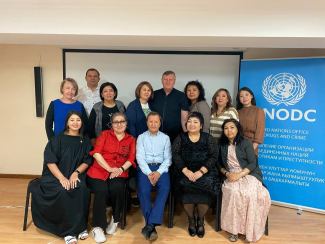
UNODC Trains Team of National Trainers from Kyrgyzstan within the Advanced Level of the Universal Treatment Curriculum for Substance Use Disorders
The UNODC Regional Office for Central Asia supported a training of trainers (ToT) on the Course 11 “Enhancing Motivational Interviewing Skills”. This course is part of the Advanced Level of the Universal Treatment Curriculum for Substance...
COVID-19 & Substance Use in Canada: Impacts on Consumption, Services, and Service Providers
ISSUP are pleased to present their Webinar on COVID-19 & Substance Use in Canada: Impacts on consumption, services, and service providers, presented by the Canadian Centre on Substance Use and Addiction (CCSA).
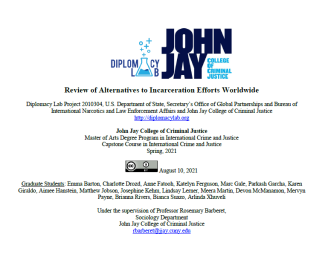
Review of Alternatives to Incarceration Efforts Worldwide
Research from John Jay College of Criminal Justice in partnership with the Department of State’s Diplomacy Lab Project on the readiness of countries to expand alternatives to incarceration (ATIs) for persons with substance use disorders (SUDs).
Periods of altered risk for non-fatal drug overdose
The risk of an individual overdosing is influenced by a range of, often overlapping circumstances. Factors such as incarceration, mental and physical health conditions, and the treatments prescribed for these conditions can all affect the...
Community-based prevention implementation system in Uganda
Uganda is one of the countries in East Africa with an outdated policy on substance use and abuse. The World Health Organization highlights Uganda as a country with hazardous drinking patterns due to the high prevalence of alcohol...
Prison and drugs in Europe - current and future challenges
Objective: to discuss the results of the report Prison and drugs in Europe: current and future challenges Insights with key customers. Invited Stakeholders: - Heino Stöver, Institute for Addiction Research Organization Frankfurt University...