
The range of medical, psychological, and social services designed to help individuals reduce or stop substance use and manage substance use disorders. Treatment may include assessment, counselling and behavioural therapies, medication-assisted treatment, withdrawal management, and support for co-occurring mental or physical health conditions. Effective treatment is typically person-centred and evidence-informed, and may be provided in outpatient, community, or residential settings. Treatment aims to improve health and functioning, reduce substance-related harms, and support individuals in moving toward recovery and long-term wellbeing.
Treatment
Canadian Substance Use Costs and Harms 2007–2014
In 2014, the cost of substance use (SU) in Canada was $38.4 billion— or approximately $1,100 spent for every Canadian regardless of age. This report presents the estimates of the costs of SU in Canada from 2007 to 2014 using the most...
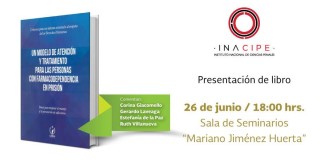
Presentación Libro: A model of care and treatment for people with drug dependence in prison
Book presentation:
"A model of care and treatment for people with drug dependence in prison"
Comment
Corina Giacomello
Gerardo Laveaga
Estefania de la Paz
Ruth Villanueva
National Institute of Criminal Sciences
June 16, 2018
18:00 hrs
"Mariano Jiménez Huerta" seminar room
Facebook Will Redirect Searches about Opiates to SAMHSA Support Services
Many news outlets are reporting on a newly introduced feature of Facebook to help support people who use opiate drugs.
Family Management Risk and Protective Factors for Adolescent Substance Use in South Africa
Abstract Background An increasingly recognised prevention approach for substance use entails a reduction in risk factors, and the enhancement of promotive, or protective factors in individuals and the environment surrounding them during...
Effectiveness Bank Matrix Cell: Performance Feedback Critical to Workforce Development
Seminal and key studies on management and supervision in psychosocial therapies for problem drug use. Findings challenge managers to invest in the post-training ‘coaching’ needed to make a difference for patients, and to set up systems...
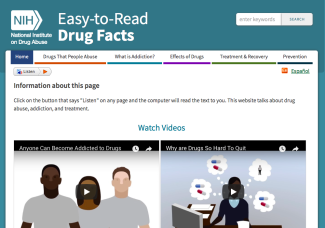
NIDA Easy to Read Drug Facts
If you are searching for a simple format way to communicate the key issues around drugs then the National Institute on Drug Abuse (NIDA) website may offer a multi-media solution. The Easy to Read Drug Facts section of the NIDA website...
Auditor General Slams 'Unacceptable' Lack of Treatment for Mentally Ill Inmates
New Brunswick jails aren't offering any addiction treatment or therapy for mentally ill inmates, according to the province's auditor general. Kim MacPherson's investigation into treatment in jails revealed a patchwork system where no one is...
SAMHSA Announces $930 Million Funding Opportunity to Combat the Opioid Crisis
The Substance Abuse and Mental Health Services Administration (SAMHSA), an agency within the Department of Health and Human Services (HHS), is now accepting applications for $930 million in State Opioid Response Grants. SAMHSA will...
Using the National Hospital Care Survey (NHCS) to Identify Opioid-Related Hospital Visits
Presenters:
Margaret Noonan, Team Lead, Hospital Care Team, National Center for Health Statistics (NCHS)
Carol DeFrances, Ph.D., Chief, Ambulatory and Hospital Care Statistics Branch, National Center for Health Statistics (NCHS)
Date: Tuesday, June 19, 2018
Application of the Consolidated Framework for Implementation Research to Assess Factors that May Influence Implementation of Tobacco Use Treatment Guidelines in the Viet Nam Public Health Care Delivery System
Abstract Background Services to treat tobacco dependence are not readily available to smokers in low-middle income countries (LMICs) where smoking prevalence remains high. We are conducting a cluster randomized controlled trial comparing...