
Psychoactive substances are natural or synthetic substances that act on the central nervous system and alter mental processes such as mood, perception, cognition, consciousness, and behaviour. These substances may be legally prescribed medications (e.g., pain medications or sedatives), legally available substances such as alcohol or caffeine, or controlled or illicit drugs. Psychoactive substances can be used for medical, social, cultural, or recreational purposes, but some carry risks of misuse, dependence, and health or social harms when used in harmful ways.
Psychoactive Substances
Treating Children for Substance Use Disorders: Current Evidence and Vision for the Future
Presented at Thessaloniki 2024 - Panel: Identifying, Assessing and Treating Children for Substance Use Disorders: Data and Experiences from Across the Globe, on the 27th of June, 2024.
Measuring the Effectiveness of Rehabilitation for Clients in Outpatient Clinic Setting: Are There Differences from the Type of Substances Used and the Level of Drug Dependence?
Presented at Thessaloniki 2024 - Panel: Empowering Recovery: Innovative Approaches and Effectiveness in Addiction Intervention, on the 27th of June, 2024.
Resilience
Presented at Thessaloniki 2024 - Panel: Empowering Recovery: Innovative Approaches and Effectiveness in Addiction Intervention, on the 27th of June, 2024.
Role of the University in Systems Change through the Lens of the ITTC Peru: analysis of the experience of a cascade training model
Presented at Thessaloniki 2024 - Panel: Systems Change and the Role of the University through the lens of the ITTC Network: Part 2, Sample ITTC Initiatives in Vietnam, South Africa and Peru, on the 27th of June, 2024.
CHildren AMplified Prevention Services (CHAMPS): A Unique Initiative to Amplify the Resilience of Children from Birth to Adolescence to Prevention the Use of Drugs and Other Psychoactive Substances
Presented at Thessaloniki 2024 - Panel: Community Collaboration for Prevention, on the 27th of June, 2024.
Regional Evidence-Based Prevention Hub: A proposal to close quality gaps in prevention initiatives in the region
Presented at Thessaloniki 2024 - Panel: Quality Standards for Prevention – Challenges in Latin America and the Caribbean, on the 26th of June, 2024.
School Psychoactive Substance Use Prevention Intervention Quality Model
Presented at Thessaloniki 2024 - Panel: Quality Standards for Prevention – Challenges in Latin America and the Caribbean, on the 26th of June, 2024.
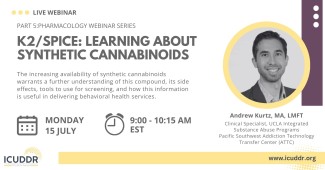
K2/Spice: Learning about Synthetic Cannabinoids
Time: 9AM - 10:15AM Eastern Time
The increasing availability of synthetic cannabinoids warrants a further understanding of this compound, its side effects, tools to use for screening, and how this information is useful in delivering behavioral health services.
Speaker:
Andrew Kurtz, MA, LMFT
The Process of the Implementation of Quality Standards in Drug Prevention in Croatia: A Case Study
INTRODUCTION: Prevention science and quality standards of drug prevention in the EU and in the world have developed in recent decades. Progress has been made in quality development in Croatia, but the experience of the process of improving...
Implementing Quality Measurement in the Field of Drug Treatment and Harm Reduction: A Case Study in Flanders
BACKGROUND: Implementing quality measurement is still a challenge in the field of drug treatment and harm reduction. In this case study, we investigate which strategies can be used to enhance the implementation of a policy in which quality...