
The range of medical, psychological, and social services designed to help individuals reduce or stop substance use and manage substance use disorders. Treatment may include assessment, counselling and behavioural therapies, medication-assisted treatment, withdrawal management, and support for co-occurring mental or physical health conditions. Effective treatment is typically person-centred and evidence-informed, and may be provided in outpatient, community, or residential settings. Treatment aims to improve health and functioning, reduce substance-related harms, and support individuals in moving toward recovery and long-term wellbeing.

Treatment
Alcohol related thiamine deficiency
Thiamine, also known as vitamin B1, is an essential nutrient used by the body to convert food into energy. Thiamine deficiency, although rare in most developed countries, is common in people who drink excessive amounts of alcohol.
Patterns of Cannabis and Alcohol Co-Use Substitution Versus Complementary Effects
ABSTRACT PURPOSE: The purpose of this review is to discuss the literature regarding the concurrent use (co-use) of alcohol and cannabis and competing hypotheses as to whether cannabis acts as a substitute for (i.e., replacing the effects of...
Outcomes After Implementation of a Benzodiazepine-Sparing Alcohol Withdrawal Order Set in an Integrated Health Care System
Abstract Importance Alcohol withdrawal syndrome (AWS) is a common inpatient diagnosis managed primarily with benzodiazepines. Concerns about the adverse effects associated with benzodiazepines have spurred interest in using benzodiazepine...
Therapeutic community-oriented day treatment program for Korean women with alcohol use disorder: A non-randomised pilot feasibility trial
Abstract Background The prevalence of alcohol use disorder (AUD) among women in South Korea has been rising, causing public health problems. Yet women’s treatment needs are mostly unmet in South Korea due to the lack of women-focused...
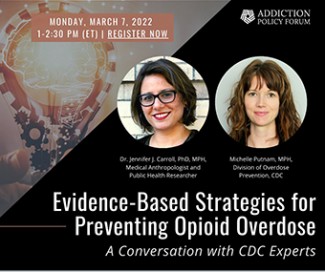
Evidence-Based Strategies for Preventing Opioid Overdose
Join the Addiction Policy Forum on March 7th from 1-2:30 p.m. (ET) for a webinar and Q&A to discuss key strategies to preventing opioid overdose with experts from the Centers for Disease Control and Prevention (CDC).
The Clinician’s Guide to Addressing Medical Cannabis in Substance Use Treatment Settings
According to the National Survey on Drug Use and Health, cannabis use rates increased in 2020, with almost 50 million individuals 12 or older reporting use of cannabis in the past year. This increase is reflected in the state-specific data for HHS Region 8 in five of the six states (Colorado, Montana, North Dakota, South Dakota, and Utah).
Staff preferences towards electronic data collection from a national take-home naloxone program: a cross-sectional study
Abstract Background During the scaling-up of a national Norwegian take-home naloxone (THN) program, data collection methods shifted from paper-based to electronic. The aim of this study was to explore staff preferences towards the shift in...
The prevalence and pattern of cannabis use among patients attending a methadone treatment clinic in Nairobi, Kenya
Abstract Background Cannabis use during methadone treatment may negatively impact treatment outcomes. The aim of this study was to determine the prevalence and pattern of cannabis use among patients attending a methadone treatment clinic in...
Prevalence and associations of metabolic syndrome in patients with alcohol use disorder
Abstract Excessive alcohol consumption has been associated with different components of the metabolic syndrome (MetS) such as arterial hypertension, dyslipidemia, type 2 diabetes or obesity. We aimed to analyze the prevalence and...
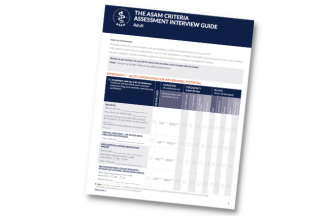
Free ASAM Criteria® Assessment Interview Guide
Source: https://sitefinitystorage.blob.core.windows.net/sitefinity-production-blobs/docs/default-source/quality-science/021122-asam-paper-criteria.pdf?sfvrsn=12032b4a_3 The ASAM Criteria® Assessment Interview Guide is the first publicly...