Knowledge Share
These resources are automatically provided by the ISSUP Knowledge Share.
Law Enforcement Pre-Arrest Diversion Resource Guide
The Law Enforcement Pre-Arrest Diversion Resource Guide, developed by SAFE Project in collaboration with the Police, Treatment, and Community Collaborative (PTACC), provides practical guidance on alternatives to arrest for individuals...
Youth Recovery: Supporting Adolescents and Young Adults – Reading List
In this reading list, we provide resources exploring recovery from substance use disorders among adolescents and young adults, with a particular focus on recovery capital, supportive educational environments, and community-based recovery...

Participant Experiences of a Collegiate Recovery Program on a UK University Campus
This study, published in Alcoholism Treatment Quarterly, explores the experiences of university students participating in Better Than Well, a university-led Collegiate Recovery Program at the University of Birmingham in the United Kingdom...

Community support and youth recovery: the mediating role of peer and parental disapproval
This study, published in Frontiers in Adolescent Medicine, examines the relationship between community recovery support, parental and peer attitudes towards substance use, and recovery among young people. Using data from the 2022 Illinois...

Adaptation of the Multidimensional Inventory of Recovery Capital (MIRC) to the Czech Environment
INTRODUCTION: While international attention toward addiction recovery research is growing, in the Czech environment there is still a lack of research data and tools for measuring this concept. The primary objective of the research project...
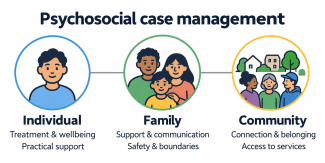
Psychosocial case management: connecting treatment, relationships and community recovery
Psychosocial case management connects evidence-based treatment with the practical and relational support needed for sustained recovery. Its clearest benefits are helping people access services and remain engaged in care. Individual care should consider housing, mental health, meaningful activity and continuity of support after discharge. Families and affected communities also need support, with involvement guided by consent, safety and individual circumstances. For treatment and prevention, interventions should address identified needs, draw on relevant evidence and be reviewed as circumstances change.