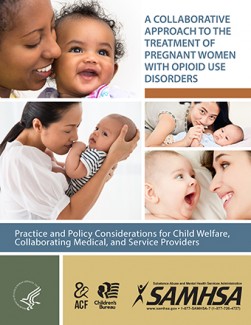
This manual offers best practices to states, tribes, and local communities on collaborative
treatment
approaches for pregnant women living with opioid use disorders (OUD), and the risks and benefits associated with
medication-assisted treatment
.
Peer recovery support services are increasingly becoming an important part of the behavioral healthcare workforce. They not only help people with behavioral health conditions connect to, engage in, and be active participants in
treatment
and recovery support services but they can also change the culture of an organization in a positive way.
With the goal of supporting the increase of Peer Recovery Support Specialists in the workforce, NAADAC presents their new FREE Peer Recovery Support webinar series presented by nationally recognized trainers.
This guide assists providers in offering
treatment
to women living with substance use disorders. It reviews gender-specific research and best practices, such as common patterns of initial use and specific treatment issues and strategies.
Aleksander H. Erga, Audhild Hønsi, Liss Gøril Anda-Ågotnes, Sverre Nesvåg, Morten Hesse & Egon Hagen (2020) Trajectories of psychological distress during
recovery
from
polysubstance use
disorder,
Addiction
Research & Theory, DOI: 10.1080/16066359.2020.1730822
Abstract
Introduction: Polysubstance use is a prevalent substance use pattern with adverse effects on psychological distress and diminished
treatment
outcomes. Although polysubstance use often dominates clinical practice, the trajectories of substance use and psychological distress in the initial phase of treatment have been subject to few empirical investigations.
Material and Methods: 141 patients initiating inpatient or outpatient treatment for substance use disorder were followed for 12 months, using multiple assessments. We assessed psychological distress and substance use at baseline...
UPSIDES stands for Using Peer Support In Developing Empowering Mental Health Services and is a consortium of scientists, mental health professionals, stakeholders and peer workers from six countries in Europe (Germany and UK), Africa (Uganda, Tanzania) and Asia (Israel and India). Peer support is...
Wednesday, September 16, 2020 @ 3-5:00pm ET (2CT/1MT/12PT)
Description
A relational approach to
addictiontreatment
is the missing component in most contemporary addiction models, even though this default assumption conflicts with most...
This Northwest ATTC webinar, presented by Lydia Bartholow, DNP, PMHNP, CARN-AP, investigates the connection between psychological trauma and substance use disorders, the neurobiological adaptations that arise in response to trauma, and the ways in which these same adaptations make one vulnerable to...
9 out of 10 people with substance abuse problems started using by age 18. What puts someone at risk for early onset drug or alcohol use? is is heritable? How are brain circuits involved? UCSF doctors answer these questions and discuss detection, diagnoses and treatment. Series: "UCSF Osher Center...
Kiluk, B. D., Ray, L. A., Walthers, J. , Bernstein, M. , Tonigan, J. S. and Magill, M. (2019), Technology‐Delivered Cognitive‐Behavioral Interventions for Alcohol Use: A Meta‐Analysis. Alcohol Clin Exp Res. doi:10.1111/acer.14189
Cognitive Behaviour Therapy (CBT) is one of the most researched
treatment
options for Alcohol Use Disorder. In order to make CBT as accessible and effective as possibles, researchers have been investigating different versions and ways to deliver CBT.
The use of technology as a platform to deliver CBT has been an exciting project that researchers hope will make the therapy more available to people who require support.
A recent meta-analysis has examined the evidence for technology-delivered, CBT-based interventions targeting alcohol use.
Following the elimination process, the researchers...
Every September the
Recovery
Month Campaign aims to increase awareness and understanding of mental and substance use disorders and celebrate the people who recover.
Over the years, Recovery Month has promoted and supported new evidence-based
treatment
and recovery practices, the strong and proud recovery community, and dedication of service providers and community members across the nation who make recovery in all its forms possible.
The SAMHSA Recovery Month 2019 theme is Join the Voices for Recovery: Together We Are Stronger, placing emphasis on the need to share resources and build...
INL just released a video on its efforts to support prevention,
treatment
and
recovery
worldwide in this short video in support of recognizing recovery month
The Collaborate Care Planning Project (COCAPP) studies mental health risk, care planning and therapeutic relationships. This podcast interview with Alan Simpson and Sarah Carr explores the importance of assessing and managing risk, how to make care planning work for staff and service users, and what constitutes a positive therapeutic relationship.
Along the way, the podcast will touch on the impact that austerity is having on the lives of service users, carers and staff, and we discuss what needs to be done to make research a central component of frontline mental health practice.
Bliuc, Ana‐Maria, Tuyet‐Ngan Doan, and David Best. "Sober social networks: The role of online support groups in
recovery
from alcohol
addiction
." Journal of Community & Applied Social Psychology 29, no. 2 (2019): 121-132.
A recent study has analysed evidence for the value of online social networks in supporting recovery from alcohol addiction.
The Recovery Collective are pleased to announce Scotland's first ever alcohol and drug-free festival Recovery Connects at Queen's Park Arena on Sunday 12th May!
Alongside an amazing line up of acts, the festival will also provide
addiction
...
What does addiction feel like and what is the potential impact?
The easy to use website also includes a list of commonly used definitions relating to addiction and lists links to several guides, resources, articles and books addressing addiction and evidence-based practice.
Join us for the 7th Annual Clinical Overview of the
Recovery
Experience (CORE), a C4 Recovery Foundation event. Last year, CORE hosted 496 participants from 36 states from a diverse range of fields.
Join us for this premier behavioral healthcare event and see how we’re creating a unique experience through numerous networking opportunities, a challenging and dynamic agenda, spotlighting programs and services, and much more. Enjoy the...
Application Due Date: Monday, May 6, 2019 SAMHSA is accepting applications for First Responders-Comprehensive Addiction and Recovery Act (FR-CARA) Grants. Recipients will train and provide resources to first responders and members of other key community sectors at the state, tribal, and local...
Register now: https://us06web.zoom.us/webinar/register/WN_roOde7kSTk2jwbC15j3jfg#/registration Thursday, June 11, 2026, 13:00 ET (Washington, DC time) Join Addiction Policy Forum on June 11, 2026, for a webinar exploring the science of...