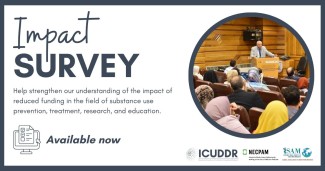
The Global Recovery Network is committed to providing valuable and relevant content for our community.
To ensure our upcoming webinar series aligns with the needs and interests of our audience, we have developed this survey with U.S. based Faces and Voices of Recovery to determine which topics may be of most relevance. Our goal is to offer webinars that not only inform but also develop and build skills that support recovery, advocacy, and professional growth.
Your feedback is crucial in helping us design a webinar series that resonates with and benefits you.
Villanueva-Blasco, V. J., Espitia-Cepeda, C., Vázquez-Martínez, A., Simó-Algado, S., & Amado, B. G. Relación entre depresión y consumo de alcohol en población latinoamericana en función del sexo y la edad. Acciones E Investigaciones Sociales, (46). Recuperado a partir de https://papiro.unizar.es/ojs/index.php/ais/article/view/11059
English:
The comorbidity between depression and alcohol consumption is a public health concern, affecting progression, treatment adherence, and outcomes. Alcohol use in Latin America exceeds the global average. This study examined the prevalence of depressive symptoms and risky alcohol consumption, considering gender and age, in 4,890 participants (ages 18-64) from six Latin American countries. Results showed women had higher risky alcohol consumption and more severe depressive symptoms than men. Younger adults (18-24) reported more depression symptoms. Women with risky alcohol consumption...
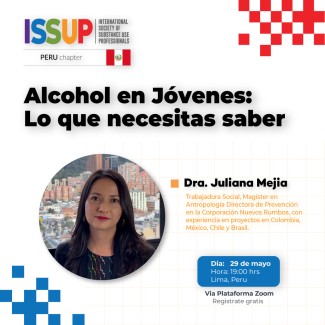
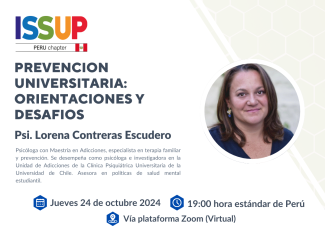
Higher education institutions are a central context for the prevention of substance use in young people, as they provide a context of strong influence on the behavior of their students. There are evidence-based prevention strategies for the university population and, in this sense, institutional policies can act effectively by incorporating the entire community.
In this webinar we will review the main guidelines for evidence-based prevention in educational contexts, lessons learned from implementation experience, and challenges that may arise in practice.
Latin Amerika ve Afrika'daki son toplantıların ve etkinliklerin ayrıntıları için en son bültenimizi kaçırmayın. Bu sayı aynı zamanda UTC16 Self Led Course ile ileri klinik becerilerin nasıl kazanılacağına dair bilgileri de içermektedir.
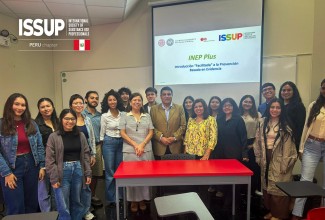
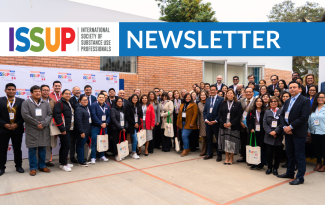
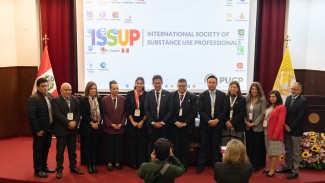
26-27 Eylül tarihleri arasında düzenlenen 2. Yıllık ISSUP Peru Konferansı, ülkede bağımlılık önleme ve tedavi stratejilerinin geliştirilmesi için önemli bir etkinlik oldu. Bu toplantı, halk sağlığı ve adalet ile ilgili kritik konuları ele almak için ulusal ve uluslararası uzmanları bir araya getirdi.
Tartışılan ana konulardan biri, Peru'da yasalarla çatışan ergenleri yönetmek için daha insancıl ve etkili çözümler sunmayı amaçlayan, ceza yerine rehabilitasyona öncelik veren onarıcı bir yaklaşımla ergenler için terapötik adaletti. Ek olarak, Kadınlar için Bölgesel Tedavi Ağı'nın oluşturulması...
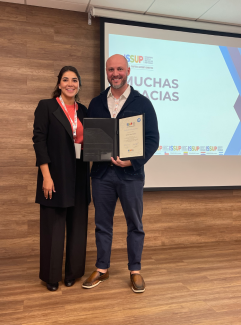
ISSUP adına, Eylül 2021'den 2024'e kadar ISSUP Ulusal Bölümleri Danışma Komitesi Başkanı olarak olağanüstü liderliği ve özverili çalışmaları için Samuel Bettiol'a en derin şükranlarımızı sunarız.
Görev süresi boyunca Samuel, ISSUP Ulusal Bölümlerinin tüm bölgelerdeki çabalarına rehberlik etmede ve güçlendirmede çok önemli bir rol oynadı, işbirliğini geliştirmeye ve ISSUP'un misyonunun küresel olarak etkisini artırmaya yardımcı oldu. Bağlılığı ve vizyonu, Danışma Komitesi ve bu süre zarfında birlikte çalıştığı kişiler üzerinde kalıcı bir iz bırakmıştır.
Villanueva-Blasco, V. J., Villanueva-Silvestre, V., Belda Ferri, L., Vázquez- Martínez, A., Isorna Folgar, M., Canay, R. y Abad Villaverde, B. (2024). Consumo de alcohol durante el COVID-19 en Latinoamérica según edad y situación de empleo. Revista Española de Drogodependencias, 49(1), 15-30. https://doi.org/10.54108/10073
This research evaluated alcohol consumption in the Latin American and Latin Caribbean adult population during COVID-19 confinement, taking into account age and employment status. Non-probabilistic design with convenience sampling, with a sample of 4975 participants. Age, employment status and alcohol consumption were analysed during confinement and retrospectively before the pandemic. The results show that regardless of the country, young people aged 18-29 decreased consumption during confinement; while the largest in- crease was in adults aged 45-54 years. Full-time workers consumed more than...
Learn about global drug trends from the authors of the World Drug Report 2024!
UNODC experts will present the World Drug Report 2024, giving an overview of the latest developments and diving into the most up-to-date global data. In the...
A global reference on drug markets, trends and policy developments, the World Drug Report offers a wealth of data and analysis and in 2024 comprises several elements tailored to different audiences.
VERÓNICA BRASESCO, MARÍA; ESPINO PAZOS, SEBASTIÁN, Acta Psiquiátrica y Psicológica de América Latina, 2022, Vol 68, Issue 3, p187
The present work seeks to analyse whether there is a relationship between the development of depression disorder and Internet addiction. For its development, the results of the Beck Depression Inventory were evaluated in a group of 60 subjects who were also administered the Young Internet Addiction Test between the months of September and October 2021. The population consisted of young adults (between 18 and 29 years old) residing in the City of Buenos Aires and Gran Buenos Aires. Among the general results we can mainly highlight the clear relationship between both variables.
Stimulants are a class of drugs that act on the central nervous system, increasing alertness, energy, and attention while elevating mood. They achieve these effects by enhancing the activity of neurotransmitters such as dopamine and norepinephrine in the brain.
Many stimulant-related hazards are linked to intensive, high-dose, or long-term usage. The mode of administration plays a significant moderating role; injecting stimulants and smoking crack cocaine or methamphetamine have been specifically associated with more problematic use behaviours. Even people who use stimulants sporadically or...