Treatment Settings

Various treatment formats, either in a live-in facility or through regular visits to a clinic, are designed for ongoing support, to help maintain recovery, and to prevent relapse. 

The role of specialist Addiction Nurses in alcohol treatment

Website
A new study from the University of Dundee and University of Stirling highlights the impact of placing specialist Addiction Nurses (ANs) within primary care teams to support individuals with serious alcohol problems in disadvantaged...
Intermediate Motivational Interviewing

Event Date
 - 
Online
- Global -
Attendance
online

Motivational interviewing (MI) is a client-centered, evidence-based, goal-oriented method for enhancing intrinsic motivation to change by exploring and resolving ambivalence with the individual. This active, skill-building workshop provides participants with a review of the spirit and micro skills of MI, and focuses on using the strategies of the model to elicit change talk in conversation.

The American Association for the Treatment of Opioid Dependence Conference 2025

Event Date
 - 
Philadelphia
United States
Attendance
person

The American Association for the Treatment of Opioid Dependence works with federal and state agency officials concerning opioid treatment policy throughout the United States. We also work with our partner, the World Federation for the Treatment of Opioid Dependence, with regard to international initiatives and working with designated agencies within the United Nations.
 

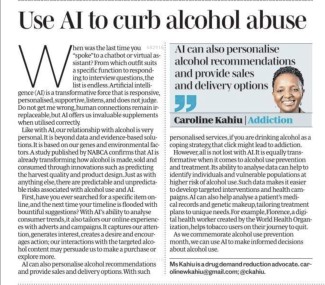
Use Artificial Intelligence To Curb Alcohol Abuse

Opinion piece, commentary
 - 
When was the last time you “spoke” to a chatbot or virtual assistant? From which outfit suits a specific function, responding to interview questions, recipes, today’s weather, gift ideas, the list is endless. Just as we asked where we would...

An Affirming and Effective Substance Use Disorder Curriculum for the LGBTQ+ Community

Event Date
 - 
Online
- Global -
Attendance
online

Studies have shown that people in the LGBTQ+ community are four times more likely to struggle with a substance use disorder. Although this population is at much higher risk, there has been a significant shortage of affirming services explicitly designed to meet their needs. This presentation will show how the new EABT substance use disorder curriculum designed specifically for the LGBTQ+ community is helping to fill that void.