
The range of medical, psychological, and social services designed to help individuals reduce or stop substance use and manage substance use disorders. Treatment may include assessment, counselling and behavioural therapies, medication-assisted treatment, withdrawal management, and support for co-occurring mental or physical health conditions. Effective treatment is typically person-centred and evidence-informed, and may be provided in outpatient, community, or residential settings. Treatment aims to improve health and functioning, reduce substance-related harms, and support individuals in moving toward recovery and long-term wellbeing.
Treatment
Reduction of mortality through improved detection of high blood pressure and problems with alcohol in primary health care in Spain
Overview The potential benefits that can lead to an improvement in the detection and treatment of high blood pressure and alcohol-related problems are studied through a simulation. The results show that if Spanish 50% of men between 40 and...
Contribution of Alcohol Use Disorders to the Burden of Dementia in France 2008–13
Summary Background Dementia is a prevalent condition, affecting 5–7% of people aged 60 years and older, and a leading cause of disability in people aged 60 years and older globally. We aimed to examine the association between alcohol use...
Women and drug treatment
Guide to clinical advice for treatment and rehabilitation programs in drugs in specific population of adult women. Are you an ISSUP member? If not, you can join ISSUP by registering here: https://www.issup.net/membership/apply Are a part of...
Is Smoking a Risk Factor for Tinnitus? A Systematic Review, Meta-Analysis and Estimation of the Population Attributable Risk in Germany
Abstract Objective: To assess the epidemiological association of smoking status and tinnitus with a systematic review and meta-analysis and to estimate the population attributable risk in Germany. Data sources: A systematic literature...
Certification of Addiction Professionals in Africa: An Overview of the Process in Kenya
Abstract This paper focuses on Kenya’s course of action to address the drug problem, specifically, treatment and rehabilitation of persons with Substance Use Disorders (SUDs). Treatment and rehabilitation of persons with SUDs was formally...
Extent and Patterns of Drug Use among Persons with Disabilities in Kenya
Abstract Background: Although some data existed suggesting that there was high prevalence of drug use among the general population in Kenya with 39-48% of 15-65 year olds having used alcohol and at least one other substance, there was a...
3rd ICUDDR Conference
The 3rd ICUDDR Conference will take place in San Diego from June 4 – 5, 2018.
Supervised Dosing with a Long-Acting Opioid Medication in the Management of Opioid Dependence
Trials challenge the need for the widely accepted policy of making opioid-dependent patients take their methadone or other opioid substitutes at the clinic or pharmacy, but ‘no difference’ findings may be due to the limitations of the...
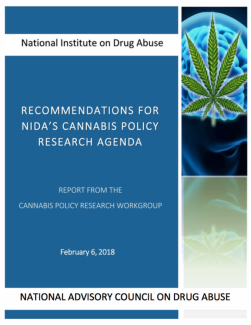
Recommendations for NIDA's Cannabis Policy Research Agenda
The National Institute on Drug Abuse (NIDA) has released a new report Recommendations for NIDA's Cannabis Policy Research Agenda. The document has been prepared by the National Advisory Council on Drug Abuse Workgroup which was formed in...
The Winding Road to Relapse: Forging a New Understanding of Cue-Induced Reinstatement Models and their Associated Neural Mechanisms
In drug addiction, cues previously associated with drug use can produce craving and frequently trigger the resumption of drug taking in individuals vulnerable to relapse. Environmental stimuli associated with drugs or natural reinforcers...