
The range of medical, psychological, and social services designed to help individuals reduce or stop substance use and manage substance use disorders. Treatment may include assessment, counselling and behavioural therapies, medication-assisted treatment, withdrawal management, and support for co-occurring mental or physical health conditions. Effective treatment is typically person-centred and evidence-informed, and may be provided in outpatient, community, or residential settings. Treatment aims to improve health and functioning, reduce substance-related harms, and support individuals in moving toward recovery and long-term wellbeing.

Treatment
Time‐Dependent Neuronal Changes Associated with Craving in Opioid Dependence: An fMRI study
Abstract Relapse after initially successful treatment is a significant problem facing the treatment of opioid dependence. Evidence suggests craving elicited by re‐exposure to drug cues may precipitate relapse. Attempts to identify neural...
Implementing a Mobile Health System to Integrate the Treatment of Addiction into Primary Care
A recent study carried out by a team of researchers from the University of Wisconsin School of Medicine and Public Health examined the use of mobile health technology in the United States’ health care system. Published in the Journal of...
New Dataset Made Available from Study of Adolescent Brain Development
In February of 2018 the US National Institute of Health (NIH) released the first dataset from an "unprecedented study of adolescent brain development", the Adolescent Brain Cognitive Development (ABCD) study. The study has, to date...
A Randomized, Open Label Trial of Methadone Continuation versus Forced Withdrawal in a Combined US Prison and Jail: Findings at 12 Months Post-Release
Research carried out in in North America has found that offering continued methadone maintenance to those entering the prison system can have positive outcomes.
Cost‐Effectiveness of Alternative Smoking Cessation Scenarios in Spain
Abstract Aims To assess the cost‐effectiveness of alternative smoking cessation scenarios from the perspective of the Spanish National Health Service (NHS). Design We used the European study on Quantifying Utility of Investment in...
Our Invisible Addicts
Older adults are often overlooked or even illegally excluded from treatment and support. A recent report found that 75% of residential rehabilitation centres had arbitrary upper age limits and had limited or no disabled access, and follows...
Tratamiento de tabaquismo intenso después de un infarto agudo de miocardio
Resumen El tabaquismo es una enfermedad crónica que afecta a una quinta parte de nuestra población. No obstante, la mayoría de los fumadores no busca tratamiento de su enfermedad ni la considera tal. Algunos pacientes logran controlar la...
Methadone Induction in Primary Care for Opioid Dependence: A Pragmatic Randomized Trial
From France the first study to randomly allocate patients to start methadone maintenance either in primary care or at a specialist centre found primary care more attractive to patients and no less safe or effective at reducing street-opioid...
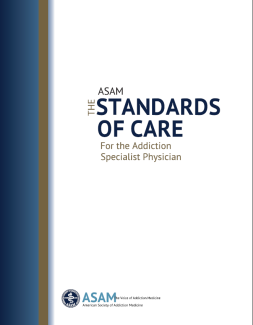
The American Society of Addiction Medicine Standards of Care
This document is a useful resource for physicians that manage care services of patients with drug use disorders and its related consequences. It is intended to support quality improvement activities conducted by health care provider systems...
Genomic and Bioinformatics Approaches for Analysis of Genes Associated with Cancer Risks Following Exposure to Tobacco Smoking
Cancer is a significant health problem in the Middle East and global population. It is well established that there is a direct link between tobacco smoking and cancer, which will continue to pose a significant threat to human health. The...