
The range of medical, psychological, and social services designed to help individuals reduce or stop substance use and manage substance use disorders. Treatment may include assessment, counselling and behavioural therapies, medication-assisted treatment, withdrawal management, and support for co-occurring mental or physical health conditions. Effective treatment is typically person-centred and evidence-informed, and may be provided in outpatient, community, or residential settings. Treatment aims to improve health and functioning, reduce substance-related harms, and support individuals in moving toward recovery and long-term wellbeing.
Treatment
A Step‑Wise Community Engagement and Capacity Building Model Prior to Implementation of mhGAP‑IG in a Low and Middle‑Income Country
Abstract Background The World Health Organization developed the Mental Health Gap Action Programme Intervention Guide (mhGAP-IG) as guidelines for innovative utilization of available resources in low- and middle-income countries (LMICs) in...
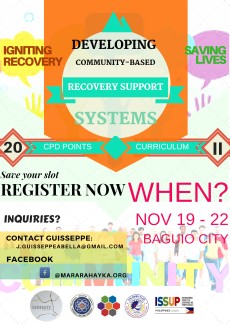
Developing Community-Based Recovery Support Systems
Serenity in The Steps, an approved education provider of Colombo Plan Drug Advisory Program (CPDAP) will be conducting a training/workshop on Developing Community-Based Recovery Support Systems Training Series II in Baguio City.
We are inviting those interested to join our training on November 19 - 22, 2018 headed by Mr. Clemente "Junjun" Abella Jr. MAC RGC ICAP III ICRC.
Maldives under the Burden of Drugs - Originally Published on 19th May 2014
We are in dire need of better understanding the nature and extent of the impact of drug abuse in the Maldives and only through this understanding will we be able to make the decisions to identify appropriate strategies to combat the problem...
Substance Use and the Maldives
There are decades’ worth of evidence from around the world to guide us; we need to follow it. Given the importance of the issue, I say let’s do all interventions that have shown promising results. But what does this mean for drug use in...
Media Guide for Journalists
The National Institute on Drug Abuse (NIDA) has released a new guide for journalists in the field of drug abuse and treatment. The purpose of this guide is to provide journalists with fast and user-friendly access to the latest scientific...
Quality Treatment for Substance Use Disorders
It is important that people wishing to access treatment for substance use disorder are informed about the quality of care they will receive. A new fact sheet has been developed by the Substance Abuse and Mental Health Services...
Opioid Treatment Resources
Emergency departments are often the first point of contact for individuals who have overdosed or suffering from the effects of opioids. Despite the vital role practitioners within this service provide, there has been, up until now, little...
Effectiveness Bank Matrix Cell: Crime-Reducing Drug Treatment Systems
Last of the 25 cells of the Drug Treatment Matrix explores research on how local treatment systems can protect the community – treatment in itself, and treatment offered or imposed by law enforcement authorities. The task is to meld...
World Mental Health Day 2018
The World Health Organization defines mental health as “a state of well-being in which every individual realizes his or her own potential, can cope with the normal stresses of life, can work productively and fruitfully, and is able to make...
How Cocaine Cues Get Planted in the Brain
Individuals suffering from substance use disorders develop strong associations between the drug’s stimulating effect and environmental cues that act as reminders of the experience, which can lead to relapse. A recent study has proposed a...