
The range of medical, psychological, and social services designed to help individuals reduce or stop substance use and manage substance use disorders. Treatment may include assessment, counselling and behavioural therapies, medication-assisted treatment, withdrawal management, and support for co-occurring mental or physical health conditions. Effective treatment is typically person-centred and evidence-informed, and may be provided in outpatient, community, or residential settings. Treatment aims to improve health and functioning, reduce substance-related harms, and support individuals in moving toward recovery and long-term wellbeing.
Treatment
Economic Evaluations of Pharmacologic Treatment for Opioid Use Disorder: A Systematic Literature Review
Abstract Objective The crisis of opioid use puts a strain on resources in the United States and worldwide. There are 3 US Food and Drug Administration–approved medications for treatment of opioid use disorder: methadone, buprenorphine, and...
Focal mu-opioid receptor activation promotes neuroinflammation and microglial activation in the mesocorticolimbic system: Alterations induced by inflammatory pain
Abstract Microglia participates in the modulation of pain signaling. The activation of microglia is suggested to play an important role in affective disorders that are related to a dysfunction of the mesocorticolimbic system (MCLS) and are...
Implementation and workflow strategies for integrating digital therapeutics for alcohol use disorders into primary care: a qualitative study
Abstract Background Alcohol use disorders (AUD) are prevalent and often go untreated. Patients are commonly screened for AUD in primary care, but existing treatment programs are failing to meet demand. Digital therapeutics include novel...
Buprenorphine versus methadone for the treatment of opioid dependence: a systematic review and meta-analysis of randomised and observational studies
Opioid dependence is associated with substantial health and social burdens, and opioid agonist treatment (OAT) is highly effective in improving multiple outcomes for people who receive this treatment. Methadone and buprenorphine are common...
Comparison of Treatments for Cocaine Use Disorder Among Adults
Key Points Question What treatments for cocaine use disorder are associated with objective reductions in cocaine use among adults? Findings In this meta-analysis of 157 clinical trials comprising 402 treatment groups and 15 842 participants...
Cocaine Reading List
Cocaine is an addictive stimulant drug that originates from the leaves of the coca plant, which is indigenous to South America. The drug's effects include heightened alertness, attention, and energy, as well as feelings of euphoria and...
Responding to stimulant use — developments in treatment
Objective: To better understand current developments in the treatment of stimulant use. Background: Stimulant drugs are second only to cannabis as the most widely used class of illicit drug globally, accounting for 68 million past-year...
Exploring treatment barriers on the use of crystal methamphetamine among young people in Zimbabwe
Substance misuse among young people is one of the most public concerns in global health. This study set out to explore treatment barriers among young people in Zimbabwe. Data was collected through interviews with 30 participants The study...
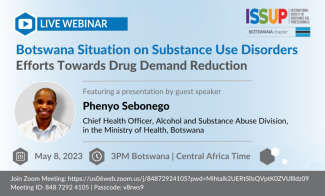
Botswana Situation on Substance Use Disorders: Efforts Towards Drug Demand Reduction
Join us on May 8, 2023 for an online event celebrating our first official year since launching ISSUP Botswana National Chapter on 29th April 2022.
Report: Colloquium on “Responding to the nexus between adverse childhood experiences and drug use”
A colloquium on “Responding to the Nexus between Adverse Childhood Experiences and Drug Use” was held on April 15, 2023 in New Delhi, attended by 40+ participants. The colloquium was hosted and organised by the Society for Promotion of Youth and Masses (SPYM) with the support of International Society of Substance Use Professionals (ISSUP) and Paul Hamlyn Foundation (PHF).