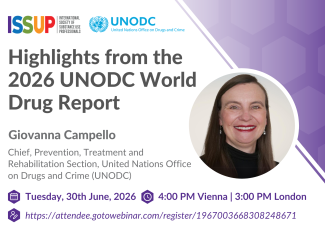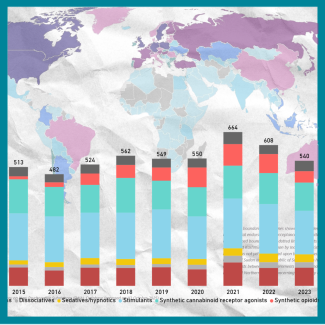
Join our upcoming webinar highlighting key findings from the 2026 edition of the UNODC World Drug Report. The session will be presented by Giovanna Campello, Chief of the Prevention,
Treatment
and
Rehabilitation
Section at the United Nations Office on Drugs and Crime (UNODC).
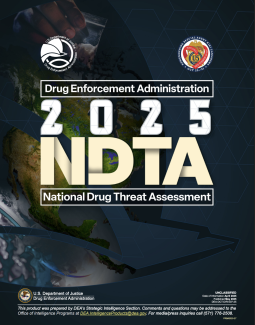
The U.S. Drug Enforcement Administration (DEA) has released its 2025 National Drug Threat Assessment (NDTA), providing an overview of the threats posed by illicit drugs and the transnational criminal organizations involved in their production and trafficking. The report highlights the continuing impact of synthetic drugs, particularly fentanyl and methamphetamine, on public health, public safety, and national security.
While overdose deaths in the United States have declined significantly over the past year, synthetic drugs remain the leading driver of drug-related fatalities. The report also...
The UNODC Early Warning Advisory highlights a continued global expansion of new psychoactive substances (NPS), with nearly 1,400 substances reported worldwide. In 2024 alone, a record number of substances were identified, including over 100 newly detected compounds.
Synthetic opioids—particularly fentanyl analogues and nitazenes—are a growing concern, now reported across all regions. At the same time, benzodiazepine-type substances remain widely present in drug samples. A key emerging risk is polysubstance use, with a significant share of deaths involving multiple substances.
The Partnership center for faith and oportunity initiatives - U.S. Department of Health and Human Services
This practical toolkit highlights the role of faith-based and community leaders in responding to the opioid crisis in the United States. Developed by the U.S. Department of Health and Human Services, it recognizes that community and faith organizations are often among the first to support individuals and families affected by
addiction
.
The toolkit encourages local action through prevention,
recovery
support, and community engagement, while emphasizing compassion, hope, and partnership. It also reflects growing recognition that addressing opioid use disorder requires collaboration between...
The Centers for Disease Control and Prevention (CDC), in conjunction with the White House Office of National Drug Control Policy (ONDCP), is issuing this Health Advisory to notify public health professionals, clinicians, laboratorians, and people at risk for overdose about increasing reports from U.S. jurisdictions detecting medetomidine in the illegal drug supply and a severe withdrawal syndrome due to medetomidine exposure. Medetomidine (also known as 'rhino tranq,' 'mede,' or 'dex') is not approved for human use but is approved for sedation and analgesia in dogs. Its dextro-isomer...
Whittaker, J., Kellom, K., Chatterjee, A. et al. Navigating opioid use disorder
treatment
for pregnant and parenting people: composite narratives for policy action. Subst Abuse Treat Prev Policy (2026). https://doi.org/10.1186/s13011-025-00694-2
Opioid use during pregnancy and the postpartum period is increasing in the United States, yet many pregnant and parenting people face serious barriers to accessing effective treatment and supportive services. These barriers arise from fragmented systems such as healthcare, health insurance, child welfare, childcare, and the criminal justice system. This study uses in-depth interviews with healthcare providers, treatment leaders, local government officials, and pregnant and parenting people in a mid-Atlantic state to explore access to medication for opioid use disorder (MOUD), key treatment...
The ESPAD report presents the results of the eighth data-collection wave, which took place in 2024, and marks an impressive 30 years of data collection by this long-standing collaboration. More than 113 000 15- to 16-year-old students from 37 countries, including 25 EU Member States, took part. Since 1995, over 800 000 students have contributed, making ESPAD the most extensive harmonised data collection on substance use and risk behaviours in Europe, and the largest cross- national research project on adolescent substance use worldwide.
The Canadian Centre on Substance Use and
Addiction
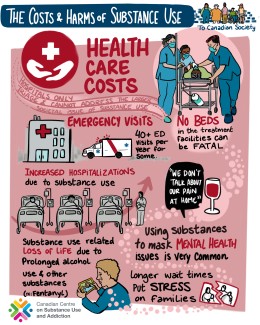
(CCSA) transforms complex data into insights that reflect real human experiences. Every aspect of the Canadian Substance Use Cost and Harms (CSUCH) project represents individuals with lived or living experience of substance use, along with their families, workplaces, and communities.
A new resource highlights these journeys and the human cost of substance use through illustrated stories from people with
lived experience
and their families. The illustrations cover three key areas of the CSUCH project: healthcare, lost productivity, and...
Admase et al.
Substance AbuseTreatment
, Prevention, and Policy (2025) 20:43 https://doi.org/10.1186/s13011-025-00660-y
Background
Stigma
related to drug use is a well-documented barrier to engaging and remaining on medication for opioid use disorder (MOUD), yet little is known about how stigma operates across multiple social and institutional settings in low-resource contexts.
Methods
This qualitative study draws on 40 in-depth interviews with current and former MOUD clients and four focus groups with 35 current clients at an opioid treatment clinic in Dar es Salaam, Tanzania. Transcripts were thematically analyzed to explore how stigma influenced MOUD adherence and retention.
Kampman et al.
Substance AbuseTreatment
, Prevention, and Policy (2025) 20:45 https://doi.org/10.1186/s13011-025-00665-7
Background
The opioid epidemic continues to pose significant challenges in the United States, with over 75% of nearly 107,000 drug overdose deaths in 2022 involving opioids. Recently, efforts to curb the epidemic have made strides. Beginning in the early 2000s, local and state governments filed a series of lawsuits against opioid manufacturers and distributors. The lawsuits held that manufacturers and distributors knew about the potential
addictive
nature of these painkillers and withheld this information from providers, leading to overprescription and overdose. The current settlement funds...
Al Khouri, I., Iannaccone, B. & Fulajtarova, M. (2024). Trends in Substance Use Among Young People in the EU: A Secondary Analysis of Available Data. Adiktologie 24(4), pp-pp
INTRODUCTION: Substance use among adolescents in the European Union constitutes a significant public health challenge. Particularly concerning are the early onset of use, patterns of polydrug consumption, and the emergence of novel psychoactive substances. This study examines prevailing trends and associated mental health risks through a secondary analysis of available data sources.
METHODS: The study employs secondary analysis of quantitative data from international and national databases (EMCDDA, ESPAD, Euro-DEN Plus, Public Health England), focusing on adolescents aged 10–24 years. The...
Shamim, U., & Collins, A. (2024). The Impact of Drug
Addiction
on Afghan Refugees in Pakistan: A Comprehensive Analysis. Adiktologie, 24(3), pp–pp. https://doi.org/10.35198/01-2024-004-0001
Drug addiction and its associated consequences, such as long-term dependence, bloodborne illnesses, HIV, sexually transmitted diseases, social isolation, and criminal activity, are gradually being recognised as serious issues that need to be addressed, especially among displaced populations. Due to disputes and conflict in their country, around 1.44 million Afghan refugees (both registered and unregistered) are currently residing in Pakistan in a situation of protracted displacement and significant uncertainty, even though around 4 million Afghan refugees have been repatriated back to...
ISSUP Global, UNODC, and the African Union presents their webinar on the World Drug Report 2025, focusing on key trends and policy challenges for Africa.
The 2025 Annual Report to the Parliament on Drug Addictions in Italy offers a comprehensive overview of the current drug
addiction
landscape. Despite a slight decline in youth drug use for the first time since 2018, the report highlights ongoing challenges, particularly with substances like cocaine, synthetic opioids, and high-potency cannabis derivatives. Law enforcement and judicial efforts remain strong, and Italy continues to be a key collaborator in global anti-drug initiatives, particularly with countries in South America and the Indo-Pacific region.
ISSUP Global, UNODC, and the African Union invite you to an upcoming webinar on the World Drug Report 2025, focusing on key trends and policy challenges for Africa.
ISSUP in collaboration with UNODC present a webinar highlighting key findings from the 2025 edition of the UNODC World Drug Report. The session is presented by Giovanna Campello, Chief of the Prevention,
Treatment
and
Rehabilitation
Section at the United Nations Office on Drugs and Crime (UNODC).
Mmoto, M., Mwombeki, I., Morawej, Z., Lawala, P., & Nyundo, A. (2024). Posttraumatic Stress Disorder Among Opioid Users in Dodoma, Tanzania: A Comparative Cross-Sectional Study Protocol. Adiktologie, 24(3), pp–pp. https://doi.org/10.35198/01-2024-003-0003
INTRODUCTION:
Post traumatic stress disorder (PTSD) is highly commorbid among individuals with opioid use disorder (OUD). PTSD among people with OUD is associated with severe opioid use, depression, and suicidality. Tanzania has seen a rise in opioid use over the past few years and the presence of PTSD among people with OUD predisposes patients to more negative impacts and impedes the
recovery
process. We aim to assess the prevalence and factors associated with PTSD among individuals with opioid use disorder (OUD) attending medication-assisted therapy (MAT) clinic in comparison to non-opioid...
ISSUP, in collaboration with Faces & Voices of Recovery, has launched a new Global Recovery Network webinar series to spotlight diverse perspectives on recovery. The first webinar featured Dr. Haner Hernández, a respected expert in the field and a person in long-term recovery. Dr. Hernández currently serves as a Senior Consultant to the Massachusetts Department of Public Health and plays a key role in advancing health equity, workforce development, and recovery support. His presentation provided an insightful and inclusive overview of multiple pathways to recovery, grounded in both...
Join our upcoming webinar highlighting key findings from the 2025 edition of the UNODC World Drug Report. The session will be presented by Giovanna Campello, Chief of the Prevention,
Treatment
and
Rehabilitation
Section at the United Nations Office on Drugs and Crime (UNODC).
A global reference on drug markets, trends and policy developments, the World Drug Report offers a wealth of data and analysis and in 2025 comprises several elements tailored to different audiences.