
Why Does Cocaine Cause Nosebleeds? Causes, Risks & Treatment
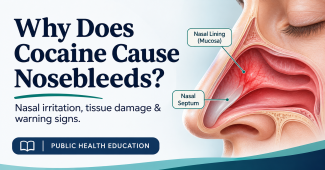
Quick Answer: Cocaine can cause nosebleeds because snorting it constricts blood vessels, irritates the nasal lining, and interferes with tissue repair. Repeated exposure may produce dryness, crusting, ulcers, and sometimes permanent damage, including a hole in the nasal septum. Recurring bleeding, especially with pain, obstruction, or nonhealing sores, warrants medical evaluation.
Key Takeaways
- Cocaine-related nosebleeds may occur after occasional or repeated intranasal cocaine use.
- Cocaine is a potent vasoconstrictor that reduces circulation to nasal tissue and can interfere with normal healing.
- Repeated exposure can cause dryness, inflammation, crusting, ulcers, and tissue breakdown.
- Recurring nosebleeds do not automatically mean someone has a septal perforation, but they should not be ignored.
- A septal perforation is an opening in the wall separating the nostrils. Established perforations rarely close spontaneously.
- An ear, nose, and throat (ENT) specialist can evaluate persistent symptoms and identify structural injury.
- Stopping intranasal cocaine exposure is essential to preventing additional cocaine-related nasal damage.
- ENT care and evidence-based treatment for cocaine use disorder may both be necessary.
Table of Contents
- Why Does Cocaine Cause Nosebleeds?
- How Cocaine Damages the Nasal Lining
- Are Cocaine Nosebleeds a Sign of Permanent Damage?
- Nasal Irritation vs. Septal Perforation
- How Does Cocaine Cause a Hole in the Nose?
- What Does Cocaine-Related Nasal Damage Look Like?
- What to Do If Your Nose Bleeds After Cocaine Use
- Can Your Nose Heal After Stopping Cocaine?
- What Does the Research Say?
- Myths vs. Facts
- When to See an ENT Specialist
- Cocaine Treatment and ENT Care
- Frequently Asked Questions
- Related Guides
- References
Why Does Cocaine Cause Nosebleeds?
Cocaine can cause nosebleeds because it damages the delicate lining and small blood vessels inside the nasal passages. When cocaine is snorted, the drug comes into direct contact with nasal mucosa, a thin layer of tissue that normally helps humidify, filter, and protect the respiratory tract.
Cocaine has two important properties that contribute to nasal injury: it is a powerful vasoconstrictor and a local anesthetic.
Vasoconstriction causes blood vessels to narrow, temporarily reducing blood flow to surrounding tissue. With repeated exposure, reduced circulation can interfere with the delivery of oxygen and nutrients needed for tissue maintenance and repair.
At the same time, cocaine's anesthetic effects can reduce the sensation of discomfort, potentially masking developing injury.
Over time, repeated exposure may contribute to inflammation, dryness, crusting, ulceration, and recurrent bleeding.
For a broader explanation of how these symptoms may progress, see Coke Nose: How Cocaine Damages the Nose and When It Becomes Irreversible.
How Cocaine Damages the Nasal Lining
Cocaine-related nasal damage develops through several overlapping mechanisms. The severity of injury depends on individual susceptibility, exposure patterns, underlying nasal conditions, and other contributing factors.
1. Reduced Blood Flow
Cocaine causes the blood vessels in the nasal lining to constrict. Repeated reductions in circulation can compromise tissue health and interfere with normal repair processes.
The cartilage within the nasal septum relies on its surrounding tissue for nourishment. When that tissue becomes severely damaged, the cartilage may become vulnerable to injury.
2. Dryness and Crusting
Inflammation and impaired nasal function can contribute to dryness, crusting, and scabbing.
Crusts can become attached to fragile tissue. When they separate during nose blowing or manipulation, bleeding may occur.
3. Chemical Irritation
Cocaine and substances mixed into street cocaine may irritate the nasal passages. The composition of unregulated cocaine cannot be determined reliably from appearance, smell, or texture.
For more information about adulterants and misleading purity claims, see What Is Fishscale Cocaine? Purity, Adulterants and Risk.
4. Physical Irritation
Powdered substances and repeated manipulation of the nasal passages can contribute to mechanical irritation.
Forceful nose blowing or repeatedly disturbing crusts may aggravate existing injuries.
5. Impaired Tissue Healing
Healthy nasal tissue depends on adequate circulation and a functioning mucosal barrier.
Repeated inflammation and reduced blood flow can interfere with healing, particularly when tissue injury has already developed.
Clinical Pearl: The amount of bleeding does not reliably indicate the severity of nasal damage. Some people with significant structural injury report relatively little bleeding, while others with superficial irritation experience repeated nosebleeds. Persistent symptoms require examination rather than diagnosis based on bleeding alone.
Are Cocaine Nosebleeds a Sign of Permanent Damage?
Not necessarily. A single nosebleed after cocaine use does not establish permanent injury or prove that a hole has developed in the septum.
Bleeding may result from relatively superficial irritation, particularly when the nasal lining is dry or inflamed.
However, recurrent nosebleeds deserve medical attention, especially when accompanied by:
- Persistent nasal crusting or scabbing
- Pain or tenderness inside the nose
- Nonhealing sores or ulcers
- Persistent nasal congestion or obstruction
- Whistling sounds during nasal breathing
- Foul-smelling discharge
- Recurring nasal infections
- Changes in the shape of the nasal bridge
These symptoms may occur with cocaine-related injury, but they can also arise from infections, inflammatory disorders, previous surgery, or other nasal conditions.
A clinician can help determine the cause and whether structural damage is present.
Cocaine-Related Nasal Irritation vs. Septal Perforation
Nasal irritation and septal perforation are different conditions. Irritation involves inflammation or injury to the lining of the nasal passages, while septal perforation involves an actual opening through the wall separating the nostrils.
The following comparison outlines symptoms that may occur with each condition.
| Feature | Nasal Irritation | Possible Septal Perforation |
|---|---|---|
| Nosebleeds | May occur | May occur repeatedly |
| Dryness | Common | Often present |
| Crusting | Possible | Often present |
| Nasal obstruction | Possible | Possible |
| Whistling while breathing | Less characteristic | May occur |
| Opening in the septum | Absent | Present |
| Spontaneous improvement | Possible if injury is superficial | Established perforations rarely close spontaneously |
| Recommended evaluation | Medical review if persistent or recurring | ENT assessment |
Important: Symptoms alone cannot confirm or exclude a septal perforation. An examination is needed to establish the diagnosis.
How Does Cocaine Cause a Hole in the Nose?
A hole in the nose caused by damage to the nasal septum is called a septal perforation.
The septum contains cartilage and bone covered by specialized tissue. The cartilage depends on its surrounding tissue for nutrients and oxygen.
Repeated cocaine-related vasoconstriction and inflammation may damage this tissue. Severe injury can lead to ulceration, tissue death, loss of cartilage support, and eventually an opening through the septum.
Septal perforations vary in size and location. Some produce few symptoms, while others cause repeated bleeding, crusting, obstruction, or whistling.
For additional patient-focused information about nasal burning, chemical irritation, septal injury, and treatment considerations, see Garden State Treatment Center's educational article, Does Cocaine Burn Your Nose? Causes, Dangers, and How to Get Help.
For a more detailed clinical discussion, ISSUP also provides Can Cocaine Cause a Hole in Your Nose? Long-Term Nasal Damage and Clinical Treatment Strategies.
What Does Cocaine-Related Nasal Damage Look Like?
Cocaine-related nasal injury can affect the lining, cartilage, and surrounding structures. Visible symptoms do not always reflect the extent of internal damage.
Possible findings include:
- Redness or irritated nasal tissue
- Dry crusts or scabs
- Persistent ulcers
- Bleeding areas within the nasal cavity
- Exposed cartilage
- Septal perforation
- Changes in the external shape of the nose
Cocaine-Induced Midline Destructive Lesions
In severe cases, intranasal cocaine use is associated with a condition known as cocaine-induced midline destructive lesions (CIMDL).
These lesions can involve the nasal septum, adjacent nasal structures, and sometimes the palate.
A 2025 international expert consensus emphasized the importance of determining the extent of tissue destruction, documenting cocaine exposure, considering alternative diagnoses, and coordinating care among appropriate specialists.
Conditions such as granulomatosis with polyangiitis, infections, and other inflammatory diseases can produce overlapping findings. Proper evaluation is therefore important.
Most nosebleeds are not evidence of CIMDL. However, progressive ulceration, structural changes, or symptoms involving the palate require prompt medical assessment.
What Should Someone Do If Their Nose Bleeds After Cocaine Use?
Most initial nosebleed first-aid recommendations focus on positioning and continuous pressure.
- Sit upright and lean slightly forward.
- Pinch the soft part of the nose, below the bony bridge.
- Maintain continuous pressure for 10 to 15 minutes without repeatedly checking.
- Breathe through the mouth while maintaining pressure.
- Do not tilt the head backward.
- Avoid further intranasal cocaine exposure.
- Seek urgent medical care for heavy bleeding, faintness, or bleeding that does not stop despite sustained pressure.
Emergency Warning: Cocaine can also cause serious cardiovascular and neurological complications. Chest pain, severe headache, stroke-like symptoms, seizures, loss of consciousness, or difficulty breathing after cocaine use require emergency medical evaluation.
Can Saline Products Help?
Clinicians may recommend saline-based products or humidification for selected patients experiencing nasal dryness or crusting.
These measures do not reverse established cartilage loss or close a septal perforation.
People with persistent bleeding, significant pain, or suspected structural injury should seek medical guidance before relying on self-treatment.
Repeated use of topical nasal decongestants may worsen some nasal conditions and should not replace a professional assessment.
Can the Nose Heal After Someone Stops Snorting Cocaine?
Some superficial irritation and inflammation may improve after cocaine exposure stops. Recovery depends on the extent of injury and whether complications such as infection, ulceration, or structural damage are present.
A true septal perforation is different. Once an established opening develops through the septum, spontaneous closure is uncommon.
An ENT specialist may recommend monitoring, management of dryness and crusting, a septal button, or selected reconstructive procedures.
Continued cocaine use can interfere with healing and increase the risk of additional tissue destruction. Sustained cessation is particularly important when surgical reconstruction is being considered.
How Long Does Recovery Take?
There is no reliable universal healing timeline for cocaine-related nasal injury.
Minor irritation and severe structural destruction have very different clinical courses. A clinician can evaluate the affected tissue and advise whether improvement is expected without a procedure.
Someone should not assume that symptoms will resolve simply because cocaine use has stopped.
What Does the Research Say About Cocaine and Septal Perforation?
Recent research has examined how cocaine-associated septal perforations affect nasal symptoms, anatomy, and quality of life.
A prospective multicenter observational study published in the European Archives of Oto-Rhino-Laryngology in 2026 evaluated 152 patients with septal perforations.
Of those patients, 57 had cocaine-related perforations.
Researchers found that cocaine-related perforations were larger on average than perforations from other causes. Participants in the cocaine-associated group also reported worse scores on certain measures of sinonasal symptoms and quality of life.
| Study Measure | Finding |
|---|---|
| Total participants | 152 patients with nasal septal perforations |
| Cocaine-related cases | 57 patients (37.5%) |
| Perforation dimensions | Larger on average in cocaine-related cases |
| SNOT-22 symptom score | Mean 53.9 in cocaine-related cases vs. 42.8 in other cases |
| Psychosocial outcomes | Greater burden on certain quality-of-life measures in the cocaine-related group |
The findings suggest that cocaine-related perforations can have substantial physical and psychological consequences.
However, the study included people who already had septal perforations. It cannot establish the percentage of all cocaine users who will develop this complication.
Source: Alegre Edo et al., 2026, PubMed.
Cocaine Nosebleeds: Myths vs. Facts
Misconceptions about cocaine-related nasal symptoms can delay appropriate evaluation.
| Myth | Fact |
|---|---|
| A nosebleed means the septum already has a hole. | Bleeding can result from superficial irritation. A clinical examination is needed to diagnose perforation. |
| No bleeding means there is no damage. | Significant nasal injury can occur without frequent bleeding. |
| Only long-term cocaine users develop nasal symptoms. | Irritation and bleeding can occur after limited exposure, although serious structural injury is more closely associated with repeated exposure. |
| A septal perforation always heals after cocaine use stops. | Established perforations rarely close spontaneously. |
| Saline spray repairs cartilage damage. | Saline may help selected symptoms but does not restore destroyed cartilage. |
| A whistling nose always means cocaine damage. | Whistling can occur with septal perforation and other nasal conditions. Examination is needed. |
| Every cocaine-related nosebleed requires surgery. | Management depends on the underlying injury, severity, symptoms, and clinical findings. |
When Should Someone See an ENT Specialist?
An ENT specialist, also called an otolaryngologist, evaluates disorders affecting the nose, sinuses, ears, and throat.
Specialist evaluation is appropriate when nasal bleeding recurs or symptoms suggest tissue damage beyond temporary irritation.
Reasons to seek assessment include:
- Frequent or unexplained nosebleeds
- Persistent nasal crusting
- Nonhealing sores or ulcers
- Whistling when breathing
- Persistent nasal obstruction
- Foul-smelling discharge
- Changes in the shape of the nose
- Concern about a septal perforation
An ENT clinician may use a direct nasal examination or nasal endoscopy. Depending on the findings, additional testing may include imaging, laboratory studies, or evaluation for infection and inflammatory disease.
It is important to disclose cocaine exposure to the treating clinician. Accurate information helps distinguish cocaine-related injury from other possible causes.
Why Cocaine Treatment and ENT Care May Both Be Needed
Medical treatment for nasal injury and treatment for cocaine use disorder address related but distinct problems.
ENT care focuses on identifying tissue damage, controlling symptoms, and determining whether structural treatment is needed.
Substance-use treatment addresses continued cocaine exposure, cravings, relapse risk, and associated behavioral or mental health concerns.
Evidence-based behavioral approaches to stimulant use disorder include contingency management and cognitive behavioral therapy.
The appropriate level of care depends on the person's substance-use pattern, overall medical condition, psychiatric symptoms, safety risks, and treatment preferences.
For more information about dependence and recovery, see Is Cocaine the Hardest Drug to Quit? Withdrawal & Recovery.
Cocaine can also produce serious effects outside the nasal passages. Combining cocaine with alcohol leads to the formation of cocaethylene, a metabolite associated with additional toxicity. See Cocaine and Alcohol: Cocaethylene and Cardiac Risk.
Someone considering treatment may also want to understand How Long Cocaine Stays in the System and Common Drug Testing Windows.
Coordinated care may involve an ENT specialist, primary care clinician, mental health professional, and addiction treatment team.
Frequently Asked Questions About Cocaine and Nosebleeds
1. Why does my nose bleed after snorting cocaine?
Cocaine constricts blood vessels, irritates the nasal lining, and can interfere with tissue healing. Dryness, crusting, and ulceration may make the tissue more vulnerable to bleeding. Recurrent bleeding should be evaluated because other nasal conditions can produce similar symptoms.
2. Can cocaine cause a nosebleed after only one use?
Yes. Irritation or bleeding can occur after a single episode of intranasal use, particularly when the nasal lining is already inflamed or dry. A single nosebleed does not necessarily indicate permanent damage. Heavy or persistent bleeding requires medical attention.
3. Does a cocaine nosebleed mean I have a hole in my septum?
No. Bleeding can occur without septal perforation. A perforation is an opening through the nasal septum and may produce symptoms such as whistling, crusting, and obstruction. A clinician must examine the septum to establish whether a perforation is present.
4. Can cocaine make your nose collapse?
Severe cocaine-associated tissue destruction can damage nasal support structures and contribute to a saddle-nose deformity. This is a recognized complication of advanced nasal injury, but it does not occur in everyone who uses cocaine. Structural changes warrant specialist evaluation.
5. Will cocaine-related nosebleeds stop if I quit?
Bleeding related to superficial irritation may improve when cocaine exposure stops and the tissue heals. However, persistent ulceration, infection, septal perforation, or other structural injuries may require treatment. Continued symptoms should be medically assessed.
6. How long does it take cocaine to damage the nose?
There is no universal timeline. The development of nasal injury depends on exposure patterns, tissue susceptibility, preexisting nasal problems, and other factors. Irritation can occur relatively quickly, while substantial structural destruction is more commonly associated with repeated exposure.
7. Can a septal perforation heal on its own?
Established septal perforations rarely close spontaneously. Treatment may focus on symptom management, preventing further injury, or selected interventions such as a septal button or surgical reconstruction. An ENT specialist can advise whether repair is appropriate.
8. Can cocaine-related nasal damage resemble an autoimmune disease?
Yes. Cocaine-induced midline destructive lesions can resemble conditions such as granulomatosis with polyangiitis. Diagnostic evaluation may require exposure history, examination, imaging, laboratory testing, and sometimes biopsy. Clinicians should consider alternative causes rather than assuming cocaine is responsible for every nasal lesion.
9. Is saline spray enough to treat cocaine-related nasal damage?
Saline-based products may help selected patients with dryness or crusting, but they cannot repair an established septal perforation or restore destroyed cartilage. Persistent pain, bleeding, ulcers, or structural changes should be evaluated by a healthcare professional.
10. Can someone receive addiction treatment while being treated for nasal damage?
Yes. ENT care and treatment for cocaine use disorder can take place together. Coordinated treatment can address immediate nasal complications while supporting cessation and reducing the risk of further injury. The appropriate treatment plan depends on individual clinical needs.
Related Guides
Explore additional ISSUP educational resources about cocaine-related health risks, dependence, testing, and recovery.
- Coke Nose: How Cocaine Damages the Nose and When It Becomes Irreversible — how nasal irritation may progress to ulceration, septal perforation, and structural injury.
- What Is Fishscale Cocaine? Purity, Adulterants and Risk — why appearance cannot identify a powder's composition and the risks of adulterants such as levamisole.
- Can Cocaine Cause a Hole in Your Nose? Long-Term Nasal Damage and Clinical Treatment Strategies — clinical evaluation and treatment of septal perforation.
- Is Cocaine the Hardest Drug to Quit? Withdrawal & Recovery — dependence, withdrawal, and evidence-based recovery strategies.
- How Long Does Cocaine Stay in Your System? Test Windows — detection windows across different drug-testing methods.
- Cocaine and Alcohol: Cocaethylene and Cardiac Risk — additional health risks associated with combining cocaine and alcohol.
- 5 Most Addictive Drugs of Abuse in 2026: Evidence-Based Rankings — how cocaine is discussed in comparisons of addictive substances.
References
- National Institute on Drug Abuse (NIDA). Cocaine. National Institutes of Health. NIDA cocaine research topics.
- U.S. National Library of Medicine. Cocaine. MedlinePlus. MedlinePlus cocaine information.
- Saibene AM, et al. Comprehensive Management of Cocaine-Induced Midline Destructive Lesions: A Young-IfOS Consensus. Journal of Personalized Medicine. 2025;15(6):231. Full text via PubMed Central. doi:10.3390/jpm15060231.
- Alegre Edo B, et al. When recreation turns risky: the multifaceted negative impact of cocaine-induced nasal septal perforations. European Archives of Oto-Rhino-Laryngology. 2026;283:887-895. PubMed PMID: 41288696. doi:10.1007/s00405-025-09883-y.
- Distribution of cocaine-induced midline destructive lesions: systematic review and classification. Full text via PubMed Central.
- National Institute on Drug Abuse. Treatment and Recovery. NIDA treatment research topics.
Last updated: November 14, 2026
About the Author
Benjamin Zohar, NCACIP is a Nationally Certified Advanced Clinical Intervention Professional and ISSUP network moderator specializing in addiction intervention, treatment navigation and emerging substance-use risks. His educational work published through ISSUP on counterfeit medications, fentanyl exposure and concentrated 7-hydroxymitragynine has been cited or referenced by GoodRx, The Washington Post, WIRED and Newsweek.
Medical review: Brandon McNally, RN
Medical disclaimer: This article is intended for educational and public-health purposes. It does not provide individualized medical advice, diagnosis or a tapering schedule. Do not start, stop or alter a prescription medication without consulting a qualified healthcare professional. Call emergency services for seizures, difficulty breathing, loss of consciousness, severe confusion or other life-threatening symptoms.