
How Long Does Adderall Last? Dose, IR vs. XR, and Common Questions
Clinical summary: Adderall immediate-release (IR) usually lasts about 4 to 6 hours, while Adderall extended-release (XR) usually lasts about 8 to 12 hours. Effects often begin within 20 to 60 minutes. Duration varies by formulation, metabolism, dose timing, food intake, urine pH, sleep, tolerance, and other medications.
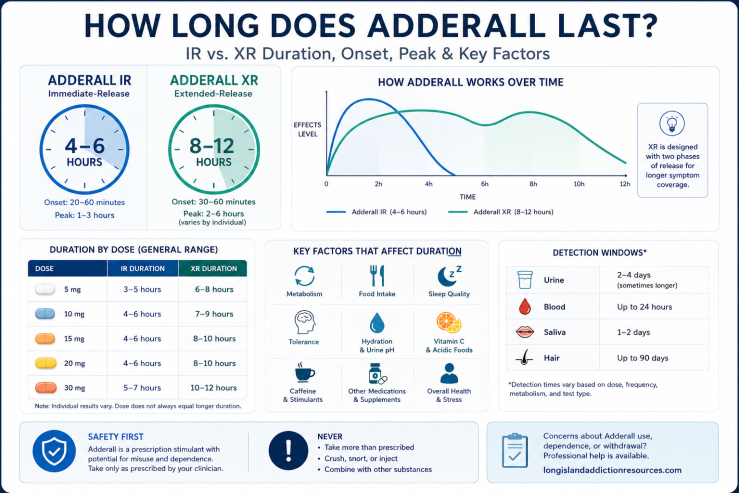
Quick answer: Adderall immediate-release (IR) usually lasts about 4 to 6 hours. Adderall extended-release (XR) usually lasts about 8 to 12 hours. Most people begin to feel effects within 20 to 60 minutes, but duration depends on the formulation, dose, metabolism, food intake, sleep, tolerance, and whether the medication is taken as prescribed.
For a more detailed patient guide with timelines, clinical context, side effects, and treatment considerations, read Palm City Wellness’s complete guide: complete Adderall IR vs. XR duration guide
In This Guide
- How Long Does Adderall Last?
- Adderall IR vs. XR
- Duration by Dose
- Onset and Peak Effects
- Factors That Affect Duration
- Detection Windows
- Half-Life
- ADHD vs. Without ADHD
- Safety and Misuse
- Frequently Asked Questions
Key Takeaways
- Adderall IR usually lasts about 4 to 6 hours.
- Adderall XR usually lasts about 8 to 12 hours.
- IR often begins working within 20 to 60 minutes.
- XR also begins working within about 30 to 60 minutes, but its effects last longer because it releases medication in phases.
- Formulation usually affects duration more than dose.
- Food, metabolism, urine pH, sleep, hydration, and tolerance may change how Adderall feels.
- Taking Adderall without a prescription or taking more than prescribed increases the risk of anxiety, insomnia, cardiovascular effects, dependence, and stimulant use disorder.
How Long Does Adderall Last?
Adderall is a prescription stimulant made from mixed amphetamine salts. It is commonly prescribed for attention-deficit/hyperactivity disorder (ADHD) and sometimes narcolepsy. The amount of time Adderall lasts depends mainly on whether the medication is immediate-release or extended-release.
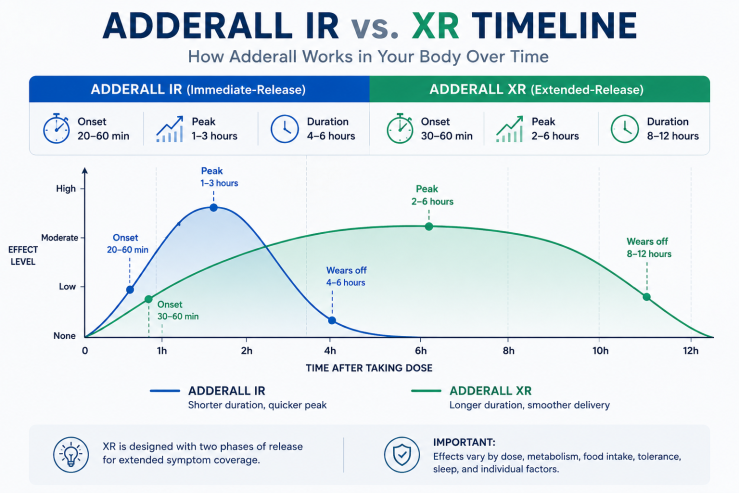
Adderall IR is designed to release the medication more quickly. Its effects usually last about 4 to 6 hours. Adderall XR is designed to release medication in two phases and usually lasts about 8 to 12 hours.
Some people feel Adderall wear off earlier or later than these ranges. Individual differences in metabolism, food intake, sleep, tolerance, other medications, and overall health can all affect the timeline.
Adderall IR vs. XR: Main Differences
| Feature | Adderall IR | Adderall XR |
|---|---|---|
| Full name | Immediate-release | Extended-release |
| Typical onset | 20 to 60 minutes | 30 to 60 minutes |
| Typical peak | About 1 to 3 hours | Often two phases, with a later second effect window |
| Typical duration | 4 to 6 hours | 8 to 12 hours |
| Common dosing pattern | May be prescribed more than once daily | Usually prescribed once daily in the morning |
| Sleep risk if taken late | Moderate | Higher because it lasts longer |
How Long Does Each Adderall Dose Last?
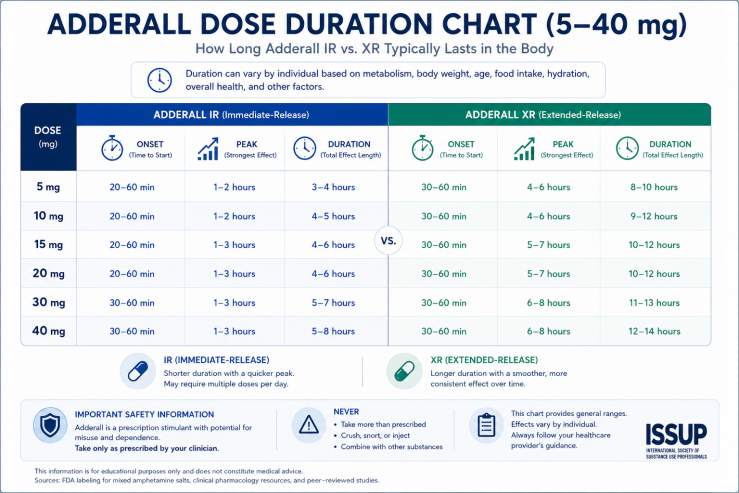
Dose can affect how strong Adderall feels, but it does not always make the medication last much longer. In many cases, formulation matters more than dose. A higher dose may feel stronger without dramatically extending the duration.
| Adderall Dose | Immediate-Release (IR) Duration | Extended-Release (XR) Duration |
|---|---|---|
| 5 mg | 3 to 5 hours | 6 to 8 hours |
| 7.5 mg | 4 to 6 hours | Not commonly used as XR |
| 10 mg | 4 to 6 hours | 7 to 9 hours |
| 12.5 mg | 4 to 6 hours | Not commonly used as XR |
| 15 mg | 4 to 6 hours | 8 to 10 hours |
| 20 mg | 4 to 6 hours | 8 to 10 hours |
| 25 mg | Not commonly used as IR | 10 to 12 hours |
| 30 mg | 5 to 7 hours | 10 to 12 hours |
| 40 mg | Varies by prescribed schedule | May last 10 to 12 hours if prescribed as XR or divided-release treatment |
Important: These are general ranges. They are not dosing instructions. Adderall should only be taken exactly as prescribed by a licensed healthcare professional.
When Does Adderall Start Working?
Adderall often begins working within 20 to 60 minutes. Immediate-release Adderall may begin working sooner for some people, especially when taken on an empty stomach. Extended-release Adderall usually begins working within about 30 to 60 minutes, although the full duration is longer because of its extended-release design.
When Does Adderall Hit the Hardest?
Adderall IR often feels strongest around 1 to 3 hours after a dose. This is when many people notice the clearest effects on attention, focus, energy, and alertness. Adderall XR may have a more gradual pattern because it is designed to release medication in phases rather than all at once.
The phrase “hit the hardest” is not a medical term. A medication that feels too strong, causes anxiety, racing heartbeat, chest discomfort, severe insomnia, agitation, or other concerning symptoms should be discussed with a healthcare provider immediately.
When Does Adderall Peak?
Adderall IR generally reaches peak effect around 1 to 3 hours after taking it. Adderall XR may have a longer, staged effect pattern because it contains immediate-release and delayed-release components. This can create a first effect window earlier in the day and a later effect window several hours after dosing.
Why Does Adderall XR Last Longer?
Adderall XR is designed to release medication over a longer period. Instead of releasing the full dose at once, XR capsules contain beads that dissolve at different times. This extended-release design allows Adderall XR to provide longer symptom coverage than immediate-release Adderall.
This is also why Adderall XR is usually taken in the morning. Taking XR later in the day may increase the risk of insomnia because the medication can remain active into the evening.
Why Does Adderall Wear Off So Fast?
Adderall may seem to wear off quickly for several reasons. Some people metabolize amphetamine salts faster than average. Others may experience shorter effects because of tolerance, poor sleep, missed meals, stress, hydration status, or interactions with acidic foods, vitamin C, or other medications.
Common reasons Adderall may wear off quickly include:
- Fast metabolism
- Medication tolerance
- Insufficient sleep
- High stress levels
- Missed meals or poor nutrition
- Acidic foods or drinks around dosing time
- Other medications or supplements
- Incorrect formulation for the person’s treatment needs
If Adderall consistently wears off too quickly, do not increase the dose on your own. Speak with the prescribing clinician or pharmacist.
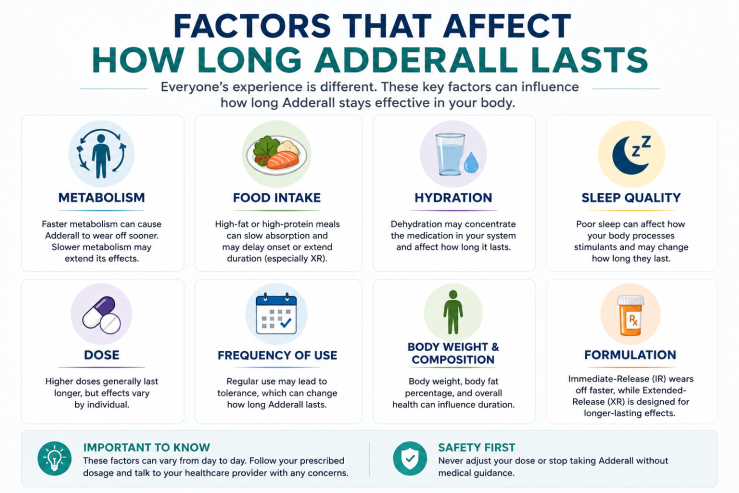
What Affects How Long Adderall Lasts?
Formulation
Immediate-release Adderall usually wears off faster than extended-release Adderall. This is the most important factor for duration.
Dose
A higher dose may feel stronger, but it does not always last much longer. Duration depends more on the medication’s release mechanism than dose alone.
Metabolism
People metabolize stimulant medications at different speeds. A person with faster metabolism may feel Adderall wear off sooner.
Tolerance
Over time, some people may feel that Adderall is less effective. This may reflect tolerance, changes in sleep, stress, diet, or the need for a treatment reassessment.
Food Intake
Food may affect how quickly Adderall begins working. A heavy or high-fat meal may delay onset for some people, while taking it on an empty stomach may make the onset feel faster.
Vitamin C and Acidic Foods
Vitamin C, citrus drinks, and acidic foods may affect amphetamine absorption or elimination in some people. Patients should ask their prescriber or pharmacist about timing if they take vitamin C supplements or drink acidic beverages around the time they take Adderall.
Sleep
Poor sleep can make ADHD symptoms worse and may make medication feel less effective. It can also increase sensitivity to stimulant side effects.
Other Medications
Other prescription medications, over-the-counter drugs, and supplements may affect how Adderall works. Always tell your prescriber about all substances you take.
Does Food Change How Long Adderall Lasts?
Food may change how quickly Adderall begins working, but it may not dramatically change the total duration for everyone. A large meal may delay onset, while taking Adderall on an empty stomach may make it feel faster or stronger.
Some people feel better taking Adderall with a light meal because it may reduce nausea, appetite changes, or stomach discomfort. Follow the instructions from your prescriber or pharmacist.
Does Vitamin C Affect Adderall?
Vitamin C and acidic substances may affect how amphetamine medications are absorbed or eliminated. This does not mean everyone must avoid vitamin C entirely. However, people who take vitamin C supplements, citrus drinks, or acidic products near their Adderall dose should ask a pharmacist or prescriber about timing.
Does Coffee Affect Adderall?
Coffee does not necessarily shorten Adderall’s duration, but caffeine can increase stimulant-like effects. Combining caffeine with Adderall may increase jitteriness, anxiety, elevated heart rate, insomnia, or restlessness in some people.
People who feel overstimulated, anxious, or unable to sleep should discuss caffeine intake with their healthcare provider.
Does Adderall Keep You Awake?
Yes. Adderall can keep you awake because it is a central nervous system stimulant. Taking Adderall later in the day may delay sleep onset, reduce sleep quality, or cause insomnia. Immediate-release (IR) Adderall typically lasts about 4 to 6 hours, while extended-release (XR) Adderall may remain active for 8 to 12 hours or longer, increasing the likelihood of sleep disruption if taken too late. If Adderall is interfering with sleep, talk with your prescriber about dose timing, formulation, sleep habits, or whether another treatment approach may be appropriate.
Is 2 PM Too Late to Take Adderall?
Whether 2 PM is too late to take Adderall depends on the formulation, dose, individual response, and your usual bedtime. For many people, taking Adderall XR (extended-release) at 2 PM may be too late because its effects commonly last 8 to 12 hours, increasing the likelihood of insomnia or delayed sleep onset.
Adderall IR (immediate-release) usually lasts about 4 to 6 hours, so a mid-afternoon dose may be appropriate for some patients when specifically prescribed. However, even IR formulations can interfere with sleep if taken too close to bedtime or in people who are particularly sensitive to stimulant medications.
Other factors—including metabolism, dose, caffeine intake, sleep habits, and other medications—can also influence how long Adderall remains active. If Adderall is causing difficulty falling asleep, talk with your prescriber before changing your dose or dosing schedule. Adjustments may involve medication timing, formulation, dose, or other treatment strategies.
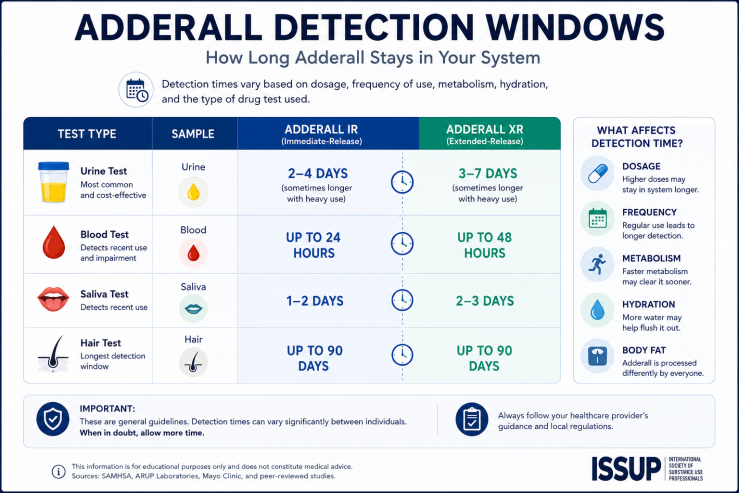
How Long Does Adderall Stay in Your System?Adderall may remain in the body for about 1.5 to 3 days after the last dose, although this varies based on metabolism, dose, frequency of use, urine pH, kidney function, liver function, and other individual factors. The medication's noticeable effects wear off much sooner than it leaves the body. Immediate-release (IR) Adderall typically lasts about 4 to 6 hours, while extended-release (XR) Adderall generally lasts about 8 to 12 hours. The amount of time Adderall remains detectable depends on the type of drug test used.
Adderall has an average elimination half-life of approximately 9 to 14 hours in adults, although this varies by age, urinary pH, and whether the medication contains dextroamphetamine, amphetamine, or both. Because it takes several half-lives for a drug to be eliminated, Adderall may still be detectable after its effects have worn off. Important: Detection windows are estimates rather than guarantees. Individual metabolism, hydration, dose, frequency of use, kidney function, liver function, and laboratory testing methods can all influence how long Adderall remains detectable |
|---|
What Is the Half-Life of Adderall?
The average elimination half-life of Adderall is approximately 9 to 14 hours in healthy adults. A drug's half-life is the amount of time it takes for the body to eliminate about half of the medication from the bloodstream. Because it generally takes about 4 to 5 half-lives for most of a drug to be eliminated, Adderall may remain in the body for roughly 2 to 3 days, even though its noticeable effects wear off much sooner.
Immediate-release (IR) Adderall typically provides noticeable effects for about 4 to 6 hours, while extended-release (XR) Adderall generally lasts about 8 to 12 hours. This is why a person may no longer feel the medication but still test positive on certain drug screenings.
Half-life and elimination vary based on several individual factors, including:
- Age
- Metabolism and genetics
- Urinary pH
- Kidney function
- Liver function
- Dose and frequency of use
- Whether the medication is immediate-release (IR) or extended-release (XR)
These values are averages. Individual clearance times may be shorter or longer depending on personal physiology and other clinical factors.
dderall With ADHD vs. Without ADHD
Adderall affects the same brain chemicals in everyone, but the experience may differ depending on whether a person has ADHD. The medication increases dopamine and norepinephrine activity, which can improve attention and executive functioning in people with ADHD while producing more noticeable stimulant effects in people without ADHD.
People With ADHD
When prescribed appropriately, Adderall may help improve attention, concentration, impulse control, and executive functioning. Many people describe feeling calmer, more organized, and better able to complete tasks rather than feeling overstimulated.
- Mental effects: Improved focus, attention, and organization.
- Behavioral effects: Reduced impulsivity and distractibility.
- Common experience: Feeling calmer and better able to stay on task.
People Without ADHD
People without ADHD may experience Adderall differently because of its stimulant effects. The medication may increase alertness and wakefulness, but it can also increase the risk of unwanted side effects.
- Mental effects: Increased alertness, wakefulness, and sometimes euphoria when misused.
- Behavioral effects: Reduced appetite, restlessness, and difficulty sleeping.
- Common experience: Feeling energized, jittery, anxious, or overstimulated.
Important Safety Information
Adderall is a Schedule II controlled substance with a recognized risk of misuse and dependence. Taking Adderall without a prescription or using more than prescribed increases the risk of elevated blood pressure, rapid heart rate, insomnia, anxiety, stimulant use disorder, and, in rare cases, psychosis or other serious medical complications.
Is 20 mg of Adderall Strong?
For many adults, 20 mg is considered a moderate therapeutic dose when prescribed by a healthcare provider. Whether it feels strong depends on formulation, body size, stimulant tolerance, diagnosis, metabolism, other medications, and sensitivity to stimulants.
A dose that is appropriate for one person may be too high or too low for another. Adderall should only be taken as prescribed.
How "strong" 20 mg feels is highly individualized and depends on your metabolism, body chemistry, and tolerance. If the dose feels too intense (causing jitters, rapid heart rate, or severe insomnia) or too weak, you should consult the prescribing doctor to adjust your medication plan.
Is 30 mg of Adderall a Lot?
A 30 mg dose may be appropriate for some patients when prescribed, but it may feel strong for others. The meaning of 30 mg depends on whether it is immediate-release or extended-release, whether it is taken once or divided, and the patient’s treatment history.
Side effects may include insomnia, reduced appetite, anxiety, elevated heart rate, elevated blood pressure, irritability, or restlessness. Any concerns about dose should be discussed with the prescribing clinician.
Is 40 mg of Adderall a Lot?
For many adults, 40 mg per day is considered a higher therapeutic amount, but whether it is appropriate depends on diagnosis, formulation, response, and the prescriber’s clinical judgment. Some patients respond well to lower doses, while others may require different medication strategies.
Higher doses may increase the likelihood of side effects. Never increase Adderall without medical supervision.
Can Adderall Cause a Crash?
Yes. Some people experience an Adderall "crash" as the medication wears off, particularly with immediate-release (IR) formulations. An Adderall crash may include fatigue, irritability, low mood, difficulty concentrating, headache, increased hunger, or restlessness. Symptoms and severity vary depending on the formulation, dose, individual metabolism, sleep, and overall health.
When Does an Adderall Crash Happen?
- Immediate-release (IR): A crash may occur about 4 to 6 hours after a dose as stimulant effects wear off.
- Extended-release (XR): A crash, if it occurs, is often more gradual and may happen 8 to 12 hours after taking the medication.
How Can You Reduce an Adderall Crash?
- Take Adderall exactly as prescribed.
- Eat regular, balanced meals and stay hydrated.
- Maintain a consistent sleep schedule.
- Avoid taking extra doses without medical guidance.
- Talk with your prescriber if crashes become frequent or severe.
If Adderall crashes are frequent or significantly interfere with daily life, your healthcare provider may recommend adjusting the dose, changing the timing, switching formulations, or considering another treatment approach. Do not change your medication without medical advice.
Adderall Misuse, Dependence, and Safety
Adderall is a Schedule II controlled substance with a recognized risk of misuse, dependence, and addiction. Taking Adderall without a prescription, taking higher doses than prescribed, crushing or snorting tablets, using it to stay awake, or combining it with alcohol or other drugs can significantly increase the risk of serious health complications.
Possible risks of misuse include:
- Anxiety or panic symptoms
- Insomnia
- Elevated heart rate
- Elevated blood pressure
- Chest discomfort
- Appetite suppression and weight loss
- Irritability or agitation
- Physical and psychological dependence
- Withdrawal symptoms after stopping
- Stimulant use disorder
If Adderall misuse, dependence, stimulant withdrawal, anxiety, depression, or another mental health concern is part of the picture, professional support may be appropriate. Learn more about detox resources and dual diagnosis treatment resources.
Seek emergency medical care immediately for chest pain, severe shortness of breath, seizures, hallucinations, confusion, loss of consciousness, or signs of overdose.
Pill Identification and Adderall Duration
Many people search for Adderall duration by pill color, imprint, or capsule marking. Pill appearance can vary by manufacturer, dose, and formulation. Online pill identification should not replace a pharmacist or prescriber.
If a pill was not dispensed by a licensed pharmacy, do not assume it is Adderall. Counterfeit pills may contain dangerous or unexpected substances.
Blue Adderall
Blue Adderall typically refers to lower-dose, immediate-release (IR) pills (5 mg, 7.5 mg, or 10 mg) of the prescription stimulant amphetamine/dextroamphetamine. Used to treat ADHD and narcolepsy, these Schedule II controlled substances are frequently misused for cognitive enhancement.
- B 972: Oval-shaped, blue tablet (10 mg) manufactured by Teva.
- AD 10: Round, blue tablet (10 mg) manufactured by Shire US Inc.
- E 341: Round, blue tablet (10 mg) manufactured by Sandoz.
- U27: Round, blue tablet (5 mg) manufactured by Aurolife Pharm
Orange Adderall
An "orange Adderall" is typically a 20 mg or 30 mg tablet of amphetamine/dextroamphetamine, used to treat ADHD and narcolepsy. Immediate-release (IR) orange pills are usually round (e.g., imprint AD 20 or E 401) or oval (e.g., B 973 for 20 mg, B 974 for 30 mg). Extended-release (XR) versions may also appear as orange capsules
U27 Pill
The imprint U27 typically identifies a blue, round, 9mm tablet containing 10 mg of Amphetamine and Dextroamphetamine, a generic form of immediate-release Adderall
B973 Pill
The pill marked B 973 2 0 (oval, orange) is an immediate-release tablet containing 20 mg of Amphetamine and Dextroamphetamine. This medication is a central nervous system (CNS) stimulant and is the generic equivalent of the brand-name drug Adderall
G AMP XR 30
This pill is a 30 mg Amphetamine and Dextroamphetamine Extended-Release capsule. Often prescribed as a generic equivalent to Adderall XR, it is a central nervous system stimulant used to treat ADHD and narcolepsy
AD 30, DP 30, E401, and Other Imprints
Imprints such as AD 30, DP 30, E401, and others may be associated with different generic amphetamine products. Because manufacturers and appearances vary, ask a pharmacist to confirm the medication, dose, and formulation.
Frequently Asked Questions About Adderall Duration
How long does 5 mg Adderall last?
A 5 mg Adderall IR dose may last about 3 to 5 hours. Lower doses may feel shorter or milder, especially in people with stimulant tolerance.
How long does 10 mg Adderall last?
A 10 mg Adderall IR dose usually lasts about 4 to 6 hours. A 10 mg XR dose may last around 7 to 9 hours for some people.
How long does 15 mg Adderall last?
A 15 mg Adderall IR dose usually lasts about 4 to 6 hours. A 15 mg XR dose may last about 8 to 10 hours.
How long does 20 mg Adderall last?
A 20 mg Adderall IR dose usually lasts about 4 to 6 hours. A 20 mg Adderall XR capsule may last about 8 to 10 hours, depending on the person.
How long does 30 mg Adderall last?
A 30 mg Adderall IR dose may last about 5 to 7 hours. A 30 mg Adderall XR capsule commonly lasts about 10 to 12 hours.
How long does 40 mg Adderall last?
The duration of a 40 mg daily amount depends on the formulation and how it is prescribed. If divided into IR doses, each dose may last about 4 to 6 hours. If prescribed in an extended-release form or long-acting treatment plan, effects may last closer to 8 to 12 hours.
How long does Adderall IR last?
Adderall IR usually lasts about 4 to 6 hours. Some people feel it wear off sooner or later depending on metabolism, tolerance, sleep, food intake, and dose timing.
How long does Adderall XR last?
Adderall XR usually lasts about 8 to 12 hours. It is designed to provide longer symptom coverage than immediate-release Adderall.
How long does Adderall take to kick in?
Adderall often begins working within 20 to 60 minutes. IR may begin working sooner for some people, while XR often begins within 30 to 60 minutes.
Does Adderall work immediately?
No. Adderall does not work instantly. Some people notice early effects within 20 to 30 minutes, but the full effect may take longer.
When does Adderall peak?
Adderall IR often peaks around 1 to 3 hours after dosing. Adderall XR has a longer phased release pattern and may have a later second effect window.
When does Adderall wear off?
Adderall IR often wears off after about 4 to 6 hours. Adderall XR may wear off after about 8 to 12 hours.
How long does Adderall keep you awake?
Adderall may keep a person awake for as long as its stimulant effects are active, and sometimes longer in sensitive individuals. IR may affect sleep for 4 to 6 hours or more. XR may affect sleep for 8 to 12 hours or longer depending on timing and sensitivity.
Why can’t I sleep after taking Adderall?
Adderall can delay sleep because it increases central nervous system stimulation. Taking it too late, taking too high a dose, using caffeine, or being sensitive to stimulants can increase insomnia risk.
Can I take Adderall on an empty stomach?
Some people are instructed to take Adderall with or without food. Taking it on an empty stomach may make it feel faster or stronger for some people, but it may also increase nausea or appetite changes. Follow your prescriber’s instructions.
Does eating make Adderall weaker?
Food may delay onset for some people, especially heavy meals. This does not necessarily mean Adderall becomes ineffective. The effect varies by person.
What cancels out Adderall?
No food or drink should be used to intentionally “cancel out” Adderall. However, acidic foods, vitamin C, certain medications, and other substances may affect absorption or elimination. Ask a pharmacist before combining supplements or medications with Adderall.
Can vitamin C reduce Adderall’s effects?
Vitamin C and acidic substances may affect amphetamine absorption or elimination in some people. Ask a pharmacist or prescriber about timing if you take vitamin C near your Adderall dose.
Can coffee make Adderall stronger?
Coffee may intensify stimulant-like effects such as jitteriness, anxiety, elevated heart rate, or insomnia. It does not necessarily make Adderall medically stronger, but the combination may feel stronger.
How long does Adderall last without ADHD?
The pharmacologic duration may be similar, but the subjective experience may differ. Someone without ADHD may notice more stimulant effects such as energy, alertness, reduced appetite, anxiety, or insomnia.
Does Adderall build up in your system?
Adderall does not usually build up like a cumulative toxin when taken as prescribed, but it may still be detectable after effects wear off. Detection depends on dose, frequency, metabolism, kidney function, urine pH, and test type.
How long does Adderall stay in urine?
Adderall may be detectable in urine for about 2 to 4 days in many cases, though this can vary depending on dose, frequency, and individual factors.
How long does Adderall stay in blood?
Adderall may be detectable in blood for up to about 24 hours in many cases, although detection windows vary.
How long does Adderall stay in saliva?
Adderall may be detectable in saliva for roughly 1 to 2 days in many cases, depending on testing method and individual factors.
How long does Adderall stay in hair?
Hair testing may detect amphetamines for up to about 90 days, although hair tests are less commonly used than urine tests.
Is Adderall XR better than IR?
Neither is universally better. XR may be better for longer coverage, while IR may be preferred when shorter duration or flexible dosing is needed. The best option depends on the patient and should be determined by a prescriber.
Is short-acting Adderall the same as IR?
Yes. “Short-acting Adderall” usually refers to immediate-release Adderall, which generally lasts about 4 to 6 hours.
Is time-release Adderall the same as XR?
“Time-release” is a common informal term for extended-release medications. Adderall XR is the extended-release version of Adderall.
Can Adderall stop working over time?
Some people feel Adderall becomes less effective over time. This may be due to tolerance, sleep problems, stress, diet, other medications, or changes in symptoms. A prescriber can evaluate whether treatment changes are needed.
Can you take Adderall twice a day?
Some prescribed treatment plans include more than one dose per day, especially with immediate-release formulations. Do not take extra doses unless specifically instructed by your prescriber.
Can you crush Adderall XR?
No. Adderall XR should not be crushed or chewed because doing so may interfere with the extended-release mechanism and increase side effect risks. Follow the medication guide and pharmacist instructions.
Can Adderall be addictive?
Yes. Adderall has misuse and dependence potential, especially when taken without a prescription, taken in higher doses than prescribed, or used for performance, weight loss, or staying awake.
What should I do if Adderall wears off too early?
Do not increase your dose on your own. Track when you take it, when it starts working, when it wears off, meals, sleep, caffeine, and side effects. Share this information with your prescriber.
When to Seek Help
Talk to a healthcare provider if Adderall causes severe insomnia, anxiety, panic symptoms, elevated blood pressure, rapid heartbeat, chest discomfort, mood changes, cravings, or loss of control over use.
If you or someone else has severe chest pain, fainting, severe agitation, confusion, hallucinations, or signs of overdose, seek emergency medical care immediately.
For help finding addiction treatment options on Long Island, visit Long Island Addiction Treatment Resources.
Read the Complete Patient Guide
This ISSUP article provides a professional overview of Adderall duration, IR vs. XR differences, dosing questions, onset, peak effects, and safety considerations.
For a fuller patient-facing explanation with additional context, visit Palm City Wellness’s full clinical guide to how long Adderall lasts.
Related ISSUP Resources
- Adderall Shortage and ADHD Medication Access
- ADHD Stimulant Shortage: Patient and Provider Guidance
- Zenzedi vs. Adderall: Prescription Stimulant Misuse Risks
- Adderall Treatment, Safe Use, and Intervention Resources
References
- U.S. Food and Drug Administration. Adderall XR Prescribing Information.
- DailyMed. Amphetamine and Dextroamphetamine Prescribing Information.
- National Institute on Drug Abuse. Prescription Stimulants DrugFacts.
- SAMHSA. National Survey on Drug Use and Health.
- American Psychiatric Association. Diagnostic and Statistical Manual of Mental Disorders.
- Mayo Clinic. Dextroamphetamine and Amphetamine Oral Route.
Author: Benjamin Zohar, NCACIP Medical Editor: Brandon McNally, RN