
Driving Distance From US Jails to Opioid Treatment Programs
Source:
Discussion
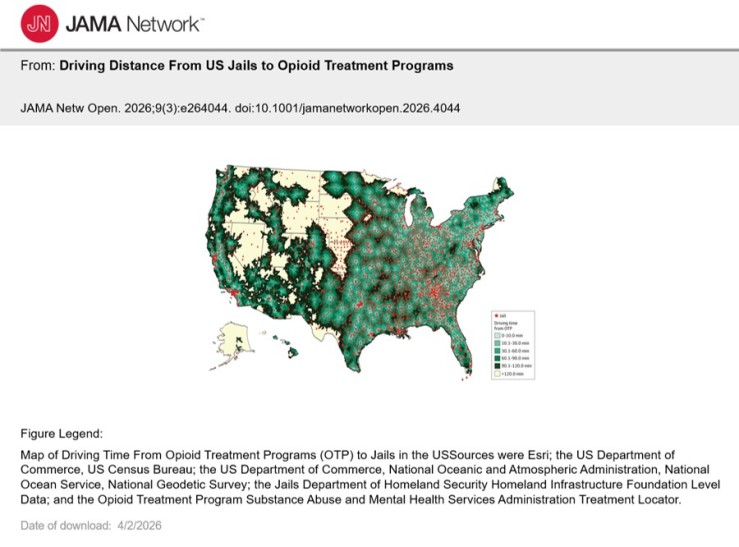
In this study, 51.5% of US jails were located more than a 30-minute drive from an OTP, a distance that makes it difficult to establish an OTP partnership for people in custody. A study limitation is a measurement based on nearest jail distance to an OTP could overstate access because OTPs may decline to collaborate with a nearby jail or jails may decline to enter into these partnerships. A total of 56.2% of jails in the sample and 22.5% of the US jail population were housed in rural areas, where OTPs are commonly located at least a 1-hour drive from the jail.
Universal accessibility of methadone in jails is likely to require alternatives to partnerships with OTPs. Federal regulations recently clarified an alternative pathway that permits correctional facilities registered as hospitals or clinics to dispense methadone to patients who have another non–substance use chronic health condition without requiring an OTP. Stocking methadone on-site could expand methadone availability when OTPs are located far away or there are other logistical or cost barriers to these partnerships if the patient has access to a community OTP after release.
- ISSUP members can join Networks to comment – Sign in or become a member