
Dopamine Bankruptcy: Cocaine Addiction, Hypersexual Dopamine Seeking, and the Cycle of Compulsive Stimulation
Dopamine Bankruptcy: Cocaine Addiction, Hypersexual Dopamine Seeking, and the Cycle of Compulsive Stimulation
Medically Reviewed by: Brandon McNally, RN
Author: Benjamin Zohar, NCACIP
Audience: addiction professionals, mental health clinicians, sex-addiction specialists, public-health practitioners, and recovery workers.
Note: In this article, the term “sex” includes not only intimacy but also pornography use, masturbation, webcam/online sexual activity, hookups, compulsive sexual behavior, and stimulant-induced hypersexuality.
Introduction: When the Dopamine System Goes Bankrupt
Cocaine addiction collapses the brain’s internal dopamine economy. According to the National Institute on Drug Abuse (NIDA), cocaine causes “distinctly large increases in dopamine” that rapidly reinforce compulsive use. Over time, this creates a state of dopamine depletion, where natural rewards (food, connection, accomplishment) no longer register.
This dopamine crash leads the brain to seek fast, intense, repeatable dopamine hits—and sexual stimulation becomes one of the most common adjunct behaviors during cocaine binges. As the Journal of Sexual Medicine notes, stimulant use is strongly associated with “hypersexual behavior, pornographic consumption, and heightened impulsivity.”
This article explains how cocaine addiction triggers a dopamine bankruptcy, how sex-seeking (porn, masturbation, hookups) becomes part of the binge cycle, and evidence-based pathways out of the self-reinforcing cycle.
1. The Dopamine Economy: How Cocaine Rewires Reward Pathways
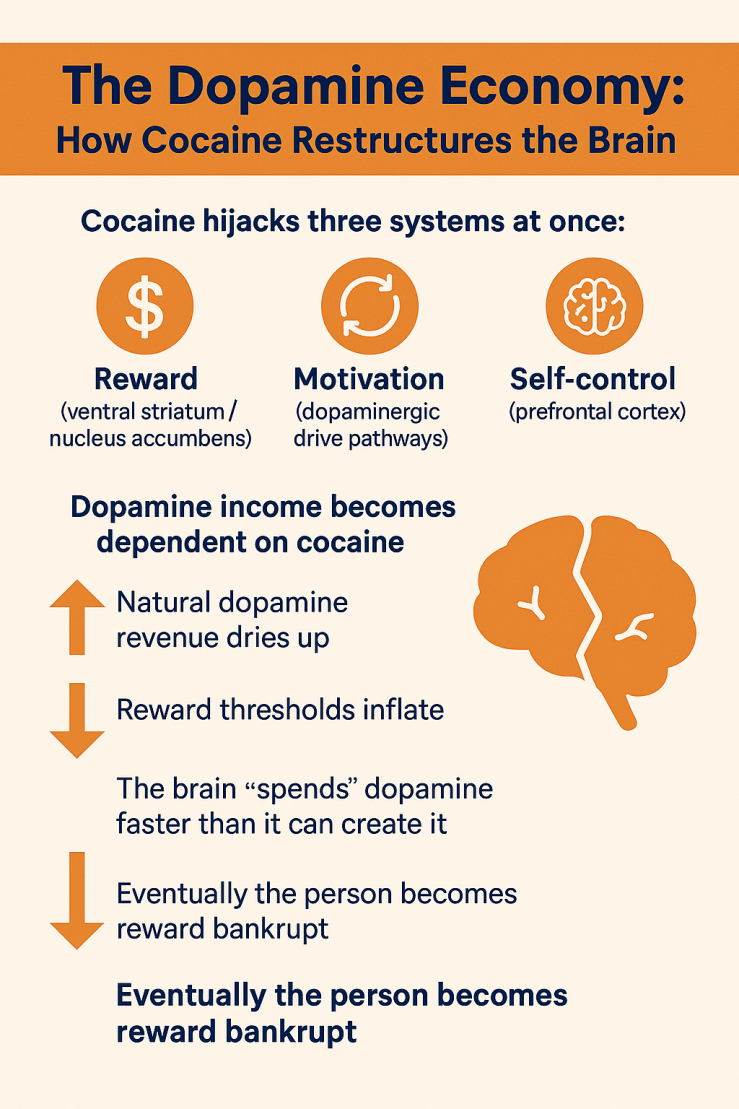
Cocaine blocks dopamine transporters, causing dopamine to accumulate to extremely high levels. As described by the American Psychological Association, addiction shifts the brain from “liking to wanting” by altering motivation circuits, not just pleasure circuits.
Clinically, this creates a “dopamine economy” where:
- Dopamine income = almost entirely cocaine-driven
- Dopamine spending = compulsive stimulation (sex, porn, bingeing behaviors)
- Dopamine inflation = the brain needs more stimulation to feel anything
- Dopamine bankruptcy = total loss of reward sensitivity during withdrawal
The CDC confirms that stimulant addiction is “characterized by impaired control, compulsive use, and diminished recognition of significant problems,” all linked to impaired dopamine signaling.
2. Why Cocaine Binges Produce Hypersexual Dopamine Seeking
During binges, cocaine increases sexual desire, disinhibition, and risk-taking. But the issue is deeper: as NIDA notes, stimulants “activate the same reward pathways involved in sexual arousal.” When cocaine spikes dopamine, the brain reflexively seeks additional dopamine sources such as:
- pornography (rapid dopamine cycling)
- masturbation (accessible, repeatable stimulation)
- online sexual activity (endless novelty and dopamine cues)
- hookups or risky sexual encounters
- prolonged sexual sessions driven by stimulants
The International Journal of Environmental Research and Public Health reports that cocaine and methamphetamine users demonstrate “marked increases in hypersexuality, compulsive sexual behavior, and pornography use during stimulant intoxication.”
3. The Sex–Cocaine Feedback Loop
Over time, sexual stimulation becomes neurologically linked to cocaine use. This conditioning explains why many clients report that:
- “Sex only works when I’m high.”
- “Porn and coke are inseparable for me.”
- “I can’t climax without stimulants.”
- “After a line, I immediately crave sexual stimulation.”
Research published in Frontiers in Psychiatry identifies cocaine as a major driver of “compulsive sexual urges and high-risk sexual behavior” due to dopaminergic overload combined with impaired inhibition.
This creates a predictable cycle:
- The stimulant spike → intense dopamine surge
- Dopamine stacking → sex/porn/masturbation layered on top of the cocaine high
- Crash → anhedonia, irritability, shame
- Dopamine bankruptcy → nothing feels pleasurable without chemical stimulation
- Relapse → the cycle restarts for dopamine relief
4. Dopamine Bankruptcy and the Post-Binge Crash
After intense dopamine spikes, the brain’s ability to produce dopamine naturally collapses. According to NIH’s Neuroscience of Addiction, repeated stimulant exposure causes the brain to:
- downregulate dopamine receptors
- diminish natural reward response
- weaken self-control circuits
- amplify stress and negative affect
This is why clients describe the crash as:
- “I felt empty.”
- “Nothing made sense unless I used again.”
- “I needed porn or sex just to feel anything.”
5. Clinical Implications for Treatment Providers
A. Decouple Sex from Cocaine Use
Early recovery requires interrupting the deeply conditioned sex–stimulant pathway. This often includes:
- temporary abstinence from sexual activity
- blocking pornography and sexual triggers
- reducing stimulation cues (apps, sites, chats)
B. Stabilize Dopamine Through Routine
Evidence from NIH Behavioral Neuroscience shows dopamine stabilizes with:
- consistent sleep
- nutrition and hydration
- exercise
- sunlight exposure
- micro-rewards and predictable structure
C. Address Hypersexuality as a Symptom, Not a Moral Issue
Providers should interpret compulsive sexual behavior as a neurobiological extension of stimulant addiction, not as deviance or intentional risk-seeking.
D. Trauma, Attachment, and Environmental Chaos
Chaotic living conditions and trauma histories amplify dopamine dysregulation, sexual impulsivity, and relapse risk. These factors require integrated care and stabilization planning.
Conclusion
Cocaine addiction creates a dopamine economy in collapse—one where the brain seeks stimulation through both drug use and compulsive sexual behavior. Understanding how stimulants reshape reward pathways, increase hypersexuality, and drive binge dynamics allows providers to intervene with compassion, precision, and evidence-based treatment strategies.