
Interventionist in New York: Ethical, Evidence-Based Family Interventions (NYC & Statewide)
Estimated read: 6–8 minutes | Last updated: December 2025
Key Takeaways
- Evidence-informed, ethical guidance for planning a drug intervention in New York (NYC & statewide)
- Clear steps: Assessment → Plan → Preparation → Facilitation → Handoff
- Linked .gov/.edu resources for deeper learning
- Local context for NYC boroughs and Long Island with practical planning notes
This guide explains how a professional interventionist supports families in New York, addressing searches like interventionist NYC, New York interventionist, and drug intervention in New York in an evidence-informed format[1][5]. It outlines common indications, how to plan and conduct a respectful meeting, and how to coordinate a warm handoff to appropriate care (withdrawal management, inpatient/residential, PHP/IOP, or community services).
For background on approach and credentials, see InterventionNY's mission and ethics and family intervention services in New York. Families on Long Island can access addiction treatment navigation through Long Island Addiction Resources for localized support.
Content is educational and does not replace clinical, legal, or insurance advice.
When an Intervention Helps (Interventionist NYC & New York State)
- High-risk use, overdoses, or severe withdrawal concerns[3]
- Repeated relapses or refusal to enter care[2]
- Escalating legal, housing, or employment problems
- Impact on dependents or vulnerable family members[5]
- Family conflict cycles despite prior attempts to set limits
Scope & Professional Standards
Interventionists facilitate the meeting and coordinate care placement. Diagnosis and medical treatment decisions belong to licensed clinicians. New Yorkers should verify insurance benefits and provider credentials before proceeding.
Meet the Credentialed Team
- Christopher Veto, NCACIP — Certified interventionist and NAADAC member
- Benjamin Zohar, NCACIP — Intervention specialist with extensive New York State experience
Both hold the Nationally Certified Advanced Clinical Intervention Professional (NCACIP) credential, demonstrating verified competency in addiction intervention and adherence to a professional code of ethics.
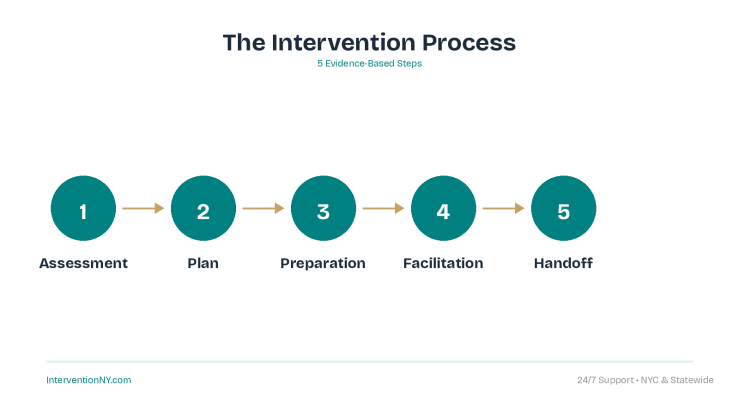
Process: Assessment → Plan → Facilitation → Handoff
- Assessment: Evaluate history, risks, and goals; determine appropriate participants[4]
- Plan: Match treatment options to clinical need, culture, and access; confirm bed availability. This includes detox coordination and exploring Long Island rehab options or Hudson Valley treatment resources based on location.
- Preparation: Coach participants on calm, non-judgmental statements and clear boundaries. Learn how to write an intervention letter.
- Facilitation: Conduct the meeting in a safe, neutral setting; present a pre-arranged pathway into care
- Handoff: Arrange transport and admission; establish communication protocols for continuity of care
Ethics & Safety for New York Drug Interventions
- Respect & dignity: Avoid shame or coercion; prioritize consent and safety
- Culturally responsive: Consider language, faith, identity, and accessibility needs
- Evidence-based pathways: Connect to services with demonstrated effectiveness
- Transparency: Clarify roles, costs, and limitations upfront
- Documentation: Maintain records of communications and decisions
Local Context: Interventionist Services by Region
NYC & Boroughs
We provide intervention services across all five NYC boroughs — Manhattan, Brooklyn, Queens, the Bronx, and Staten Island. Executive intervention services are also available for professionals requiring discretion and scheduling flexibility.
Long Island
Families in Nassau and Suffolk Counties can access Long Island Addiction Resources for peer-led treatment navigation and Long Island rehab placement assistance.
Hudson Valley & Upstate
The Hudson Valley Addiction Treatment Center provides regional resources for families north of NYC.
Statewide Support
Every1 Center offers additional recovery support resources across New York State.
New York Resources
- OASAS: Find certified treatment providers
- SAMHSA FindTreatment.gov
- NYC Well: 24/7 support, chat & text
- 988 Suicide & Crisis Lifeline
FAQs: Interventionist NYC / New York
Is a surprise intervention recommended?
Unannounced meetings can increase risk. Planned, consent-forward approaches are typically safer and more effective. See expert insights on interventionist services for preparation guidance.
How soon can treatment start after a drug intervention?
When pre-arranged, admission can occur the same day. Availability and clinical fit determine timing.
Can an intervention be conducted virtually?
Yes. Some components can be remote when safety, privacy, and technology access are addressed.
How do I choose the right interventionist in New York?
Review credentials (NCACIP, NAADAC membership), scope of practice, ethical standards, familiarity with evidence-based treatment, and experience with New York State resources.
What if they say no to treatment?
Refusal is possible but proper preparation reduces this outcome. Learn about next steps if they say no and how families can maintain healthy boundaries while leaving the door open.
What happens after the intervention?
Continuing care may include therapy, peer support, MAT (as indicated), and family education. Long Island Addiction Resources provides ongoing navigation for families in Nassau and Suffolk Counties.
References (.gov / .edu)
- NIDA: Treatment for Substance Use Disorders
- NIAAA: Treatment for Alcohol Problems
- CDC: Treatment of Substance Use Disorders
- UConn SBIRT Academy: Screening & Brief Intervention
- SAMHSA: Recovery Support Tools for Parents & Families
Last updated: December 2025 • Author: Benjamin Zohar, NCACIP • Medical Review: Brandon McNally, RN, BSN