Recovery
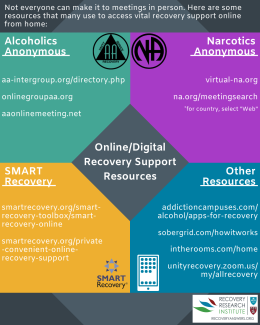
is not a one-size-fits-all process—it is dynamic, multifaceted, and deeply individual. To truly support individuals on their recovery journey, practitioners must access tools, systems, and knowledge that reflect the realities of those they serve.
This report from the Centre of Excellence for Women’s Health reviews what we know about women’s substance use
treatment
and
recovery
in Canada. It highlights the need for
trauma
-informed, culturally sensitive, and family-focused care. Since women-centred treatment has been under-researched and underfunded, the report brings together researchers, service providers, and organisations to discuss current evidence and identify key research priorities. The discussion focuses on four main areas essential to women’s recovery, emphasising Indigenous principles of purpose, belonging, hope, and...
This Charter introduces a visionary plan for a global partnership focused on recovery
advocacy
. The Global Recovery Network (GRN) is a new international group supported by several organizations. It offers a platform where members can strengthen their recovery support through lifelong learning, build meaningful connections, and promote better understanding and practices of recovery worldwide. GRN brings together people in recovery from substance use disorders and Recovery Allies—those who support recovery through personal efforts, programs, or advocacy. Together, they work to promote a shared...
AI is helping improve
addictiontreatment
in many ways. It creates personalized treatment plans based on a person’s history and needs, and can even detect early signs of risk before addiction develops. AI also analyzes large amounts of data to better understand addiction patterns and improve
recovery
methods. Tools like AI chatbots offer around-the-clock support and a safe space to talk, while remote monitoring through apps and wearables helps counsellors track progress and prevent
relapse
. Virtual reality therapy lets individuals practice coping skills in realistic situations, making recovery...
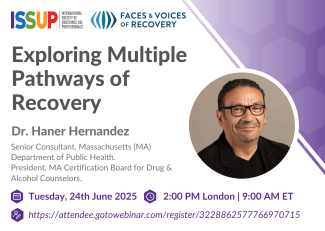
ISSUP, in collaboration with Faces & Voices of Recovery, has launched a new Global Recovery Network webinar series to spotlight diverse perspectives on recovery. The first webinar featured Dr. Haner Hernández, a respected expert in the field and a person in long-term recovery. Dr. Hernández currently serves as a Senior Consultant to the Massachusetts Department of Public Health and plays a key role in advancing health equity, workforce development, and recovery support. His presentation provided an insightful and inclusive overview of multiple pathways to recovery, grounded in both...
ISSUP Global, in collaboration with the Recovered Users Network (RUN), invites you to a joint webinar titled "Building Bridges: Enhancing Global
Recovery
Systems for International Recovery Day," in celebration of International Recovery Day.
Recovery support services are intended to provide access to social support, employment, housing, and a variety of other services for people in recovery from substance use disorder. You can find attached the major types of recovery support services and information in this booklet by the Recovery Research Institute.
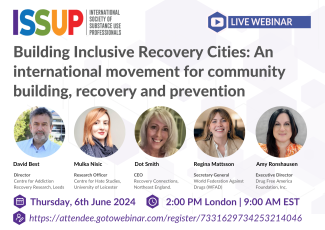
ISSUP, in collaboration with the Centre for
AddictionRecovery
Research (CARR), cordially invites you to an upcoming webinar on Building Inclusive Recovery Cities.
Day, E., Manitsa, I., Farley, A. et al. A UK national study of prevalence and correlates of adopting or not adopting a
recovery
identity among individuals who have overcome a drug or alcohol problem. Subst Abuse Treat Prev Policy 18, 68 (2023). https://doi.org/10.1186/s13011-023-00579-2
Background:
In the last 20 years, the term "recovery" has become crucial in dealing with
addiction
. However, different groups, such as researchers, clinicians, policymakers, and people with
lived experience
of alcohol or drug (AOD) problems, have varying definitions for this term. While professional groups are working towards a consensus, individuals with lived experience use the term differently, causing confusion in UK policy making. Understanding how prevalent and what factors contribute to adopting a recovery identity among those who have overcome an AOD problem can inform clinical...
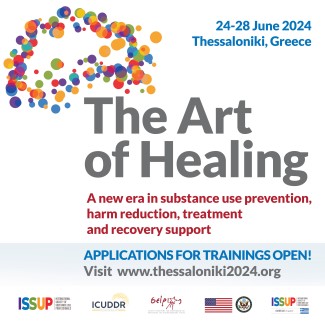
The 2024 ISSUP Global Event will be held in Thessaloniki, Greece between 24th & 28th June, 2024. Abstract submission is now open until December 31st, 2023, and we are inviting contributions from professionals across substance use prevention,
harm reduction
,
treatment
, and
recovery
support, as well as those working with vulnerable populations. Whether you're an academic or not, we welcome your submissions.
CICAD and ICUDDR invite you to learn about general tools and criteria for the publication of scientific articles on
drug demand reduction
for researchers in Latin America and the Caribbean. The event will offer language interpretation in...
Okrant, E., Reif, S. & Horgan, C.M. Development of an
addictionrecovery
patient-reported outcome measure: Response to Addiction Recovery (R2AR). Subst Abuse Treat Prev Policy 18, 52 (2023). https://doi.org/10.1186/s13011-023-00560-z
Background:
Recovery, a primary goal of addiction
treatment
, goes beyond
abstinence
. It encompasses various aspects that differ among individuals, making it challenging to measure. Traditional assessments in addiction care have focused on processes, which provide limited insights into treatment quality and long-term outcomes. In contrast, patient-reported outcomes offer a more comprehensive and nuanced understanding. To address these gaps, this study introduced and tested a patient-reported outcome measure for addiction recovery, called Response to Addiction Recovery (R2AR).
Thursday, October 26, 2023 @ 3:00-4:00pm ET (2CT/1MT/12PT)
Description
Peer
recovery
services are becoming an integral part of the process for those seeking or already in recovery from substance use. There appears to be quite a bit of...
The journey of
recovery
from substance use and mental health challenges is a profound and transformative experience. The effective integration of wellness into recovery services across care systems stands as a pivotal element in addressing substance misuse and its associated consequences. Wellness, with its holistic approach, holds great promise for enhancing the overall recovery experience and improving outcomes.