Fuente: Fleiz-Bautista, C., Domínguez-García, M., Villatoro-Velázquez, JA., Vázquez-Quiroz, F., Zafra-Mora, E., Sánchez-Ramos R., Resendiz-Escobar E., Bustos-Gamiño M., Medina-Mora ME. Cuqueando la Chiva: Contextos del consumo de heroína en la frontera norte de México… Ciudad de México, México...
Drug overdose deaths are at epidemic levels in the United States. As communities work to combat this complex issue, coalitions are often expected to lead the way. This issue can take coalitions into areas beyond prevention, to address harm reduction, overdose prevention, naloxone distribution and...
Ballreich J, Mansour O, Hu E, et al. Modeling Mitigation Strategies to Reduce Opioid-Related Morbidity and Mortality in the US. JAMA Netw Open. 2020;3(11):e2023677. doi:10.1001/jamanetworkopen.2020.23677
Un modello Markov analitico analitico sulla popolazione statunitense di età pari o superiore a 12 anni è stato utilizzato per proiettare il numero di overdose fatali causate da qualsiasi oppioide tra il 2020 e il 2029 e proiettare il numero di decessi che possono essere evitati prescrivendo restrizioni, distribuzione di naloxone ed espansione degli interventi MAT. Sulla base dei dati tratti dal National Survey on Drug Use and Health 2010-2018, dai Centers for Disease Control and Prevention, dal National Health and Nutrition Examination Survey, dal censimento degli Stati Uniti e dal National...
Vertice virtuale 2020 Data: 24 e 25 settembre 2020
Il team Improving Outcomes in the Treatment of Opioid Dependence (IOTOD) è lieto di annunciare che IOTOD 2020 sta diventando virtuale. Alla luce delle continue restrizioni ai viaggi e agli...
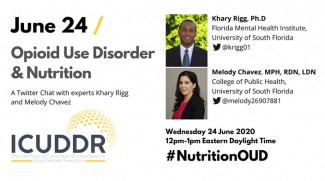
ICUDDR ti invita a partecipare a questa chat su Twitter sul disturbo da uso di oppioidi e la nutrizione con i relatori esperti Khary Rigg, Ph.D. e Melody Chavez, MPH, RDN, LDN
New resource on how to help prevent an opioid related death. Learn about an overdose including the symptoms, how to respond, information on naloxone, tips on preventing an overdose, and resources for seeking help. Download and share now.
We are witnessing, arguably, the greatest public health issue of our time. However, that is not to say the public health concerns that were present before the pandemic have disappeared.
Opioidaddiction and opioid-related deaths continue to cause great harm to society.
This article discusses the way these two critical issues are interacting and causing damage to particularly vulnerable groups of people.
The author describes how social determinants- the conditions in which people are born, grow, live, work and age- influence levels of risk and overall wellbeing.
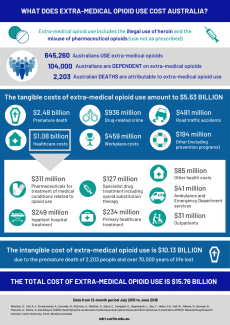
A recent study, published by the National Drug Research Institute (NDRI) at Curtin University in Perth, has estimated that the illegal use of heroin and the misuse of pharmaceutical opioids is costing Australia around $15.7 billion and causing more than 2200 deaths a year.
This is a significant increase from the previous record that was collected in 2007.
Professor Steve Allsop commented:
“Extra-medical use of opioids is likely to result in adverse outcomes that require the use of health services, reduce work productivity, or result in contact with the criminal justice system,”.
Recovery is a process of change through which individuals improve their health and wellness, live self-directed lives, and strive to reach their full potential.
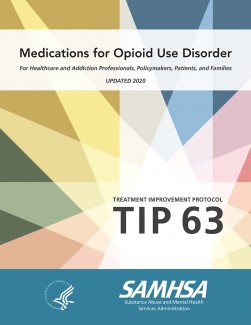
This Treatment Improvement Protocol (TIP) reviews the use of the three Food and Drug Administration (FDA)-approved medications used to treat OUD—methadone, naltrexone, and buprenorphine—and the other strategies and services needed to support recovery for people with OUD.
La pandemia di coronavirus ha rappresentato una nuova sfida per i servizi sanitari pubblici di tutto il mondo.
Sebbene gli scienziati stiano lavorando instancabilmente per comprendere di più sul virus, ci sono ancora molte domande senza risposta.
In una recente intervista, la dottoressa Nora Volkow, che dirige il National Institute on Drug Abuse, descrive i fattori che possono aumentare il rischio che il coronavirus causi maggiori danni all'individuo infetto.
Naloxone is a medication designed to rapidly reverse opioidoverdose. It is an opioid antagonist—meaning that it binds to opioid receptors and can reverse and block the effects of other opioids. It can very quickly restore normal respiration to a person whose breathing has slowed or stopped as a result of overdosing with heroin or prescription opioid pain medications.
Delroy CS, Ifeanyichukwu AO, Rachel BA (2020) Attitudes towards Cough Syrup Abuse: A Study of Adolescents in Southwest, Nigeria. J Addict Behav Ther Rehabil 9:188. doi: 10.37532/jabtr.2020.9(1).188
One area of substance misuse among adolescents that is currently a problem, and has not been fully understood in the Nigerian context is the attitudes of adolescents towards cough syrup abuse. Thus, to inform policy actions for reducing cough syrup abuse among Nigerian adolescents, this study explored the attitudes of adolescents towards cough syrup abuse in two Southwest states of Nigeria, where substance abuse is rampant.
By a stratified sampling method, 302 adolescents (152 males, 150 females; mean age = 13.61 years, SD = 2.09) were selected from secondary schools in Lagos and Oyo states...
As the COVID-19 global crisis continues, it is vital that OpioidTreatment Programs (OTPs) remain stable sources of treatment for patients receiving support for opioid use disorders.
The American Association for the Treatment of Opioid Dependence (AAOTD) has written guidance designed to support opioid treatment services through the COVID-19 crisis.
The guidelines cover:
Maintaining Adequate Supplies of Medications and Other Vital Materials
Abstract | Opioid use disorder (OUD) is a chronic relapsing disorder that, whilst initially driven by activation of brain reward neurocircuits, increasingly engages anti-reward neurocircuits that drive adverse emotional states and relapse. However, successful recovery is possible with appropriate treatment, although with a persisting propensity to relapse. The individual and public health burdens of OUD are immense; 26.8 million people were estimated to be living with OUD globally in 2016, with >100,000 opioid overdose deaths annually, including >47,000 in the USA in 2017. Well-conducted...
Nalliah, R. P., Sloss, K. R., & Kenney, B. C. (2020). Association of opioid use with pain and satisfaction after dental extraction. JAMA Network Open, 3(3). doi:10.1001/jamanetworkopen.2020.0901
Opioid prescriptions increased by 68% from 2010 to 2016 for new dental procedures among people not previously prescribed opioids. This study sheds light on the potential of unnecessary prescribing of opioids for dental procedures especially for people never prescribed opioids prior to their procedure. Those who were prescribed opioids after a dental extraction reported worse pain including more moderate and severe pain than those not prescribed opioids, while both groups reported similar satisfaction levels. Out of 195 extractions, 1145 excess prescription pills prescribed. These findings...