User account menu

  • प्रवेश
  • Join ISSUP

भाषायें

  • English
  • Français
  • Português
  • Español
  • العربية
  • Pусский

मुख्य नेविगेशन

  • About ISSUP

    • 10 Years of ISSUP
    • ISSUP Rationale
    • Membership
      • Membership Criteria
      • Code of Ethics
      • Who is ISSUP for?
    • News
      • Newsletters
    • ISSUP Events
    • International Partners
    • Governance
    • ISSUP Scientific Council
    • Friends of ISSUP (USA)
    • ISSUP Awards
      • Evidence-Based Award
      • Local Initiative Award
      • Services Award
      • Excellence in Training Provision
      • Outstanding Contribution to ISSUP Award
    • In Memoriam
    • Acknowledgements
    • ISSUP Website Guides
    • Contact ISSUP
    • FAQs - Frequently Asked Questions
    • Donate to ISSUP
  • Professional Development

    • Online Learning Hub
      • How to Register
      • UTC Self Led Courses
    • Universal Curricula (UC)
      • Currículo de Prevenção Universal
      • Currículo de Tratamento Universal
      • Universal Recovery Curriculum
    • Resources
      • Drug Data Hub
      • Glossary
      • The ISSUP Exchange
      • ISSUP Webinars
      • IEP
      • INEP Plus
      • Prevention Insights Video Series
      • Prevention Lists
      • Recovery Support
      • Quality in Treatment
      • ICAP certification
      • HealthEKnowledge
    • Jobs and Opportunities
  • Knowledge Share

    • Search in the Knowledge Share
    • ADDICTOLOGY Journal
      • Latest Issue
  • National Chapters

    • Africa
      • ISSUP Botswana
      • ISSUP Côte d’Ivoire
      • ISSUP Egypt
      • ISSUP Ethiopia
      • ISSUP The Gambia
      • ISSUP Ghana
      • ISSUP Kenya
      • ISSUP Liberia
      • ISSUP Mauritius
      • ISSUP Morocco
      • ISSUP Namibia
      • ISSUP Nigeria
      • ISSUP South Africa
      • ISSUP Tanzania
      • ISSUP Togo
      • ISSUP Uganda
      • ISSUP Zambia
    • The Americas
      • ISSUP Argentina
      • ISSUP The Bahamas
      • ISSUP Barbados
      • ISSUP Brazil
      • ISSUP Canada
      • ISSUP Chile
      • ISSUP Colombia
      • ISSUP Ecuador
      • ISSUP El Salvador
      • ISSUP Guatemala
      • ISSUP Mexico
      • ISSUP Panama
      • ISSUP Paraguay
      • ISSUP Peru
      • ISSUP United States
    • Asia
      • ISSUP Afghanistan
      • ISSUP Bangladesh
      • ISSUP India
      • ISSUP Indonesia
      • ISSUP Kazakhstan
      • ISSUP Korea
      • ISSUP Lebanon
      • ISSUP Malaysia
      • ISSUP in Pakistan
      • ISSUP Philippines
      • ISSUP Qatar
      • ISSUP Singapore
      • ISSUP Sri Lanka
      • ISSUP Thailand
      • ISSUP Türkiye
      • ISSUP United Arab Emirates
      • ISSUP Uzbekistan
      • ISSUP Vietnam
    • Europe
      • ISSUP Bosnia & Herzegovina
      • ISSUP Czech Republic
      • ISSUP Greece
      • ISSUP Italy
      • ISSUP Spain
      • ISSUP Ukraine
      • ISSUP United Kingdom
    • Oceania
      • ISSUP Australia
      • ISSUP Fiji
      • ISSUP New Zealand
    • How to Become a National Chapter
    • ISSUP National Chapters' Advisory Committee
    • ISSUP National Chapter Spotlight
  • Events

    • Search through all events
    • ISSUP Events
      • ISSUP 2026
      • Indonesia 2025
      • Thessaloniki 2024
      • Buenos Aires 2023
      • Manila 2022
      • Abu Dhabi 2022
      • Virtual 2021
      • Africa 2020
      • Vienna 2019
      • Nairobi 2018
      • Cancún 2017
      • Campinas 2016
      • Bangkok 2015
  • Networks

    • A–Z
  • My ISSUP

    • Member Directory
    • सदस्यता के लिए आवेदन करें

Europe

Regional network for Europe

Moderators

Profile picture for user livia.edegger
Livia
ISSUP
Profile picture for user KIRSTY.FITZPATRICK
Kirsty Fitzpatrick
ISSUP
Profile picture for user MoralesBA
Brian Morales
U.S. Department of State
Discussionsदस्तावेजचित्रVideosलिंकEventsKnowledge Shareसभी
Rasha Abi Hana

Drug Diversion Schemes Linked to Lower Reoffending Rates, New Research Finds

Shared by Rasha Abi Hana (ISSUP staff) - 19 August 2026

Shutterstock
Format
News
Published by / Citation
The Guardian

New research examining more than 62,000 criminal incidents across 13 police forces in England found that police-led drug diversion schemes are associated with significantly lower reoffending rates than traditional prosecution for drug possession. Individuals who were referred to treatment or education services through diversion programmes were around one-third less likely to reoffend than those who were prosecuted.

The study also found that diversion schemes remain underused, with many eligible individuals not being referred despite established programmes in some police forces. Researchers...


  • Read more about Drug Diversion Schemes Linked to Lower Reoffending Rates, New Research Finds
  • ISSUP members can join Networks to comment – Sign in or become a member
Rasha Abi Hana

Do Drug Diversion Schemes Work? Insights from the Thames Valley Police Drugs Diversion Pilot

Shared by Rasha Abi Hana (ISSUP staff) - 19 August 2026
Shutterstock
Format
Scientific article
Published by / Citation
Thames Valley Police Journal

This paper examines the development and early outcomes of the Thames Valley Police Drugs Diversion Pilot in West Berkshire, which offers people found in possession of drugs an opportunity to engage with treatment rather than receive a conventional criminal justice sanction. It places the initiative within the wider evolution of UK drug policy and compares it with similar police-led diversion schemes in England and Wales.

Early findings show mixed engagement with treatment: while many eligible individuals initially accepted the offer, 55% did not go on to enter treatment. However, among those...

  • Read more about Do Drug Diversion Schemes Work? Insights from the Thames Valley Police Drugs Diversion Pilot
  • ISSUP members can join Networks to comment – Sign in or become a member
Rasha Abi Hana

The introduction of drug Arrest Referral schemes in London: A partnership between drug services and the police

Shared by Rasha Abi Hana (ISSUP staff) - 19 August 2026
Format
Scientific article
Published by / Citation
Gillian Hunter, Tim McSweeney, Paul J. Turnbull, The introduction of drug Arrest Referral schemes in London: A partnership between drug services and the police, International Journal of Drug Policy, Volume 16, Issue 5, 2005, Pages 343-352, ISSN 0955-3959, https://doi.org/10.1016/j.drugpo.2005.06.008.

Arrest Referral (AR) schemes in London were established to connect people who use drugs with treatment services at the point of arrest through collaboration between police and drug service providers. Based on interviews with police officers and drug workers, the study explores the practical challenges of delivering treatment referrals within police custody settings, differences in professional perspectives, and the development of effective working relationships over time. The findings highlight the value of collaboration between health and criminal justice agencies in improving referral...

  • Read more about The introduction of drug Arrest Referral schemes in London: A partnership between drug services and the police
  • ISSUP members can join Networks to comment – Sign in or become a member
Rasha Abi Hana

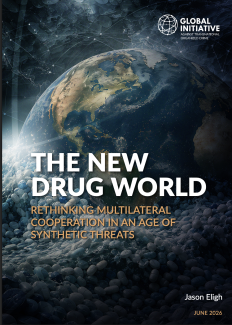
The New Drug World: Strengthening Collaboration to Address Synthetic Drug Threats

Shared by Rasha Abi Hana (ISSUP staff) - 30 July 2026
Global Initiative Against Transnational Organized Crime
Format
Report
Published by / Citation
Global Initiative Against Transnational Organized Crime.

This report examines how the rapid growth of synthetic drug markets is transforming the global drug landscape and challenging traditional approaches to drug control. Unlike plant-based drugs such as cocaine and heroin, synthetic drugs can be manufactured almost anywhere using a wide range of precursor chemicals, making production more flexible and difficult to disrupt.

The report highlights that synthetic drug markets are now present in almost every country and have experienced the fastest growth of any criminal market since 2021. Lower barriers to production have enabled both organised...

  • Read more about The New Drug World: Strengthening Collaboration to Address Synthetic Drug Threats
  • ISSUP members can join Networks to comment – Sign in or become a member
Rasha Abi Hana

Assessment of the threat posed by highly potent synthetic opioids in Europe

Shared by Rasha Abi Hana (ISSUP staff) - 30 July 2026
EUDA
Format
Report
Published by / Citation
EUDA

This threat assessment examines the potential risks posed by highly potent synthetic opioids (HPSOs) in Europe over the next two years. Drawing on early warning data, forensic and clinical evidence, and expert input, the report explores how opioid-related harms could develop under different scenarios and identifies key uncertainties that may influence future trends.

The assessment highlights the emergence of these substances as a significant public health and security concern due to their extreme potency, the risk of overdose at very low doses, and their presence in counterfeit or...

  • Read more about Assessment of the threat posed by highly potent synthetic opioids in Europe
  • ISSUP members can join Networks to comment – Sign in or become a member
Rasha Abi Hana

The Role of Faith Communities in Addressing Substance Use and Crime – Reading List (Part 2)

Shared by Rasha Abi Hana (ISSUP staff) - 20 July 2026
Format
Reading List

In this second reading list, we continue exploring the growing evidence on the role and contribution of faith communities and faith-based organisations in addressing substance use and crime, with a particular focus on treatment engagement, recovery, rehabilitation, and criminal justice. While Part 1 highlighted the contribution of faith communities to prevention, community resilience, and violence reduction, this collection examines how spirituality and religiosity may influence help-seeking, substance use outcomes, abstinence, recidivism, and successful reintegration into society.

Faith...

  • Read more about The Role of Faith Communities in Addressing Substance Use and Crime – Reading List (Part 2)
  • ISSUP members can join Networks to comment – Sign in or become a member
Rasha Abi Hana

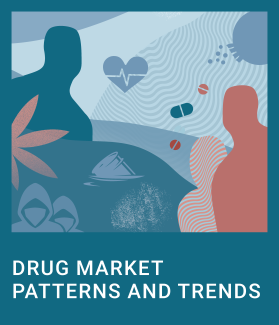
Explore the UNODC World Drug Report 2026: Drug Market Patterns and Trends

Shared by Rasha Abi Hana (ISSUP staff) - 30 June 2026
UNODC WDR
Format
Website
Published by / Citation
UNODC

The UNODC World Drug Report 2026 introduces a new interactive platform that allows users to explore the latest global, regional, and subregional trends in drug demand and supply through dynamic data visualisations, maps, graphs, and downloadable datasets.


The Drug Market Patterns and Trends platform presents concise, evidence-based analyses across a range of topics, enabling users to examine emerging developments in drug markets, patterns of use, production, trafficking, and related indicators. Each finding is supported by interactive visualisations, with the underlying data available for...

  • Read more about Explore the UNODC World Drug Report 2026: Drug Market Patterns and Trends
  • ISSUP members can join Networks to comment – Sign in or become a member
Rasha Abi Hana

Measuring gang membership in England and Wales: A latent class analysis with Eurogang survey questions

Shared by Rasha Abi Hana (ISSUP staff) - 24 June 2026
Format
Scientific article
Published by / Citation
Medina, Juanjo & Aldridge, Judith & Shute, Jon & Ross, Andy. (2013). Measuring gang membership in England and Wales: A latent class analysis with Eurogang survey questions. European Journal of Criminology. 10. 591-605. 10.1177/1477370813475393.

This study examines how gang membership is measured among young people using the Eurogang Network’s survey approach. Drawing on nationally representative data from England and Wales, the researchers used statistical analysis to identify different types of peer groups and assess whether commonly used survey questions accurately distinguish gang-involved youth.

The findings suggest that the Eurogang measures successfully identified a group of young people involved in more frequent and serious offending. However, the same measures also classified another group whose primary behaviour was...

  • Read more about Measuring gang membership in England and Wales: A latent class analysis with Eurogang survey questions
  • ISSUP members can join Networks to comment – Sign in or become a member
Rasha Abi Hana

Addressing the recruitment of young people into criminal drugs networks

Shared by Rasha Abi Hana (ISSUP staff) - 19 June 2026
EUDA
Format
Report
Published by / Citation
European Union Drugs Agency (2026), Addressing the recruitment of young people into criminal drugs networks, Publications Office of the European Union, Luxembourg.

This report examines how and why young people are recruited into criminal drug networks across Europe. It highlights the range of factors that can increase vulnerability to recruitment, including social and economic disadvantage, peer influence, family circumstances, and community environments.

Drawing on international evidence, the report identifies several promising approaches to prevention, including family-based support, school-based interventions, community engagement, digital prevention initiatives, and targeted efforts to disrupt criminal networks. It also emphasizes the importance of...

  • Read more about Addressing the recruitment of young people into criminal drugs networks
  • ISSUP members can join Networks to comment – Sign in or become a member
Rasha Abi Hana

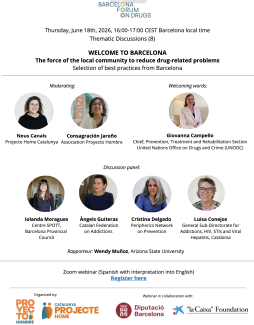
The force of the local community to reduce drug-related problems

Shared by Rasha Abi Hana (ISSUP staff) - 15 June 2026
Location
Online
Event Date
डी, एम / डी / वाई - एच :00

On the way to the Barcelona Forum on Drugs, the 8th Thematic Discussion aims to pay tribute to local communities around the world in addressing drug-related problems. A selection of best practices from Barcelona will be presented, the city...

  • Read more about The force of the local community to reduce drug-related problems
  • ISSUP members can join Networks to comment – Sign in or become a member
Rasha Abi Hana

Drug production and precursors — EUDA ongoing activities

Shared by Rasha Abi Hana (ISSUP staff) - 12 June 2026
EUDA
Format
Website
Published by / Citation
EUDA

The European Union Drugs Agency (EUDA) continues to monitor illicit drug production and precursor chemicals across Europe to improve understanding of how drug markets are evolving. Production within the European Union is primarily focused on synthetic stimulants, including amphetamine, MDMA, methamphetamine, and synthetic cathinones, while production methods are becoming increasingly flexible and adaptive.

The report also highlights the significant environmental and public safety risks associated with illicit drug production. Drug manufacturing can generate large amounts of hazardous chemical...

  • Read more about Drug production and precursors — EUDA ongoing activities
  • ISSUP members can join Networks to comment – Sign in or become a member
Rasha Abi Hana

European Drug Report 2026: Trends and Developments

Shared by Rasha Abi Hana (ISSUP staff) - 9 June 2026
Format
Report
Published by / Citation
European Union Drugs Agency (2026), European Drug Report 2026: Trends and Developments, https://www.euda.europa.eu/publications/european-drug-report/2026_en

The European Drug Report 2026: Trends and Developments provides the latest overview of the drug situation across Europe, drawing on data from EU Member States, Türkiye, and Norway. The report examines patterns of drug use, drug-related harms, drug supply, treatment services, and other interventions, offering a comprehensive picture of developments up to the end of 2025.

Using data collected through national monitoring systems and European research networks, the report highlights emerging trends and supports evidence-informed responses to drug-related challenges. It also emphasises the...

  • Read more about European Drug Report 2026: Trends and Developments
  • ISSUP members can join Networks to comment – Sign in or become a member
Rasha Abi Hana

UN Toolkit on Synthetic Drugs

Shared by Rasha Abi Hana (ISSUP staff) - 3 June 2026
Format
Toolkit

The UN Toolkit on Synthetic Drugs is a practical online resource coordinated by UNODC that brings together tools, guidance, and operational resources from across the UN system to support responses to the global synthetic drug problem. Covering topics such as diversion prevention, investigations, trafficking, criminal financing, and cybercrime, the Toolkit is regularly updated to help policymakers, law enforcement agencies, and practitioners address the rapidly evolving synthetic drug landscape.


ISSUP will be sharing selected modules, tools, and resources from the UN Toolkit on Synthetic...

  • Read more about UN Toolkit on Synthetic Drugs
  • ISSUP members can join Networks to comment – Sign in or become a member
Rasha Abi Hana

New UNODC Toolkit Module on Security Document Examination: Launching event

Shared by Rasha Abi Hana (ISSUP staff) - 3 June 2026
Location
Online
Event Date
डी, एम / डी / वाई - एच :00

UNODC has launched a new Security Document Examination module within the UN Toolkit on Synthetic Drugs to help law enforcement, border control, and forensic professionals detect and respond to document fraud linked to synthetic drug...

  • Read more about New UNODC Toolkit Module on Security Document Examination: Launching event
  • ISSUP members can join Networks to comment – Sign in or become a member
Rasha Abi Hana

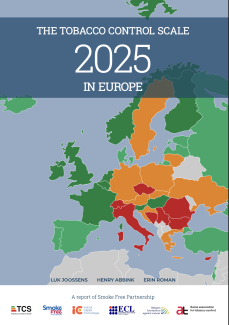
The Tobacco Control Scale 2025 in Europe

Shared by Rasha Abi Hana (ISSUP staff) - 2 June 2026
Format
Report
The Tobacco Control Scale 2025 shows that progress in tobacco control across Europe has slowed, with more countries recording lower scores than in previous years. Key reasons include the failure to regulate heated tobacco products in the same way as cigarettes and the lack of adjustments to tobacco taxes and prices to keep pace with inflation.
  • Read more about The Tobacco Control Scale 2025 in Europe
  • ISSUP members can join Networks to comment – Sign in or become a member
Rasha Abi Hana

A European Guide on Dual disorders: Health and Social Responses

Shared by Rasha Abi Hana (ISSUP staff) - 2 June 2026
EUDA
Format
Guide
Published by / Citation
EUDA

This European guide by EUDA highlights the importance of addressing dual disorders, where mental health conditions and substance use disorders occur at the same time. These co-occurring conditions are common and often lead to poorer health outcomes, increased social marginalisation, and more complex recovery pathways.

The guide emphasizes that effective responses require integrated and coordinated care, bringing together mental health services, addiction treatment, medication management, and social support. It also highlights the value of early identification, personalised treatment plans...

  • Read more about A European Guide on Dual disorders: Health and Social Responses
  • ISSUP members can join Networks to comment – Sign in or become a member
Rasha Abi Hana

NEW Security Document Examination module in the UN Toolkit on Synthetic Drugs

Shared by Rasha Abi Hana (ISSUP staff) - 2 June 2026
Format
Toolkit

UNODC has launched a new Security Document Examination module within the UN Toolkit on Synthetic Drugs, developed in collaboration with the UNODC Laboratory and Scientific Services. The module aims to help law enforcement, border control authorities, and forensic experts detect and respond to the use of fraudulent documents in synthetic drug trafficking.

Criminal networks often rely on forged passports, identity documents, and manipulated shipping and travel records to conceal identities and facilitate cross-border operations. The new module provides practical guidance on document examination...

  • Read more about NEW Security Document Examination module in the UN Toolkit on Synthetic Drugs
  • ISSUP members can join Networks to comment – Sign in or become a member
Rasha Abi Hana

Instrument for Pre-accession Assistance (IPA) data sheets

Shared by Rasha Abi Hana (ISSUP staff) - 18 May 2026
EUDA Data Sheet
Format
Leaflet, Infographic, Fact sheet, Poster
Published by / Citation
EUDA

The European Union Drugs Agency has released updated data sheets providing a clear and comparable overview of drug-related indicators across six Western Balkan partners under the Instrument for Pre-accession Assistance (IPA). These include Albania, Bosnia and Herzegovina, North Macedonia, Kosovo, Montenegro, and Serbia.

The data sheets bring together health and security information in one place, making it easier for policymakers and practitioners to access and use routine data. They are part of ongoing EU support to help these countries strengthen monitoring systems and align with EU...

  • Read more about Instrument for Pre-accession Assistance (IPA) data sheets
  • ISSUP members can join Networks to comment – Sign in or become a member
Rasha Abi Hana

EU controls nine drug precursors following first EUDA assessments

Shared by Rasha Abi Hana (ISSUP staff) - 18 May 2026
EUDA News
Format
News
Published by / Citation
EUDA

The European Commission has introduced new controls on nine high-risk chemical precursors used in illicit drug production under Delegated Regulation (EU) 2026/314. Most of these substances are linked to synthetic cathinones, while one is used in amphetamine production.

This measure responds to the growing scale of synthetic drug production in Europe, with dozens of production sites dismantled in recent years. The regulation is based on updated risk assessments that improve understanding of how precursor chemicals are sourced and diverted into illegal markets.

Overall, the new controls aim to...

  • Read more about EU controls nine drug precursors following first EUDA assessments
  • ISSUP members can join Networks to comment – Sign in or become a member
Rasha Abi Hana

Playing legislative catch-up: Drug law reform in the Pacific

Shared by Rasha Abi Hana (ISSUP staff) - 5 May 2026
Format
Website
Published by / Citation
Virginia Comolli - Global Initiatives

Drug trafficking in the Pacific is rapidly expanding, shifting countries from transit points to consumer and production markets. However, many national laws remain outdated, as they were designed for earlier challenges like cannabis and are not equipped to address synthetic drugs and cocaine.

Governments are under pressure to respond, leading in some cases to tougher punitive proposals, but legislative reform alone is not keeping pace with the evolving threat. Fiji’s recent approach shows a more integrated model, combining law enforcement, public health, and community engagement through broad...

  • Read more about Playing legislative catch-up: Drug law reform in the Pacific
  • ISSUP members can join Networks to comment – Sign in or become a member

Pagination

  • Current page 1
  • पृष्ठ 2
  • पृष्ठ 3
  • पृष्ठ 4
  • पृष्ठ 5
  • पृष्ठ 6
  • पृष्ठ 7
  • पृष्ठ 8
  • पृष्ठ 9
  • …
  • अगला पृष्ठ Next ›
  • Last page Last »

Upcoming Events

There aren't any upcoming events
All Events
हमसे संपर्क करें

Stay Connected

Newsletter

Subscribe to the ISSUP Newsletter

ISSUP is funded by the U.S. Department of State via the Bureau of International Narcotics and Law Enforcement Affairs (INL). INL works to keep Americans safe by countering crime, illegal drugs, and instability abroad.

Copyright © International Society of Substance Use Professionals Privacy Policy