Aller au contenu principal

User account menu

  • Se connecter
  • Rejoindre l’ISSUP

Langues

  • English
  • Français
  • Português
  • Español
  • العربية
  • Pусский

Navigation principale

  • À propos de l’ISSUP

    • 10 Years of ISSUP
    • Raison d’être de l’ISSUP
    • Membres
      • Critères d’adhésion
      • Code d’éthique
      • Who is ISSUP for?
    • News
      • Newsletters
    • Ateliers de l’ISSUP
    • Partenaires internationaux
    • Gouvernance
    • ISSUP Scientific Council
    • Friends of ISSUP (USA)
    • Prix de l’ISSUP
      • Prix basé sur des données probantes
      • Prix de l’initiative locale
      • Prix des services
      • Excellence in Training Provision
      • Outstanding Contribution to ISSUP Award
    • In Memoriam
    • Acknowledgements
    • Guides relatifs au site Web de l’ISSUP
    • Contact ISSUP
    • FAQs - Frequently Asked Questions
    • Donate to ISSUP
  • Développement professionnel

    • ISSUP Academy
      • What is ISSUP Academy?
    • Universal Curricula (UC)
      • Currículo de Prevenção Universal
      • Currículo de Tratamento Universal
      • Universal Recovery Curriculum
      • UTC Self Led Courses
    • Programme international de formation
      • Drug Data Hub
      • Your Professional Hub
      • L’ISSUP Exchange
      • Webinaires de l’ISSUP
      • Glossary
      • IEP
      • INEP Plus
      • Prevention Insights Video Series
      • Prevention Lists
      • Recovery Support
      • Quality in Treatment
      • ICAP certification
      • HealthEKnowledge
    • Jobs and Opportunities
  • Partilha de conhecimentos

    • Search in the Knowledge Share
    • ADDICTOLOGY Journal
      • Latest Issue
  • Chapitres Nationaux

    • Africa
      • ISSUP Botswana
      • ISSUP Côte d’Ivoire
      • ISSUP Egypt
      • ISSUP Ethiopia
      • ISSUP The Gambia
      • ISSUP Ghana
      • ISSUP Kenya
      • ISSUP Liberia
      • ISSUP Mauritius
      • ISSUP Morocco
      • ISSUP Namibia
      • ISSUP Nigeria
      • ISSUP South Africa
      • ISSUP Tanzania
      • ISSUP Togo
      • ISSUP Uganda
      • ISSUP Zambia
    • The Americas
      • ISSUP Argentina
      • ISSUP The Bahamas
      • ISSUP Barbados
      • ISSUP Brazil
      • ISSUP Chile
      • ISSUP Colombia
      • ISSUP Ecuador
      • ISSUP El Salvador
      • ISSUP Guatemala
      • ISSUP Mexico
      • ISSUP Panama
      • ISSUP Paraguay
      • ISSUP Peru
      • ISSUP United States
    • Asia
      • ISSUP Afghanistan
      • ISSUP Bangladesh
      • ISSUP India
      • ISSUP Indonesia
      • ISSUP Kazakhstan
      • ISSUP Korea
      • ISSUP Lebanon
      • ISSUP Malaysia
      • ISSUP in Pakistan
      • ISSUP Philippines
      • ISSUP Qatar
      • ISSUP Singapore
      • ISSUP Sri Lanka
      • ISSUP Thailand
      • ISSUP Türkiye
      • ISSUP United Arab Emirates
      • ISSUP Uzbekistan
      • ISSUP Vietnam
    • Europe
      • ISSUP Bosnia & Herzegovina
      • ISSUP Czech Republic
      • ISSUP Greece
      • ISSUP Italy
      • ISSUP Spain
      • ISSUP Ukraine
      • ISSUP United Kingdom
    • Oceania
      • ISSUP Australia
      • ISSUP Fiji
      • ISSUP New Zealand
    • How to Become a National Chapter
    • ISSUP National Chapters' Advisory Committee
    • ISSUP National Chapter Spotlight
  • Événements

    • Search through all events
    • Ateliers de l’ISSUP
      • ISSUP 2026
      • Indonesia 2025
      • Thessaloniki 2024
      • Buenos Aires 2023
      • Manila 2022
      • Abu Dhabi 2022
      • Virtual 2021
      • Africa 2020
      • Vienne 2019
      • Nairobi 2018
      • Cancún 2017
      • Campinas 2016
      • Bangkok 2015
  • Réseaux

    • A–Z
  • Mon ISSUP

    • Annuaire des membres
    • Formulaire d’enregistrement

Tx

Treatment / Tratamiento

Moderators

Profile picture for user sinadiccion
Jose Luis Vazquez Martinez
CICAD/OAS
DiscussionsFichiersImagesVideosLiensÉvènementsPartage des connaissancesTout
Rasha Abi Hana

Law Enforcement Deflection Frameworks: A Decision Making Tool for Police Leaders

Shared by Rasha Abi Hana (ISSUP staff) - 17 November 2026
Format
Guide
Published by / Citation
Center for Health and Justice at TASC. (2017). Law Enforcement Deflection Frameworks: A Decision Making Tool for Police Leaders: Methods for Diverting People Away from Arrest and Into Services in the Community. TASC, Inc.

The Law Enforcement Deflection Frameworks: A Decision Making Tool for Police Leaders, developed by the Center for Health and Justice at TASC, provides practical guidance for law enforcement agencies seeking to develop alternatives to arrest for individuals experiencing substance use-related problems.

The resource introduces different deflection approaches that enable law enforcement officers to connect individuals with community-based treatment and support services instead of relying on traditional criminal justice responses.

Designed as a decision-making tool, it helps police leaders...

  • En savoir plus sur Law Enforcement Deflection Frameworks: A Decision Making Tool for Police Leaders
  • ISSUP members can join Networks to comment – Sign in or become a member
Rasha Abi Hana

Critical Elements of Successful First Responder Diversion Programs

Shared by Rasha Abi Hana (ISSUP staff) - 17 November 2026
Format
Guide
Published by / Citation
Bureau of Justice Assistance (BJA), Comprehensive Opioid, Stimulant, and Substance Abuse Program (COSSAP). (2020). Critical Elements of Successful First Responder Diversion Programs. Catching Up With COSSAP, December 2020.

Critical Elements of Successful First Responder Diversion Programs provides practical guidance on developing and implementing first responder diversion initiatives that connect individuals experiencing substance use and mental health disorders with community-based treatment and support services.

Published through the Comprehensive Opioid, Stimulant, and Substance Abuse Program (COSSAP), the resource identifies five essential elements for successful diversion programmes:

  • Partnership building: Establishing collaboration between law enforcement, treatment providers, justice agencies...

  • En savoir plus sur Critical Elements of Successful First Responder Diversion Programs
  • ISSUP members can join Networks to comment – Sign in or become a member
Rasha Abi Hana

Non-invasive vagus nerve stimulation for substance use disorder: A narrative review

Shared by Rasha Abi Hana (ISSUP staff) - 11 November 2026
Format
Scientific article
Published by / Citation
Thompson-Lake, D. G., Snetkov, G., Johnson, L., Ait-Daoud, N., & Mahoney III, J. J. (2026). Non-Invasive Vagus Nerve Stimulation for Substance Use Disorder: A Narrative Review. Drug and Alcohol Dependence, 113244.

Abstract

Background

Recent technological advances have led to increased experimentation in non-invasively modulating the brain to reduce craving and drug use in substance use disorder (SUD). However, many forms of neuromodulation remain costly and require administration in a medical setting, limiting scalability. Vagus nerve stimulation (VNS) circumvents these limitations. A substantial body of neurobiological and clinical evidence suggests that VNS may be well-suited to target core mechanisms underlying substance use, including craving, mood, and stress dysregulation.

Methods

Fifty-two...

  • En savoir plus sur Non-invasive vagus nerve stimulation for substance use disorder: A narrative review
  • ISSUP members can join Networks to comment – Sign in or become a member
Rasha Abi Hana

Family Intervention Models for Young Adults with Substance Abuse: A Systematic Review

Shared by Rasha Abi Hana (ISSUP staff) - 10 November 2026
Shutterstock
Format
Scientific article
Published by / Citation
Daryl Mahon. (2026) Building recovery capital through an integrated educational and fitness substance use programme: a patient and public involvement (PPI) approach. Journal of Integrated Care 34:4, pages 217-233.

Published in the Indian Journal of Psychological Medicine, this systematic review examines the effectiveness of family-based interventions for addressing substance use among adolescents and young adults.

The researchers reviewed 41 studies published between 2000 and 2023, including randomised controlled trials and quasi-experimental studies involving young people aged 10–25 years. The interventions included family therapy, counselling, psychoeducation and other approaches involving family members in treatment.

The findings suggest that family-based interventions can contribute to reductions...

Traductions
Español
  • En savoir plus sur Family Intervention Models for Young Adults with Substance Abuse: A Systematic Review
  • ISSUP members can join Networks to comment – Sign in or become a member
Rasha Abi Hana

Adaptation of the Multidimensional Inventory of Recovery Capital (MIRC) to the Czech Environment

Shared by Rasha Abi Hana (ISSUP staff) - 28 October 2026
Format
Scientific article
Published by / Citation
Komrska, Š., Plíhal, D., & Bowen, E. (2026). Adaptation of the Multidimensional Inventory of Recovery Capital (MIRC) to the Czech environment. Adiktologie, 26(2), 109–120.

INTRODUCTION: While international attention toward addiction recovery research is growing, in the Czech environment there is still a lack of research data and tools for measuring this concept. The primary objective of the research project was therefore to adapt and validate the Multidimensional Inventory of Recovery Capital (MIRC) for the Czech population.


METHODS: The study included 111 respondents recovering from alcohol addiction who met the original inclusion criteria. An interactive web application was created for data collection, which continues to be used in practice by recovery...

AddictologyIssue 2/2026
  • En savoir plus sur Adaptation of the Multidimensional Inventory of Recovery Capital (MIRC) to the Czech Environment
  • ISSUP members can join Networks to comment – Sign in or become a member
Rasha Abi Hana

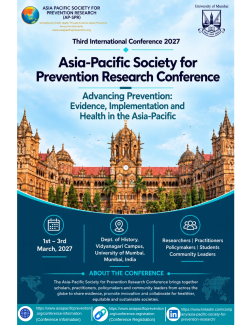
Asia-Pacific Society for Prevention Research conference

Shared by Rasha Abi Hana (ISSUP staff) - 23 October 2026
Location:
University of Mumbai, Mumbai, India
Inde
Event Date
1 mars 2026

The Asia-Pacific Society for Prevention Research (APSPR) is inviting abstract submissions and registrations for the 3rd International Asia-Pacific Society for Prevention Research Conference, taking place on 1–3 March 2027 in Mumbai, India.

...
  • En savoir plus sur Asia-Pacific Society for Prevention Research conference
  • ISSUP members can join Networks to comment – Sign in or become a member
Rasha Abi Hana

Faith-Based Approaches: The Role of Faith and Religious Institutions in Addressing Substance Use 

Shared by Rasha Abi Hana (ISSUP staff) - 12 October 2026
Format
Report

Faith, spirituality and faith-based organisations can play an important role in addressing substance use, supporting recovery and responding to related vulnerabilities as well as crime. Across different cultural and community settings, they can provide identity, belonging, hope and sustained relationships, while often reaching individuals and families in ways that formal services cannot. 

But recognising this potential also raises important questions. How can faith communities ensure that the support they provide is informed by evidence? How can faith leaders be equipped with the knowledge...

  • En savoir plus sur Faith-Based Approaches: The Role of Faith and Religious Institutions in Addressing Substance Use 
  • ISSUP members can join Networks to comment – Sign in or become a member
Rasha Abi Hana

Faith-Based Addiction Recovery

Shared by Rasha Abi Hana (ISSUP staff) - 8 June 2026
Format
Website
Published by / Citation
Addictionhelp.com

This article explores how faith-based recovery programs combine spiritual support with evidence-based addiction treatment to help people achieve and maintain recovery. These programs integrate religious beliefs and practices with services such as detoxification, counselling, behavioural therapies, rehabilitation, and aftercare.

Faith-based approaches may provide additional benefits through shared values, community support, accountability, and opportunities to address feelings of shame and stigma often associated with substance use disorders. The article also highlights a range of faith...

  • En savoir plus sur Faith-Based Addiction Recovery
  • ISSUP members can join Networks to comment – Sign in or become a member
Rasha Abi Hana

Faith-based intervention, change in religiosity, and abstinence among people with substance use disorders

Shared by Rasha Abi Hana (ISSUP staff) - 5 May 2026
Format
Scientific article
Published by / Citation
Yeung JWK. Faith-based intervention, change of religiosity, and abstinence of substance addicts. Braz J Psychiatry. 2022 Jan-Feb;44(1):46-56. doi: 10.1590/1516-4446-2020-1576. PMID: 34190824; PMCID: PMC8827378.

This study examines how changes in religiosity influence recovery outcomes among people in addiction treatment. It finds that individuals in faith-based programs show higher and increasing levels of religiosity over time, which is linked to better abstinence outcomes after treatment.

While both faith-based and secular programs provide similar clinical support (e.g. counseling, social support), faith-based approaches add a strong spiritual dimension, which appears to strengthen long-term recovery. The findings highlight that religiosity is not static—its development over time plays an...

  • En savoir plus sur Faith-based intervention, change in religiosity, and abstinence among people with substance use disorders
  • ISSUP members can join Networks to comment – Sign in or become a member
Rasha Abi Hana

Addiction Nursing Competencies A Comprehensive Toolkit for the Addictions Nurse

Shared by Rasha Abi Hana (ISSUP staff) - 15 May 2025
Format
Scientific article
Published by / Citation
Wason, Kristin MSN, NP-C, CARN; Potter, Annie MSN, MPH, NP-C, CARN-AP; Alves, Justin RN, ACRN, CARN; Loukas, Vanessa L. MSN, FNP-C, CARN-AP; Lastimoso, Charmaine MSN, MPH, NP-C; Sodder, Shereen BA; Caputo, Andrea DNP, FNP-C, CARN-AP; LaBelle, Colleen T. MSN, RN-BC, CARN. Addiction Nursing Competencies: A Comprehensive Toolkit for the Addictions Nurse. JONA: The Journal of Nursing Administration 51(9):p 424-429, September 2021. | DOI: 10.1097/NNA.0000000000001041

With the increased role of nurses in caring for patients with substance addiction, there was a clear need to develop the Addiction Nursing Competencies to guide and support the nursing workforce. A literature search revealed a lack of formal instruments to assess and guide nurses in caring for persons with substance use disorders. The Addiction Nursing Competencies were created using existing nursing education frameworks and addiction nurse care manager clinical guidelines.

  • En savoir plus sur Addiction Nursing Competencies A Comprehensive Toolkit for the Addictions Nurse
  • ISSUP members can join Networks to comment – Sign in or become a member
Barbara Correa

​​​​​​​¡Seguimos construyendo juntos comunidades más saludables y resilientes!

Shared by Barbara Correa - 7 May 2025
Organizaciones basadas en la Fe

En el marco de la Semana ISSUP, contamos con la “Capacitación del Currículum de Prevención, Tratamiento y Recuperación del Uso de Drogas para Organizaciones Basadas en la Fe”. 🙌🏼

Durante este taller, trabajamos con hogares y organizaciones comprometidas con las buenas prácticas basadas en la fe, fortaleciendo sus capacidades para ofrecer una respuesta efectiva, compasiva y fundamentada en evidencia frente al uso de sustancias. 🧠💚

Agradecemos a todos los participantes por su entrega y dedicación. 💪🏼🇸🇻

#ISSUP #ISSUPsv #Prevención #Tratamiento #Recuperación #SaludMental #BuenasPrácticas...

  • En savoir plus sur ​​​​​​​¡Seguimos construyendo juntos comunidades más saludables y resilientes!
  • ISSUP members can join Networks to comment – Sign in or become a member
Rasha Abi Hana

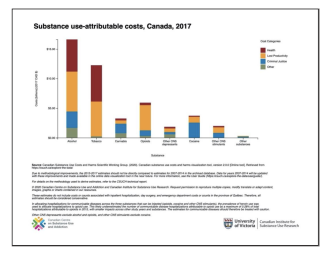
Canadian Substance Use Costs and Harms Online Data Visualisation Tool

Shared by Rasha Abi Hana (ISSUP staff) - 2 April 2025
Format
Guide
Published by / Citation
Canadian Substance Use Costs and Harms (CSUCH)

CSUCH’s data visualisation tool can be used to estimate substance use trends across the country. The data helps inform programs, practices, and research to protect communities, save lives, and improve the well-being of people in Canada.


Spotlight: Top 3 causes of death due to substance use in Canada 


More than 200 people died each day due to substance use (SU) in 2020 (the latest year for which data are available). That works out to 73,994 deaths that year. The average age of death due to SU was 45 years. Tobacco use caused 63% (46,366) of SU-related deaths, followed by alcohol at 23%...

  • En savoir plus sur Canadian Substance Use Costs and Harms Online Data Visualisation Tool
  • ISSUP members can join Networks to comment – Sign in or become a member
Rasha Abi Hana

Alcohol insensitivity and the incentive salience of alcohol: Two decades of work relevant to future directions of the addictions neuro-clinical assessment

Shared by Rasha Abi Hana (ISSUP staff) - 31 March 2025
Format
Scientific article
Published by / Citation
Cofresí, R.U., Piasecki, T.M. & Bartholow, B.D. Alcohol insensitivity and the incentive salience of alcohol: Two decades of work relevant to future directions of the addictions neuroclinical assessment. Transl Psychiatry 15, 50 (2025). https://doi.org/10.1038/s41398-025-03273-y

In a recent article, Gunawan and colleagues explore how the Incentive Salience (IS) domain in the Addictions Neuroclinical Assessment (ANA) framework relates to alcohol motivation and alcohol insensitivity. Their findings support previous research suggesting a connection between alcohol insensitivity and the motivation-driven response to alcohol-related cues. This review highlights the importance of understanding how individuals with low alcohol sensitivity (LS) experience stronger reactions to alcohol cues compared to those with high alcohol sensitivity (HS). It also emphasizes the need for...

  • En savoir plus sur Alcohol insensitivity and the incentive salience of alcohol: Two decades of work relevant to future directions of the addictions neuro-clinical assessment
  • ISSUP members can join Networks to comment – Sign in or become a member
Rasha Abi Hana

VCU researchers are developing a long-acting medication for opioid addiction

Shared by Rasha Abi Hana (ISSUP staff) - 24 March 2025
Format
News
Published by / Citation
VCU

Researchers at Virginia Commonwealth University (VCU) have developed a new version of a medication for opioid use disorder that could offer longer-lasting treatment. Current medications for opioid addiction often require daily doses, but the new formulation of nor-levo-alpha-acetylmethadol (nor-LAAM) is designed to be taken once a month or less frequently. This long-acting medication has shown promise in reducing opioid use and withdrawal symptoms in rodent models. The goal is to provide an alternative to existing treatments like methadone and buprenorphine, which come with barriers such as...

  • En savoir plus sur VCU researchers are developing a long-acting medication for opioid addiction
  • ISSUP members can join Networks to comment – Sign in or become a member
Rasha Abi Hana

Prevalence of Anti-Social Behavior Among Women with Substance Use Disorder in Pakistan

Shared by Rasha Abi Hana (ISSUP staff) - 28 November 2024
Format
Scientific article
Published by / Citation
Saddiqua, A., & Zunnurain, M. Z. (2024). Prevalence of antisocial behavior among women with substance use disorder in Pakistan. Adiktologie, 24(2), 81–87. https://doi.org/10.35198/01-2024-002-0004

INTRODUCTION: Pakistan is ominously impacted by the menace of substance abuse. Women, who represent 42% of the total population, are primarily affected by the use of illicit substances with co-occurring behavioural disorders. Despite extensive efforts, prevalence estimates reported here are likely to underestimate substance use among women. A high level of dependency was observed among the cases who were reported; however, the unreported cases in the general population are beyond the count. This study focuses on an approximation about the prevalence of anti-social behaviour among women in...

AddictologyIssue 2/2024
  • En savoir plus sur Prevalence of Anti-Social Behavior Among Women with Substance Use Disorder in Pakistan
  • ISSUP members can join Networks to comment – Sign in or become a member
Rasha Abi Hana

L’ISSUP à Lisbonne Addictions 2024 : Renforcer la main-d’œuvre de demain

Shared by Rasha Abi Hana (ISSUP staff) - 5 novembre 2024
Apprendre de l’Afrique : Séance sur le développement, l’amélioration et le soutien de la main-d’œuvre à Lisbon Addictions.

Du 23 au 25 octobre 2024, Lisbonne a accueilli la conférence Lisbon Addictions 2024, qui a réuni 2 231 participants du monde entier. L’événement a fourni une plate-forme dynamique pour partager les dernières recherches en science de la toxicomanie et explorer les orientations futures des politiques et des pratiques en matière de toxicomanie. Le thème de la conférence, « Habiliter la main-d’œuvre de l’avenir », était axé sur le renforcement de la main-d’œuvre dans la prévention, le traitement et le rétablissement de la toxicomanie, soulignant le besoin crucial de professionnels bien formés pour...

Traductions
English
العربية
Türkçe
Vietnamese
  • En savoir plus sur L’ISSUP à Lisbonne Addictions 2024 : Renforcer la main-d’œuvre de demain
  • ISSUP members can join Networks to comment – Sign in or become a member
Rasha Abi Hana

2023 National Survey on Drug Use and Health (NSDUH) Releases

Shared by Rasha Abi Hana (ISSUP staff) - 14 August 2024
Format
Leaflet, Infographic, Fact sheet, Poster
Published by / Citation
SAMHSA

Conducted annually, the National Survey on Drug Use and Health (NSDUH) provides nationally representative data on the use of tobacco, alcohol, and drugs; substance use disorders; mental health issues; and receipt of substance use and mental health treatment among the civilian, noninstitutionalized population aged 12 or older in the United States. NSDUH estimates allow researchers, clinicians, policymakers, and the general public to better understand and improve the nation’s behavioral health. These reports and detailed tables present national estimates from the 2023 National Survey on Drug Use...

  • En savoir plus sur 2023 National Survey on Drug Use and Health (NSDUH) Releases
  • ISSUP members can join Networks to comment – Sign in or become a member
Rasha Abi Hana

Experiences of UTC-Trained Addiction Professionals

Shared by Rasha Abi Hana (ISSUP staff) - 10 July 2024
Format
Scientific article
Published by / Citation
Musni, S. G. E., & Cabbigat-Wetherick, F. K. (2024). Experiences of UTC-trained addiction professionals. Adiktologie, 24(1), 41–48. https://doi.org/10.35198/01-2024-001-0006

INTRODUCTION: In response to the emerging recognition of the need for Evidence-Based Practices (EBPs) for treating PSUDs, the Universal Treatment Curriculum (UTC) was conceptualised as a training series that is being conducted globally. This study delved into the experiences of addiction practitioners who completed the Universal Treatment Curriculum (UTC) training and utilize their UTC background to provide care for people with substance use disorder (PSUD).

METHODS: Ten addiction practitioners were interviewed, and Interpretative Phenomenological Analysis (IPA) was employed to analyse the...

AddictologyIssue 1/2024
  • En savoir plus sur Experiences of UTC-Trained Addiction Professionals
  • ISSUP members can join Networks to comment – Sign in or become a member
Rasha Abi Hana

Implementing Quality Measurement in the Field of Drug Treatment and Harm Reduction: A Case Study in Flanders

Shared by Rasha Abi Hana (ISSUP staff) - 6 June 2024
Format
Scientific article
Published by / Citation
De Pourcq, K. Deneckere, S., & De Wachter, D. (2023). Implementing quality measurement in the field of drug treatment and harm reduction: A case study in Flanders. Adiktologie, 23(1), 63–72. https://doi.org/10.35198/01-2023-002-0005

BACKGROUND:

Implementing quality measurement is still a challenge in the field of drug treatment and harm reduction. In this case study, we investigate which strategies can be used to enhance the implementation of a policy in which quality indicators are made public.

METHODS:

Building on an evidence-based methodology, this case study shows how an organisation in Flanders – the Flemish Institute for Quality of Care – develops quality indicators along with its strategies to implement the measurement of the indicators.

RESULTS:

The study shows three types of quality indicators in the field...

  • En savoir plus sur Implementing Quality Measurement in the Field of Drug Treatment and Harm Reduction: A Case Study in Flanders
  • ISSUP members can join Networks to comment – Sign in or become a member
Rasha Abi Hana

National Implementation of Quality Standards in Prevention and Treatment Services for Substance Use/ Addictions – A Case Study of Cyprus

Shared by Rasha Abi Hana (ISSUP staff) - 6 June 2024
Format
Scientific article
Published by / Citation
Kyprianou, E., Mina, Ch., Stylianou, K., Yiasemi, I., Gaist, B., Symeonidou E., Matheou, M., & Mavrou, J. (2023). National implementation of quality standards in prevention and treatment services for substance use/addictions – A case study of Cyprus. Adiktologie, 23(1), 41–46. https://doi.org/10.35198/01-2023-002-0004

INTRODUCTION:

The Cyprus National Addictions Authority (NAAC) is the main coordinating body for all matters related to licit and illicit substances as well as pathological gambling in Cyprus and it is responsible, inter alia, for the licensing, evaluation, funding (where possible), coordination, and reinforcement of all programmes, actions, and activities related to substances and gambling. Licensing and funding are based on the fulfilment of certain criteria and a certain level of quality.

METHODS:

The process that led to the establishment of a quality standards system for licensing and...

  • En savoir plus sur National Implementation of Quality Standards in Prevention and Treatment Services for Substance Use/ Addictions – A Case Study of Cyprus
  • ISSUP members can join Networks to comment – Sign in or become a member

Pagination

  • Page courante 1
  • Page 2
  • Page 3
  • Page suivante Next ›
  • Dernière page Last »

Upcoming Events

There aren't any upcoming events
All Events
Nous contacter

Restez connecté

ISSUP Newsletter

S'abonner

Support ISSUP

Donate

ISSUP is funded by the U.S. Department of State via the Bureau of International Narcotics and Law Enforcement Affairs (INL). INL works to keep Americans safe by countering crime, illegal drugs, and instability abroad.

Copyright © International Society of Substance Use Professionals Privacy Policy