Knowledge Share
Estos recursos son proporcionados automáticamente por la sección de Intercambio de Conocimientos de ISSUP.
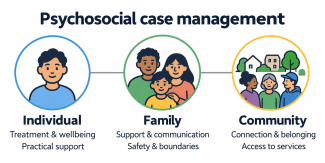
Psychosocial case management: connecting treatment, relationships and community recovery
Psychosocial case management connects evidence-based treatment with the practical and relational support needed for sustained recovery. Its clearest benefits are helping people access services and remain engaged in care. Individual care should consider housing, mental health, meaningful activity and continuity of support after discharge. Families and affected communities also need support, with involvement guided by consent, safety and individual circumstances. For treatment and prevention, interventions should address identified needs, draw on relevant evidence and be reviewed as circumstances change.
Advancing the science of evaluating Collegiate Recovery Program processes and outcomes: A recovery capital perspective
Collegiate recovery programs (CRPs) offer resources and programming for postsecondary students in addiction recovery to ensure they can initiate or maintain their recovery and complete college. To achieve these goals, CRPs offer a variety...
Collegiate Recovery Communities Programs: What do we know and what do we need to know?
As the broad construct of recovery increasingly guides addiction services and policy, federal agencies have called for the expansion of peer-driven recovery support services. The high prevalence of substance use and abuse in colleges and...
Are Collegiate Recovery Programs worth the investment?
The first collegiate recovery program was founded at Brown University in 1977. Since then, these programs have seen explosive growth, with 136 currently in operation. Universities are often tasked with determining whether programs are worth...
Recovery High Schools: A Descriptive Study of School Programs and Students
High schools specifically designed for students recovering from a substance use disorder (substance abuse or dependence) have been emerging as a continuing care resource since 1987. This study of 17 schools provides the first systematic...
A systematic review of recovery high schools and collegiate recovery programs for building recovery capital among adolescents and emerging adults
Introduction: Educational settings represent a prime opportunity for reaching adolescents and young adults (ages 12–27) experiencing substance use disorders (SUD). Recovery high schools (RHSs) were established to help adolescents in...