Resilience in Leadership: Key Behaviors for Self-Care and Caring for Others
ISSUP are pleased to present their Webinar on Resilience in Leadership.
Join as an individual or organization
A one-day training was organized by Teacher Training Academy to equip the teachers to become reflective on their interaction with the students. The assessment of student behavior and interest in intellectual and recreational activities were...


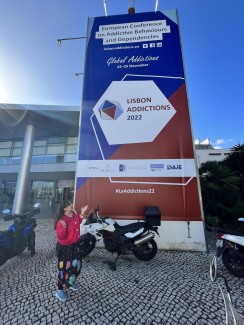
During the second last month of 2022, November 22-24 an international conference was held successfully at the Lisbon Congress Center in Portugal with the collaboration of SICAD, EMCDDA and the Portuguese Directorate. Organized by Clinic in...
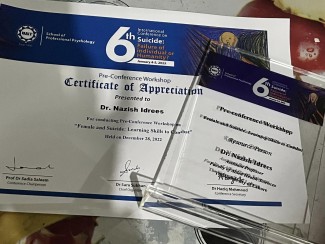
6th conference is going to be held at the University of Management and Technology, Lahore which has organized a pre-conference workshop for students and professionals about suicide and addiction. The theme of the conference is suicide...
World AIDS Day takes place in December each year. This reading list contains a list of research, publications and resources for practitioners relating to HIV/Aids. We also have a network dedicated to HIV and HCV where you can find a...

Integrating HIV-related care with treatment for substance use disorder provides an opportunity to better meet the needs of people living with these conditions. People with substance use disorder are rendered especially vulnerable by...
People with mental illness and/or SUD are disproportionally affected by HIV. They may participate in behaviours that increase risk for contracting and transmitting HIV, such as sharing injection drug equipment or...
This summary page, developed by HIV info and NIH’s Office of AIDS Research, explores HIV and substance use.
The fact sheet addresses the following questions:
This side event for the 65th Commission on Narcotic Drugs was originally presented on 14 March, 2022. Organised by INPUD, it was co-sponsored by Médecins du Monde, UNAIDS, UNODC HIV/AIDS Section, the Netherlands and Australia.
In 2021...
The 2021-2026 Global AIDS Strategy has bold and critical new targets on realizing human rights, reducing stigma, discrimination and violence and removing harmful punitive laws as a pathway to ending inequalities and ultimately ending AIDS.
...
A new publication by UNAIDS and the World Health Organization (WHO) emphasizes the importance of integrating HIV and mental health services and other interventions, including linkages to social protection services, for people living with...
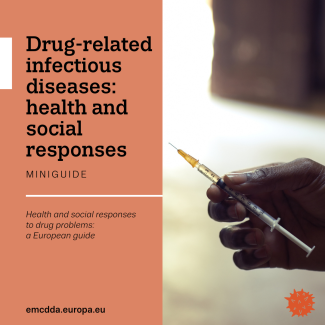
Sharing drug injecting equipment increases the risk of transmitting and acquiring blood-borne infections, such as HIV and hepatitis B and C. While hepatitis C is the most prevalent blood-borne viral infection among people who inject drugs...
Since the beginning of the HIV epidemic, the focus on HIV prevention, treatment and care among people who use drugs has concentrated on the needs of people who inject drugs, and mainly on those who inject opioids. However, data show that...
There is increasing interest and evidence for the use of cannabinoid medications in the treatment of cannabis use disorder, but little examination of the correlates of successful treatment. This paper is a secondary analysis...
There is a higher prevalence of substance use disorder (SUD) among justice-involved children (JIC). It is critical to ensure that JIC who report current use are referred for SUD assessment and potentially life-saving treatment...
COVID-19 dramatically limited the scale and scope of local health department (LHD) work, redirecting resources to the response. However, the need for essential public health services—including substance use prevention—was not...
The Canadian Community Epidemiology Network on Drug Use (CCENDU) is a pan-Canadian network of community partners co-ordinated by the Canadian Centre on Substance Use and Addiction (CCSA). The network has sites in British Columbia, Manitoba...
In the framework of the International Day against Drug Abuse and Illicit Trafficking, several activities took place, including the publication of the World Drug Report elaborated by the United Nations Office on Drugs and Crime (UNODC).
Thi...
A new systematic review and meta-analysis has found that alcohol-targeted brief interventions (short, structured, one-to-one conversations about drinking designed to motivate changes in risky behaviour) delivered in doctors’ offices and...