Seminar on Prevention and Treatment for Amphetamine Stimulant Users
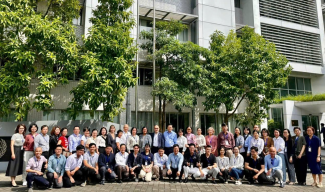
"On October 2nd, 2025, in Hanoi, WeCare Social Enterprise, along with many related organizations, departments, and agencies, had the opportunity to attend the "Workshop on Prevention and Treatment for Amphetamine-Type Stimulant Users" organized by the Vietnam Association of HIV/AIDS Prevention and Control (VAAC) in collaboration with the United Nations Office on Drugs and Crime (UNODC) and Hanoi Medical University (HMU)."

The workshop was chaired by MSc. Vo Hai Son, Deputy Director of the Department of HIV/AIDS Prevention and Control, Associate Professor, Dr. Le Minh Giang, Deputy Director in charge of the Center for Training and Research on Substance Abuse and HIV (CREATA-H) and Ms. Sanita Suhartono, international expert of UNODC. In addition, the event was attended by representatives from departments of the Ministry of Health, the Ministry of Labor, Invalids and Social Affairs; universities such as Hanoi Medical University and the University of Labor and Social Affairs; and community groups, social enterprises, international organizations and bridgeheads across 63 provinces and cities.
At the Workshop, representatives of the organizing committees took turns speaking and presenting on the current situation of substance use in general and Amphetamine-type stimulants in particular globally and in Vietnam. MSc. Vo Hai Son, in his opening speech at the Workshop, emphasized the great concern of relevant sectors including Health, Labor - Invalids and Social Affairs, and Police about the problem of increasing supply and demand for stimulants, increasing effectiveness, and increasingly low prices. To overcome and manage in a timely manner, there needs to be coordination between sectors, community organizations and international cooperation to enhance research, improve treatment methods and provide information to the public.
On behalf of UNODC, Ms. Sanita Suhartono gave a presentation assessing the current state of substance use worldwide and in Vietnam. She also presented and promoted expanded international cooperation through the global initiative #ScaleUp, aiming to implement evidence-based psychosocial interventions to treat substance use disorders. Through this program, UNODC hopes that communities in various countries will participate in the network and contribute to building an evidence-based foundation to achieve the goal of developing pharmaceutical treatment protocols that can be applied in many countries as soon as possible.
In the later stages of the program, community organizations and social enterprises such as Hai Dang Social Enterprise, SHP Clinic, the Vietnam Drug Users Network (VNPUD), and the Center for Supporting Community Development Initiatives (SCDI) shared their practical experiences in implementing psychosocial intervention programs for ATS users in Vietnam and highlighted issues specific to vulnerable groups such as men who have sex with men (MSM), young people, and women. The presentations successively showcased the results of programs on substance use education during sex (ChemSex/HighFun), provision of HIV prevention medication (PrEP), and advocacy for the rights of vulnerable groups. Through these presentations, community organizations and social enterprises agreed on the need to promote domestic and international cooperation, improve access to and eliminate stigma among ATS users.
At the conclusion of the workshop, Assoc. Prof. Dr. Le Minh Giang chaired a panel discussion among participating organizations to highlight the current situation, issues, and existing opportunities for substance abuse intervention in Vietnam. Local representatives from across Vietnam, along with delegates attending in person, actively contributed their opinions. The issues of human resources, training, and the remaining legal framework were emphasized to ensure a solid foundation for existing health services in localities. Regarding opportunities, participation in international cooperation such as the Global Alliance to Respond to the Threat of Synthetic Drugs, as well as actively organizing community projects, were highlighted as important steps forward. During this session, the social enterprise WeCare contributed suggestions on strengthening youth participation and leveraging digital technologies such as social media to promote information and bridge the gap between vulnerable communities and essential health services.
After summarizing the discussion, the Workshop officially ended for the day but will continue the following day with a professional discussion on “Opportunities for access, care and treatment for drug users in the community” with the participation of representatives from the Supreme People's Court, the Department of Science, Education and Social Affairs under the Government Office, and a number of other relevant departments.